

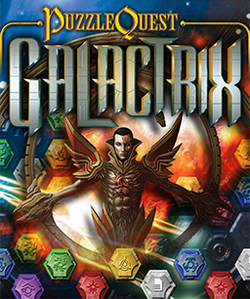

When Puzzle Quest: Challenge of the Warlords reinvented the match-three wheel by grafting it onto RPG progression, the industry sat up and took notes. Galactrix is the sequel that took those notes, taped them to a rocket and fired them into interstellar space. The promise is simple: take the addictive bead-swapping of Bejeweled, change the grid to hexagons, wrap it in a spacefaring campaign and add a generous helping of ship-building, faction politics and assorted alien shenanigans. It is an intriguing concept, and at its best Galactrix feels like an ambitious, occasionally brilliant melding of arcade puzzle and light strategy. At its worst it exposes the awkwardness that arises when you attempt to make a gem-matching game shoulder the burden of a whole galaxy of systems and mechanics.
Galactrix wears its ambitions on its sleeve. The heart of the game remains the tile-matching engine that made the original Puzzle Quest a sleeper hit, but here the board is a field of hexagonal tiles and gravity behaves like a moody physics teacher. Matches in orbit around planets fall downward in a familiar way, but in open space tiles will cascade from the direction of your last move. That small change has a disproportionately large effect on planning: sequences you could rely on in rectangular grids now require spatial thinking and, occasionally, a little luck. Tiles themselves are no longer merely colored blobs to be cleared for points. There are several categories you must learn to read: colored tiles - red, yellow, green, blue, purple and silver - feed various ship systems. Red charges weapons, yellow engines, blue restores shields and green powers the ship's computer. Purple builds psi power and silver yields intel. Numbered attack tiles have replaced the skulls of the previous game; their damage is the sum of the numbers matched, which makes a single combo capable of producing satisfying spikes of damage when the numbers align. These resource mappings give each move an additional layer of consequence. A careless clear can starve your engines and leave you vulnerable; a carefully orchestrated sweep can overload an opponent with gunnery and end the engagement quickly. Combat puzzles are the meat of the experience. Your ship is a character and equipment functions like the spells in the original Puzzle Quest, drawing from gunnery, engineering and science energies (red, yellow and green respectively). Battles are a duel of resource management as much as pattern recognition: shields must be stripped by missile and laser, then hull taken down, while certain ship modules convert gem matches into special effects. Persistent resources such as intel and psi carry over between fights; intel can boost your baseline starting energies or raise the maximum gain from matches, while psi allows you to bypass fights - a useful safety valve when facing a stark power differential. The combat loop encourages experimentation with loadouts and occasionally rewards the patient planner with a cinematic chain of matches that feels earned. Galactrix's campaign stretches across planets and star systems, and the designers bolt on a variety of secondary puzzle types to give travel and commerce some teeth. Hacking leap gates turns the board into a timed memory exercise: the game presents a sequence of colors you must reproduce in order, within a time limit. Mining of asteroids is a resource-extraction puzzle in which the board is mined for raw materials until either the vein is tapped or legal moves run out; extracting the maximum yield before moves expire provides a tidy bonus. Crafting, available in shops, requires you to convert matches of primary colors into new tokens that must then be cleared - a micro-puzzle about transformation and clearance. Haggling, accessible after recruiting certain crew members, presents a board where black inactive tokens fall in lieu of new gems, and your goal is to maximize clears to gain trade discounts. Gathering rumours is a survival-style minigame where you must avoid detonating nuke tokens for a certain number of turns; it yields intel but otherwise reads like flavor text with mild gameplay payoff. All of these modes attempt to tie the match-three core to the RPG-ish trappings of shipbuilding, crew hiring and faction interaction. The game features a diplomacy and commodity system, and you can collect, customize and construct ships from gathered materials. Crew members introduced through the campaign bring special abilities to bear, altering the available puzzle types and offering new strategic hooks. There is also online multiplayer for two to four players and support for downloadable content such as additional ships, items and missions, which was forward-thinking for a handheld in 2009. Where Galactrix trips is in its scope versus its execution. The DS version carries the full ambition but some of the interface and control challenges of the platform are exposed in prolonged play. The hex grid and variable gravity are clever, but they require a steadier hand than a stylus occasionally allows; comments in contemporary reviews noted control finickiness, and that observation is fair. Luck still plays a role: as the Hyper review of the time observed, the game relies on fortune as much as the player's skill. That said, luck is an ingredient in most match-three systems; Galactrix merely compounds it by increasing the number of variables in play. The pace swings from slow planning sessions to bursts of frantic matching, and those swings can be delightful or maddening depending on your appetite for probabilistic systems. Balance is a mixed bag. Early-game encounters teach you the economy of gems and ship systems nicely, but later on certain enemy setups and RNG-driven tile falls can produce frustratingly uneven encounters. The addition of numbered attack tiles rewards forward-thinking players, but it can also produce one-turn swings that feel outsized. Persistent resources like intel and psi mitigate some of the sting, allowing a player who has invested in research and upgrades to weather bad breaks better. Ultimately, the game is best enjoyed as a campaign of incremental gains: the pleasure is in slowly building a vessel that matches your playstyle and then watching the puzzle mechanics bend in your favor.
Graphically Galactrix is unpretentious. The DS hardware was never going to render the kind of space vistas the box art implies, and the developers sensibly focused on clarity over spectacle. Hex tiles are crisply drawn and color-coding is distinct - a necessity when the entire game hinges on quick visual parsing. Ship portraits, menus and the galaxy map have an illustration-heavy, utilitarian aesthetic that echoes strategy magazines of the 1990s more than modern AAA gloss. On the small DS screens, menus can feel a bit text-heavy, but they are readable and functional. Animation is minimal but serviceable: tiles cascade and explode with the right amount of feedback to make combos satisfying, and damage and special effects are communicated with simple but effective visual flourishes. The consequence of this modest approach is that the game never dazzles, but it also never confuses; you always know what a match will do and how it will affect your gauges. For a title that wants players to think about economy and consequence, this visual restraint is defensible. If you are buying Galactrix because you expect a graphical tour de force, prepare to be disappointed; if you want a clear, legible board and enough visual cues to make strategy intelligible, the DS version delivers.
Puzzle Quest: Galactrix is an odd bird: a serious attempt to evolve a simple arcade formula into something that can wear the cloak of strategy and narrative. The hex grid and gravity quirks inject fresh tactical thought into the match-three template, and the variety of puzzle types provides welcome detours from straight combat. The ship-building, crew abilities and persistent intel mechanics give the campaign the sense of progression that distinguishes Puzzle Quest games from run-of-the-mill puzzlers. Yet ambition is not the same as polish. The DS adaptation sometimes shows its seams in controls and RNG sensitivity, and the weight of extra systems makes the whole package occasionally lurch under its own ideas. Critics at the time were split and with good reason: IGN and several outlets found a lot to admire, while others pointed out control issues and an imbalance between skill and luck. If you approach Galactrix as a thinking player's puzzler - one that asks you to manage resources, read hex geometry and accept the occasional cruel cascade of tiles - you will find many rewarding sessions. If you expect a more streamlined, purely skill-based competitive puzzle experience, you may be left frustrated. On the Nintendo DS, Galactrix is a bold experiment that mostly works. It is not flawless, but it is earnest, clever and occasionally thrilling in a way that only a game willing to fuse two genres can be. For those who loved the original Puzzle Quest and want a sci-fi reinvention with depth and variety, Galactrix is a worthy, if rough-edged, companion on the long voyage through the stars.
 Puzzle Kingdoms on DS
 Puzzle Quest 2 on DS
 Professor Layton and the Last Specter on DS
 Puzzle de Harvest Moon on DS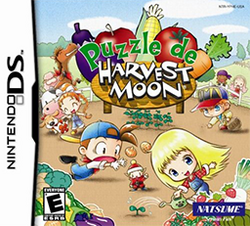












 Another SquareThought Site