

 Nov 2019
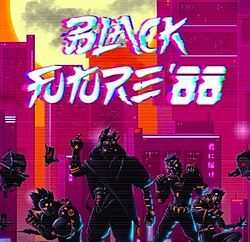

If you leafed through glossy magazines in the 1990s and fancied yourself a connoisseur of brutal arcade trials, Black Future '88 will read like a dispatch from a future-that-never-was. It's a roguelike wrapped in neon, developed by SUPERSCARYSNAKES and brought to Nintendo Switch by Good Shepherd Entertainment. The premise is suitably melodramatic: survivors of a nuclear apocalypse must scale a procedurally generated tower and stop an Architect from trapping time in 1988 - or suffer a literal exploding heart when the 18‑minute clock runs out. That sentence alone reads like a back‑cover blurb for a VHS sci‑fi B-movie, which is exactly the mood the game courts. This review comes from a place of old-school seriousness: I will not wink at you from behind a visor or promise that this is a "must-buy" just because the pixels sparkle. Black Future '88 is not casual; it's an arcade sprint that expects you to learn, die, and try again. On the Nintendo Switch it arrives as the better-received port, and it's worth considering for anyone who misses the pure, unadulterated tension of ticking clocks and one‑life runs.
Gameplay is the sort of lean, heartless machine you would have admired in the magazine era - you can picture the box art and the blistering difficulty blurb. You pick one of six characters, each with distinct loadouts and quirks, and launch into a procedurally generated tower where rooms are compact arenas populated by enemies and traps. Platforming is tight: your survivor can double jump, dash, and importantly, aim and fire while moving. The result is a twitchy ballet of strafes and bullets, where positioning matters as much as what you're carrying. What makes a run feel urgent - aside from enemy fire and cramped corridors - is the 18‑minute time bomb strapped to your chest. The heart‑exploding timer is not mere aesthetic flourish; it shapes every decision. There's no loitering to savor loot or methodically farm weak enemies. Instead, you are given a strict tempo: move fast, pick up currency, buy ammo or weapons where the shopkeeper appears, and push forward before the clock eats you. Some will find this exhilarating - a metronome to keep the run sprinting - while others will feel it constrains exploration and narrative breathing room. This was a common critique at launch, and it's fair: the game sacrifices exposition and leisurely discovery in favor of relentless pace. Combat leans into variety through weapon pickups and shops. Defeated foes drop currency that can be spent on ammunition, health, and new arms. As you play more runs the pool of possible weapons expands, a small but welcome roguelike progression loop that tempers the sting of failure. Rooms are designed with short bursts of challenge and then reward; every five or six screens you're likely to meet a mini‑boss, and the difficulty spikes are deliberately spaced. The Switch controls are serviceable - the Pro Controller and Joy‑Con both handle aiming and dashing with minimal fuss - though perfectionists may prefer analog precision when lining up shots. There is a multiplayer option, but the core of the experience is single‑player endurance. The core loop is satisfying: learn enemy patterns, optimize routes, and try different characters to discover which loadouts best suit your rhythm. Critics with differing takes tended to split along the time‑limit line: some praised the relentless pacing and tight room balance, while others felt the game lacked variety and narrative depth because of the ticking clock. Both positions are defensible. If you treat Black Future '88 like an arcade score attack with short, repeatable runs, it shines. If you come expecting a sprawling story you can wade through at leisure, you'll likely be frustrated.
Visually, the game is an exercise in retro‑futurist mood. The art direction wears its influences openly: neon drenches every stairwell, rain streaks through distant vistas, and the palette frequently tips toward Blade Runner‑adjacent chrome and cerulean. On the Switch the environments are evocative and clean; the sprites and particle effects read crisply on both TV and handheld, maintaining the game's cyberpunk aesthetic without sacrificing readability in the heat of combat. Rooms are small but meticulously composed, which is crucial when every square inch can be lethal. Animation is snappy, with dashes and shots feeling instantaneous - a necessity for a game built around split‑second survival. There's a pleasing contrast between the lo‑res charm of pixel art and the high‑concept synthwave sheen of the UI. The soundtrack, repeatedly singled out by reviewers, complements the visuals: pulsing electronic tracks that could have been lifted from a 1980s arcade and remixed for a late‑night nightclub. It's a soundtrack that demands headphones. On the technical side, the Switch port received more positive notices than its PC counterpart, and for good reason: performance is steady and the presentation rarely stutters even when explosions and bullets clutter the screen. If you're looking for a graphics showcase, Black Future '88 won't flex ray tracing or photorealism. What it does is atmosphere, and it does that very well.
Black Future '88 on Nintendo Switch is a confident, lean roguelike that wears its inspirations on its sleeve and refuses to apologize for its difficulty. It rewards discipline and fast thinking, trading narrative breadth for concentrated, arcade‑style thrills. Fans of score‑chasing, tight platform‑shooting loops will find themselves returning to the tower again and again, learning enemy placements and experimenting with weapon synergies. Critics noted - correctly - that the 18‑minute heart timer curtails exploration and that variety can feel thin over long stretches, but those are design choices rather than bugs: the game wants you to sprint, not stroll. If you grew up reading print reviews and measuring games by how quickly they grabbed you and refused to let go, Black Future '88 is a modern echo of that sensibility. On Switch it's a solid package: stylish, sonically convincing, and mechanically unforgiving in an entertaining way. Give it a run or ten; you'll either appreciate its ruthless tempo or be enraged by it. Either outcome makes for good playtime, and in this case that feels like a recommendation.
 Masyu on PS4
 Nurikabe on PS4
 Touhou Genso Wanderer: Reloaded on Switch
 Unexplored: Unlocked Edition on Switch
 Quest of Dungeons on PS4
 Rad on PS4










 Another SquareThought Site