

 Aug 2020
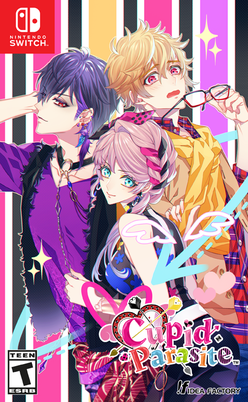

Cupid Parasite trades swords-and-dragons thrills for something more emotionally tactical: matchmaking as a sport, with you cast as a goddess-in-disguise turned reality-TV producer. On the Nintendo Switch this otome-style visual novel asks for a different kind of player skillset - less thumb reflex, more brain reflex. If you enjoy getting inside characters' heads, memorizing their ticks, and executing multi-run strategies to coax romantic growth out of a band of famously hopeless men, this is a game that will test your pattern recognition, patience, and social deduction skills. Reviews generally favored it (Metacritic around the low 80s), and the later fan disc confirms there was appetite for more. This review focuses on what makes Cupid Parasite challenging, and what player skills it asks you to bring to the table.
Cupid Parasite is a single-player visual novel and otome title in which the primary mechanics are narrative choices, route management, and long-form planning across multiple playthroughs. The premise is deliciously meta: Lynette Mirror, a matchmaker who is secretly Cupid, is assigned to produce a reality show about the Parasite 5 - a crew of men who are comically terrible at romance. Your main objective is to guide each man toward personal growth and romantic success. That sounds simple until you remember that the game is designed to be replayed, with branching decisions and locked routes that require specific knowledge and sequences to unlock. From a challenge standpoint the core difficulty isn't reaction time but cognitive load. You will be juggling character profiles, remembering which choices nudged someone to open up, and tracking long chains of cause-and-effect that might only pay off several chapters later. Good note-taking or an obsessive save-file system is your friend. Players who enjoy systematizing relationships will get the most out of it: figure out each character's triggers (humor, vulnerability, validation), test how they respond to different tones, and catalog the outcomes so you can repeat or avoid patterns in subsequent runs. Decision timing and context reading are essential skills here. Conversations change meaning based on established backstory and previously selected dialogue, so treating each choice as binary yes/no is a recipe for frustration. The game rewards nuance: a sarcastic quip that works with one guy can blow up with another. That makes empathy - the ability to mentally simulate how a character feels and responds - one of the game's stealth mechanics. Replay discipline is another form of challenge. Cupid Parasite's structure encourages multiple playthroughs to see each route and the full narrative. While that's great for completionists, it demands stamina: you must be willing to re-encounter long stretches of text to get to the branching points that matter. The fan disc released later adds post-launch routes and scenes, increasing the playtime you'll need to master the cast and collect all endings. There are some meta-puzzles too. The reality-show framing creates scenarios where you manipulate events to effect character change - staging the right situation, pressing the right conversational buttons. That layer introduces light strategy: you're effectively running social experiments, predicting outcomes, and adjusting your approach when a gambit backfires. Success depends on careful observation and iterative learning - not a quick reflex challenge, but a slow-burn, analytical one. Accessibility to non-Japanese players was improved by western release and localization, but players still face the classic visual-novel endurance test - lots of reading, many subtle branching nodes, and the need to retain tiny details for later payoff. If you hate long texts or despise replaying content you've already read, Cupid Parasite will feel like doing homework for a dating show. If you enjoy methodically breaking down social systems and refining approaches across playthroughs, it's deeply satisfying. Finally, the emotional intelligence challenge: being a good matchmaker requires actually listening to characters and responding appropriately. The writing plays on character archetypes and slowly peels back layers. Getting the most rewarding endings takes more emotional nuance than button-mashing. Players who treat choices as experiments - not moral absolutes - will find themselves improving with each run and appreciating the game's design as a skill-growth loop rather than a simple romcom.
Cupid Parasite wears its otome pedigree on its sleeve: crisp anime-style character portraits, expressive sprite work, and CG moments that reward reaching key beats. The Switch hardware handles the 2D presentation smoothly; there's no flashy 3D wizardry because the game doesn't need it. Visual clarity serves gameplay: characters' facial shifts and poses are used as cues to their moods, which you must learn to read if you want to make smart choices. Backgrounds and UI are serviceable, prioritizing readability and atmosphere over bombast. If the game's challenge is largely cerebral, the graphics are the supporting cast - competent, attractive, and tuned to give you the visual hints you need to interpret social scenes without straining your eyes.
Cupid Parasite is less about winning quick fights and more about winning hearts through applied strategy. Its challenges are subtle and compound: tracking branching narratives, inferring character psychology, and refining tactics across multiple playthroughs. Players who enjoy systems that reward observation, note-taking, and emotional deduction will find it rewarding and pleasantly demanding. Casual players expecting instant gratification or minimal replay might find it grindy, but that's a design choice that serves the game's theme: matchmaking is a craft that takes time and repeated practice. With generally favorable reviews and a fan disc that expands the content, Cupid Parasite is a smart pick for anyone who enjoys treating an otome as a puzzle to be solved rather than just a story to be passively consumed.
 Parasite Eve on PlayStation
 HyperParasite on Switch
 Root Film on PS4
 Tokimeki Memorial Drama Series Vol. 3 Tabidachi no Uta on PlayStation
 Oshiete! Popotan on PS2
 Princess Princess on PS2










 Another SquareThought Site