

 Sep 2026


In an era when video games often shout their ambitions from rooftop广告 billboards, Harvest Moon: Echoes of Teradea arrives like a polite neighbour leaning over the hedgerow to ask if you might like some tomatoes. This is not a bad thing. The Harvest Moon name has been a curiously bifurcated talisman since 2014, and Echoes of Teradea is the latest leaf on that branch cultivated by Appci Corporation and released under Natsume's watchful eye. Players familiar with the farm life sim tradition will know the drill: you inherit or buy a tired patch of earth, coax crops and livestock back to health, make awkward small talk with townsfolk and, if you must, attend to the rituals of courtship and community. What Echoes of Teradea does is take that familiar blueprint and dress it in middling conservatism, offering a competent experience that rarely surprises but seldom outright disappoints. If you are expecting the polish and panache of the original Bokujō Monogatari entries now branded Story of Seasons, you may find Echoes of Teradea a thrift-store blazer; serviceable, occasionally charming, and with a few loose threads.
Echoes of Teradea does what Harvest Moon has always promised: it hands you a spade, a list of seasonal tasks and a modest plot of land with more potential than cash. The core loop is familiar and comforting. You plant, you water, you harvest, you sell, you upgrade. There are role-playing trappings - dialogue trees, NPC schedules, quests and incremental progression - woven around the agricultural mechanics, and small puzzle elements crop up in the form of resource management and environmental obstacles. The series' raison d'etre, the slow, methodical accumulation of improvements, remains intact. Where Echoes of Teradea distinguishes itself is in the cadence. The pacing is measured, almost staunchly old-fashioned. You will be rewarded for routine rather than spectacle: tending fields over weeks rather than sprinting for endgame fireworks. This is an echo of the earlier Harvest Moon sensibility; it is deliberately unhurried in a gaming climate that often equates more systems with better systems. The town of Teradea, as presented through the game, functions as both marketplace and social arena. NPCs have predictable routines, and while romance and friendship mechanics lack the deep conversational garnish of higher-tier life sims, they deliver reliable outcomes: festivals, crafting recipes and the occasional cutscene. The upgrade path is the game's main carrot. Tools can be improved, new seeds and livestock unlocked, and outbuildings expanded. The puzzle aspects emerge when the schedule, weather and finite stamina conspire against you. Managing time and resources becomes a satisfying brain-tease: should you repair the barn now or buy a new plough? The answers are rarely binary, which keeps the day-to-day gameplay from dissolving into autopilot. If Echoes of Teradea has a flaw at the mechanical level it is a conservative design philosophy. There are no radical systems that rearrange expectations; fans of the series will feel right at home, newcomers might find the learning curve gentle to the point of modest tedium, and veterans of Story of Seasons may bristle at the lack of daring. The net result is a game that privileges reliability over innovation. That will please a certain audience and leave others glancing longingly at the horizon for signs of creative risk.
On the Nintendo Switch, Echoes of Teradea presents a visually pleasant, if not avant-garde, package. Appci Corporation opts for a clean, amiable presentation that favors legibility and charm over technical bravado. Character sprites and environments are rendered with a cartoonish clarity that reads well on both the hand-held and docked modes. There is a comforting bright palette at play; fields, flowers and fur are rendered in colours that suggest late afternoon sunshine rather than hyperreal bloom. This is not a game that will be used as a demo reel for the Switch's graphical horsepower. There are no jaw-dropping particle effects, no cinematic lighting tricks salvaged from an action blockbuster. Textures are functional, animations are adequate, and occasionally you will spot rough edges where a developer might have spent another month polishing. That conservative visual ethos mirrors the gameplay: it is pleasant, approachable and unpretentious. Worth noting is the UI design, which leans on clarity. Inventory management, tool selection and calendar screens are straightforward - a welcome nod to the practical gamer in all of us. Occasional hiccups in frame rate can be found if you fill the screen with too many physics-enabled animals or festival fireworks, but such moments are brief and seldom break the game. In short, the graphics do their job without fuss, reinforcing Echoes of Teradea's steady, dependable personality.
Echoes of Teradea is a Harvest Moon release that will be judged mostly by two constituencies: the faithful and the comparative. To the faithful - those who relish the meditative art of tilling soil, balancing a budget and building a life from seeds and sweat - this title is a comfortable, respectable entry. It honours the franchise's pastoral roots and provides many hours of low-stakes engagement. To the comparative crowd, particularly those who measure modern farming sims against the narrative depth and mechanical flair of Story of Seasons and other high-water marks, Echoes of Teradea may feel like a competent echo rather than a new melody. In the spirit of 1990s seriousness: when cartridges and press kits were king, this would be the kind of game you recommended to your friend who liked steady, honest entertainment rather than cinematic spectacle. It is well made, occasionally whimsical, and stubbornly traditional. It stumbles where the series as a whole has often stumbled since 2014 - namely, an unwillingness to reinvent the wheel - but it never collapses into frustration or poor design. For Switch owners looking for an agreeable, long-form pastime that won't demand twitch reflexes or a wallet full of DLC, Echoes of Teradea is worth a seat on the porch. Score: 6.5 out of 10.
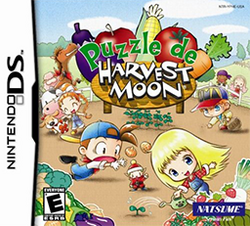 Moon: Remix RPG Adventure on Switch
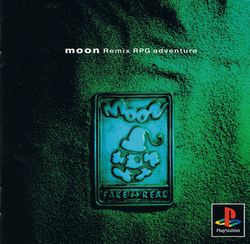 Rainbow Moon on PS4
 DX Jinsei Game V on PlayStation
 Fantasy Life i: The Girl Who Steals Time – Nintendo Switch 2 Edition on Switch 2
 Professor Layton and the Last Specter on DS
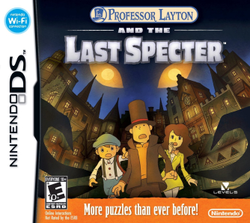 Puzzle Kingdoms on DS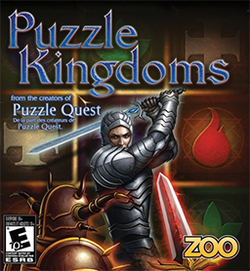
 Harvest Moon: Mad Dash on Switch
 Harvest Moon: One World on PS4
 Harvest Moon: One World on Switch










 Another SquareThought Site