

 Aug 2025
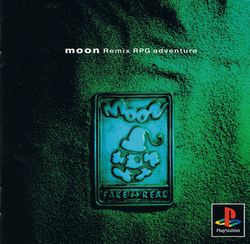

Moon: Remix RPG Adventure is the videogame equivalent of walking into a JRPG convention and loudly unbuttoning your shirt to reveal a T-shirt that says "I don't fight things - I make them feel better." Originally released in 1997 by Love-de-Lic and resurrected for modern consoles by Onion Games, Moon flips the archetypal RPG script: the 'hero' has already wrecked the place, and your job is not to grind through combat but to repair the emotional and literal damage. This review zeroes in on what actually makes Moon a challenge - not in the slash-and-dice sense, but in the brains-and-heart sense - and what skills you need to survive Love-de-Gard without turning into the kind of player who punches NPCs for fun.
Moon dresses up like an RPG for about ten minutes so you can get comfortably fooled. You play a small boy who gets sucked into the fictional world of Fake Moon - a parody RPG - and quickly learns that the Hero has been busy: animals are dead, homes are looted, and the world reeks of careless XP farming. Where a traditional JRPG hands you a sword and a level bar, Moon hands you a net for catching souls, a stack of name cards, and a concept called "Love" that replaces experience points. Challenge in Moon is almost entirely non-combat and context-driven. The core loop revolves around observing NPCs, learning their secret wishes, and granting those wishes to raise your Love Level. Souls spawn where the Hero left a mess, but they don't appear randomly: they obey a real-time calendar. The game follows a week with seven colorfully named days (Solarday, Crescenday, Blazeday, Tearsday, Leavesday, Coinsday, Echoday) and inhabitants who stick to schedules. A soul will show up at a specific time and day each week, meaning timing and schedule-memorization are actual in-game skills. If you like timing windows and weekly rituals, prepare to geek out; if you hate waiting, prepare to feel personally judged by the Moon. Your primary meter to manage is Boy's "action limit" - the amount of time he can exist in the world before getting pulled back. Action limit grows as you raise Love Level, so success expands your time budget. Save points come in the form of going to bed and entering dream state; sleeping both preserves progress and is the game's way of saying "you did enough for one day, kid." Letting your action limit hit zero results in a game over. That single sentence turns Moon's gentle pace into a tension machine: every outing has to be planned. Do you chase that soul that appears on Crescenday afternoon (and you only have 12 minutes of action left), or do you fulfill a time-limited wish that will disappear the next week? Time management and risk assessment are constant companions. The game's tools encourage detective work. "Name cards" are collectible snapshots of characters that contain hints to their backstories and wishes. "Chips" act as sacred texts: cryptic images and phrases that reveal the world's tapestry and, crucially, the clues you need to decide how to act. Moon rewards curiosity and lateral thinking; there is a heavy premium on reading (yes, even the bits that feel like weird flavor text), re-checking a character's schedule, and experimenting when a hint seems only half-formed. This is where the game's skill demands get interesting. Observation is top-tier. NPCs follow routines, so pattern recognition - the ability to notice that Mrs. Blue always visits the fountain on Leavesday morning - is valuable. Timing and memory go hand-in-hand: the game expects you to hold a mental calendar in your skull or to write notes like you're in a particularly cozy conspiracy club. Deduction is heavily used because wishes are idiosyncratic and often indirect. Sometimes vestigial JRPG logic helps; sometimes you need an empathetic leap. The latter is the unique part: Moon pushes social intuition as a gameplay mechanic. There's also an inventory of sorts: MoonDiscs (M.D.) let you change the background music on the fly. While this is a cosmetic system on the surface, music affects player perception and can be used in situations where atmosphere or timing matters. Collecting M.D.s is partly about unlocking songs and partly about having the right soundtrack for the scenario you think will improve your chances of success. It's a mild meta-skill: curating your audio to influence your own focus. A key difference from standard RPGs is that you don't "level up" by killing monsters; you level up by giving the world what it needs. That changes the metric of success: you are rewarded for empathy, patience, and methodical play. That said, Moon still creates pressure via precious, time-limited events. Missing an event may slow your progress or force you to reshuffle priorities. The modern Switch port, localized and serviced for Western audiences, helps reduce a language barrier that used to make the game feel cryptic to non-Japanese speakers. But cryptic design is often intentional: the game expects you to infer and experiment. This can be deeply satisfying if you enjoy puzzle-ish, schedule-based challenges, and maddening if you want a clear breadcrumb-line to the next objective. Because the game parodies JRPG conventions, it toys with your muscle memory. If your reflex is to whack every enemy you see, Moon will make you feel awkward until you recalibrate toward nonviolence. The skill set rewarded here is the opposite of twitch: it's patience, planning, note-keeping, situational awareness, and interpretive reading. The best players are those who keep a mental notebook of who wants what and when, who revisit locales at different times, and who treat each NPC as a tiny logic puzzle rather than an XP vending machine. There are no traditional boss fights, but the emotional and logistical puzzles can feel like bosses. Figuring out a character's elusive wish, finding the right chip reading to act on, and doing it within the action limit can produce a triumphant high that is its own kind of adrenaline rush. If you want to be spoon-fed, Moon will be frustrating. If you want an experience that trains your attention span and rewards creative empathy, it's a masterclass wrapped in PS1-era aesthetics.
Moon's visuals wear their PlayStation heritage like a sentimental sweater: a bit woolly up close, but knit with a lot of personality. The maps and backgrounds were designed by Akira Ueda, and character/monster art comes from Kazuyuki Kurashima, which means the world looks hand-crafted rather than factory-made. The original game has a 90s studio-craft vibe - simple polygons, quirky sprite work, and environments that lean on atmosphere and layout rather than photorealism. Onion Games' Switch port preserves that identity rather than polishing it into something generic, so expect charm over sheen. Because Moon's challenges rely on NPC schedules and location cues, readable visuals matter more than glossy ones. Locations are distinct enough to learn from: you will come to recognize the fountain under Mrs. Blue's favorite tree or the house next to the market with a crooked sign. The art serves clarity and character, and when paired with the eclectic soundtrack (assembled from dozens of independent Japanese musicians), it forms an aesthetic that helps you remember and interpret in-world patterns. If you fear old-school graphics, know that the game's visual language intentionally supports its gameplay: it communicates routines, moods, and clues with a painterly thriftiness that rewards players who look closely.
Moon: Remix RPG Adventure is a different kind of difficulty. It doesn't ask you to memorize button combos or perfect frame-perfect dodges; it asks you to be observant, patient, empathic, and delightfully nerdy about weekly schedules. The challenge is ecological: learning the rhythms of Love-de-Gard, decoding name cards and chips, and juggling action limits against time-limited opportunities. The Switch port's localization removes many barriers that kept this cult classic confined to Japan for decades, and the game's oddball charm and social-puzzle focus remain intact. If you enjoy games that make you think in calendars rather than stamina bars, that treat NPCs as puzzles to be understood rather than obstacles to be cleared, and that reward careful note-taking and schedule-spotting, Moon is worth a long, leisurely orbit. If you crave the catharsis of head-popping combat and instant feedback, this is probably not the Moon for you. Either way, it deserves credit for making empathy a mechanic and for turning the most underrated skills in gaming - attention, timing, and listening - into something that feels earned. Score: 8/10 - a thoughtful cult classic that challenges your brain and your heart more than your thumbs.
 One Piece Grand Adventure on PS2
 Taiko no Tatsujin: Dokodon! Mystery Adventure on Switch
 Taiko no Tatsujin: Don to Katsu no Jikū Daibōken on Switch
 Ring Fit Adventure on Switch










 Another SquareThought Site