

 Jan 2019


Monster Viator arrived on the Switch in 2019 as part of a larger wave of Kemco titles that migrated from mobile to console. The game's presence on Xbox One, PS4, iOS and Android (as listed in Kemco's 2019 catalogue) makes its lineage unambiguous: this is a mobile-first JRPG adapted to a home/handheld hybrid. That pedigree matters, because many of the tradeoffs you encounter on the Switch build are the direct result of decisions made for touch-first hardware. This review is less about hand-waving impressions and more about the plumbing: how the UI scales, how input maps to game systems, the port's performance envelope, asset fidelity, and whether the Switch package feels like a native experience or a stretched mobile canvas.
Design and systems: Monster Viator leans on the familiar bones of Kemco's JRPG template - party management, monster acquisition/leveling, and an overworld punctuated by dungeons and scripted encounters. The systems are functionally competent: XP progression, skill trees, and elemental affinities are implemented with the expected granularity, and there are respectable choices at the party composition level. The game's monster-taming loop (capture, evolve, equip) is simple but effective, and does a good job of incentivizing play without a heavy paywall - a hallmark of Kemco's console ports of their mobile catalog. Input model and control mapping: On Switch the control mapping is serviceable but reveals the port's mobile origins. Menus are navigable with the left stick and face buttons, but the default UI assumes touch-hotspots for selecting monsters, swapping equipment, or toggling items often require precise cursor placement. The D-pad works for grid-style navigation, but the button-to-action mapping occasionally suffers from ambiguous contexts (for example, the same button confirming a selection and opening a context menu in different screens), which forces extra button presses when you're trying to maintain flow during repetitive management tasks. If you play handheld with touch enabled (where supported), the experience is markedly smoother for inventory juggling, reinforcing that this is fundamentally a touch-native interface retrofitted for physical sticks and buttons. Pacing, difficulty curve and encounter design: Encounters are standard JRPG fare with a mix of random and scripted fights. The difficulty curve is gentle early on and spikes in mid-game dungeons where enemy design leans toward ability combos and status synergies. On Switch the encounter frequency and grindy moments are amplified by inflated enemy HP and XP thresholds-typical mobile-to-console scaling that aims to extend playtime. This is a double-edged sword: it gives the collection and leveling loop meat, but it also exposes how repetitive traversal and menu tedium hinder momentum. A complaint of a technical nature: there is no visible adaptive difficulty indicator and encounter balancing does not compensate for the reduced input speed that arises from non-touch play. Save, resume and QoL features: Save behavior is local and immediate at designated points; there is no forced auto-save that I could reliably reproduce except at transition nodes. Given that the Switch supports sleep/resume, the game plays well with suspend/resume, but the lack of cloud save mention in the base package means cross-platform continuity (between mobile and Switch) is unlikely without manual workarounds. The menu lacks advanced QoL toggles (speed-up option, auto-battle toggles, and fast text skip options are minimal or buried) which feels odd for a title with mobile roots where such toggles are standard. For players prioritizing technical convenience, the absence of batch-merge or mass-feed options for monster management becomes a repetitive chore after the first dozen hours. Performance impacts on gameplay: The game itself is CPU-light, but UI-heavy. That means most of the hiccups players notice are in UI responsiveness and scene transitions rather than in complex simulation. Large-form lists (inventory, skills, monster rosters) have measurable frame drops when scrolled rapidly, especially in docked mode. These are not catastrophic frame-drops, but they are visible enough to affect the perceived responsiveness of controls and can make fast-forwarding through repetitive screens irritating. Overall the core gameplay loop works; the technical shortcomings are primarily convenience and polish rather than mechanical failure.
Art pipeline and assets: Monster Viator uses a hybrid of 2D sprites and low-to-mid polygon models for environments, a visual language common in many Kemco releases that straddle mobile and indie console markets. Character and monster sprites are charming and stylistically consistent, but asset resolution betrays the game's multi-platform history. On the Switch, in docked mode, sprites and UI elements lack the crispness you expect from a title targeting a 1080p display - textures appear upscaled, and fonts can look soft in menus. This is more noticeable on larger televisions where compression artifacts and sprite edge aliasing become obvious. Rendering performance: The rendering stack is conservative: draw calls are modest, shaders are simple, and there is little post-processing. That keeps baseline frame rates attainable on the Switch's Tegra X1 hardware. In handheld the game usually holds a stable 30fps, and the reduced resolution masks many of the scaling artifacts. Docked, the target is still roughly 30fps, but scene transitions and heavy UI operations trigger microstutters due to CPU/GPU synchronization points-likely where the engine regenerates UI lists or constructs dynamic windows. The absence of a higher-performance mode (e.g., 60fps or dynamic resolution) is an understandable constraint for a port of mobile-native code, but it also feels like a missed optimization opportunity. Audio and compression: The soundtrack is competent; orchestral-leaning tracks and battle stings are mixed to the mid-range and get the job done. Audio fidelity is consistent with mobile-first masters - good melodies but relatively subdued dynamic range and compression artifacts evident in the higher sample frequencies. Spatialization is basic (stereo mix only), so docked audio immersion is serviceable but not impressive. Voice acting is minimal to nonexistent, which reduces storage pressure and aligns with the title's budget profile. UI and typography: The UI is the single most telling technical artifact of the game's origin. Fonts are bitmap-based and scale poorly, with small glyphs becoming indistinct on a TV. Button prompts and contextual hints retain mobile-sized touch targets, causing awkward negative space and inconsistent visual hierarchy on the Switch screen. The control remapping interface is functional but not robust - the ability to change bindings exists but lacks in-game visual feedback for every binding context, which makes reassigning actions a trial-and-error process for completionists who want a custom layout.
Monster Viator is an earnest, mechanically sound JRPG with a decent monster-taming loop and systems that will satisfy players who enjoy methodical progression. From a technical standpoint on the Switch, the game sits squarely in the 'mobile port' category: it runs adequately, but porting compromises are visible in UI scaling, occasional frame microstutters, and an input model that still prefers touch control. If you primarily play Switch in handheld mode and accept that the UI was designed for finger taps, Monster Viator delivers an enjoyable experience with acceptable performance. If you're a docked player chasing pristine visuals, buttery 60fps, or polished console-grade menu ergonomics, the title will sometimes feel like an app stretched to fit a TV. The game's placement in Kemco's 2019 releases alongside many mobile-origin titles contextualizes these tradeoffs - this is part of a broader strategy of bringing affordable, content-rich JRPGs to multiple platforms rather than producing platform-native showcases. For technical-minded players, the Switch port is competent and pragmatic, not revolutionary. Scorewise, the balance of solid core design and rough edges lands Monster Viator at a 7/10: recommended for collectors of indie JRPGs and those who play Switch in handheld mode, but with caveats for players who demand high-fidelity console polish.
 Monster Rancher on Switch
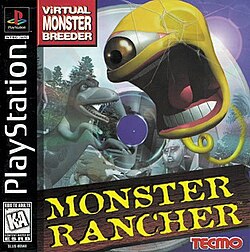 Monster Rancher Hop-A-Bout on PlayStation
 Taiko no Tatsujin: Dokodon! Mystery Adventure on Switch
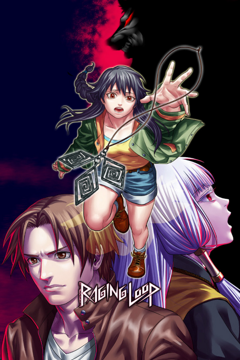
 Raging Loop on Switch
 Antiquia Lost on PS4
 Asdivine Dios on PS4
 Asdivine Menace on PS4
 Dragon Sinker on Switch










 Another SquareThought Site