

 Oct 2017
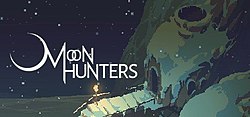

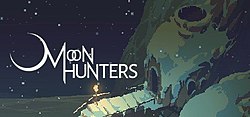
Moon Hunters is the kind of indie game that exists to remind you an entire narrative can be built from a single missing celestial body and several earnest conversations around a campfire. Kitfox Games describes it as a "personality test RPG," which is a polite way of saying it will judge how you behave and then memorialize that judgement in a constellation you can't ignore. On Switch, the game brings its crash-course in myth-making to the handheld, offering co-op for up to four players, six character archetypes, procedurally generated maps, and expectations that you'll be emotionally invested in quests that were probably algorithmically assigned. The premise is straightforward: the moon doesn't rise in the fantasy land of Issaria, magic goes on strike, monsters throw a nationwide tantrum, and your band of would-be heroes must convince the cosmos to show up for work. Outcomes are intentionally fluid-your choices, personality, and inexplicable decisions around a campfire can fundamentally alter the ending. Reviewers generally liked the game's writing, atmosphere and visual identity, but complained about its short runtime and combat that sometimes feels like less of a deep system and more of a flashy hobby. If you like your RPGs with a side of existential folk tale and a dash of procedural whimsy, Moon Hunters is likely to occupy a warm, particular corner of your Switch library.
Gameplay in Moon Hunters is equal parts action-RPG and social experiment, which is to say you'll be whacking things with weapons while occasionally asking yourself what kind of person you are. Up to four players can choose from six unique characters. Each class has its own strengths and shortcomings, and more importantly, its own personality rubric. The developers wanted to avoid a binary good-versus-evil moral meter, so the game measures your decisions against character traits and then files the results under "legend." It sounds bureaucratic until you realize the file is a constellation. Levels are procedurally generated, so runs look different each time-unless the RNG is having an off day, in which case everything looks faintly like your last playthrough but with different trees. The world design is split into bite-sized regions that funnel you toward objectives, enemies, and narrative beats. Combat is breezy and accessible: basic attacks, a dodge button, and a few character-specific skills. It doesn't try to reinvent the action RPG wheel. This is both its charm and its flaw. The moves feel satisfying in short bursts, but a few reviews noted repetition and occasional balance oddities where certain abilities feel disproportionately strong. Put another way: the combat is competent, and then it sometimes gets overexcited and beats the scenery. Where Moon Hunters really tries to differentiate itself is in its story systems. There's a campfire mechanic where bits of lore, relationship-building, and personality-defining choices happen. These small scenes are the game's heart-they're where the "personality test" tag earns its keep. Your dialogue shoestrings pull on a lot of narrative weight: a few offhand answers can change how townsfolk remember you, what myths form around your name, and even the outcome of the final confrontation with the Sun Cult. The culmination of runs is deliberately nonlinear. You can end up as a revered ancestor, a mythological monster, or someone the village mentions only when the ale runs out. Moon Hunters also keeps a meta-record of your adventures via constellations that represent prior playthroughs. This is a neat trick: it lets the game feel cumulative without forcing you into a single linear story. The constellations act like a scrapbook for your heroic (or questionable) choices, and they encourage replay. Replayability is the game's lifeblood because an individual run is relatively short. Critics and players noted that the game favors a wide variety of outcomes over deep systems, which means you'll need multiple playthroughs to see everything the title has to offer. If you enjoy telling little origin stories at a campfire and then watching the cosmos scribble your reputation in stars, the loop is delicious. If you wanted a sprawling, sustained RPG campaign with dozens of hours of layered systems and character builds, this is not that. Co-op is local and cooperative in spirit. The developers wanted a social experience where people discuss, bicker, and determine the group's identity while monsters try to eat them. Some reviewers lamented the absence of online co-op at launch, noting the game is less charming when played alone. Solo players can still enjoy the narrative systems, but a lot of Moon Hunters' delight comes from the shared storytelling and the petty in-game rivalries that arise when real people sit around a virtual campfire and make questionable moral decisions together. Mechanically, Moon Hunters is concise rather than deep. Its strength lies in the emergent stories it produces from simple systems. Combat, while enjoyable in the moment, is not the main long-term hook. The reward is the legends you build and the unique endings your group stumbles into. If you want to grind stats, min-max builds, or spend 40 hours agonizing over theorycrafting, this title will politely hand you a different kind of satisfaction and ask you to accept it.
Moon Hunters adopts a stylized, low-poly aesthetic with bold colors and clear silhouettes-basically, it looks like a bedtime story illustrated by someone who also likes geometry. The visuals pair nicely with the game's Mesopotamian-inspired myths, evoking ancient frescoes retold through a modern indie lens. This is not photorealism; it is carefully composed storytelling through shape and palette. The art direction is responsible for a significant portion of the game's atmosphere; it helps the procedural world feel coherent even when the layout changes from run to run. Animations are functional rather than showy. You won't be watching elaborate frame-by-frame combat ballets, but the animations serve the gameplay and the narrative beats well. The campfire scenes-where major character moments occur-are given a little extra visual weight, because the game understands that what you say while roasting something over an open flame is probably the single most important decision you will make that night. The soundtrack, mentioned by several critics as a highlight, complements the visuals with mood-setting music that is simultaneously haunting and approachable. It nudges the experience from "procedural roguelike" toward "shared myth-making session," which is exactly what the designers were aiming for.
Moon Hunters on Switch is a small, clever experiment disguised as an action RPG. It knows what it is: a cozy, repeatable myth machine focused on personality and narrative consequences rather than mechanical complexity. The game's procedural generation and constellation system make each run feel like a page in a family saga, while the campfire conversations are where the soul of the game resides. Critics praised the writing, atmosphere and soundtrack, and those are all deserved accolades. The downsides are also clear: the runtime is short, combat can feel thin or occasionally overpowered, and the initial lack of online co-op leaves solo players with less of the social spice the game was built for. If you play Moon Hunters expecting a 100-hour epic of power-scaling and loot spreadsheets, you'll be disappointed and probably a little smug about being right. If you go in expecting a dozen or so heartfelt, often hilarious mythic vignettes you can shape with a few friends while commuting or sitting on a couch, the Switch version delivers. It's a compact, repeatable good time that excels at making small moments feel legendary. Score-wise, it lands around a 7 out of 10: not flawless, but honest, charming, and quietly proud of its constellations.
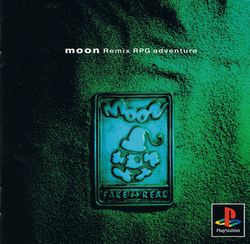
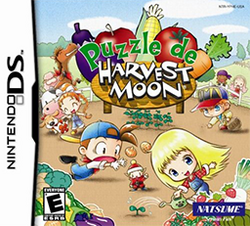 Moon: Remix RPG Adventure on Switch
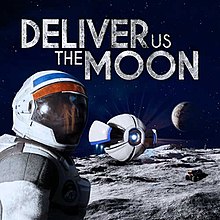
 Deliver Us The Moon on PS5
 Combat Elite: WWII Paratroopers on PS2
 Onimusha: Dawn of Dreams on PS2
 Action Man: Operation Extreme on PlayStation
 Project Sakura Wars on PS4
 Boyfriend Dungeon on PS5
 Boyfriend Dungeon on Switch










 Another SquareThought Site