

 May 2021
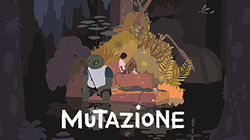

Mutazione is the kind of game that politely asks you to slow down, sit on a bench, and listen to strangers tell you things they never intended to say out loud. On the Switch it feels like carrying a tiny, island-sized soap opera in your backpack: soft, unusual, and somehow louder than its volume setting. You play as Kai, who arrives on the eponymous island for what's framed as a short, summer visit to see her ailing grandfather. What begins as a personal errand of care quickly opens into something wider - a web of lives that the game reveals in languid chapters, like peeling back the layers of an overwater onion with a watering can. Die Gute Fabrik designed Mutazione around purposefully unflashy systems: walking, talking, and gardening. Those elements might sound simple on paper, but the game spins them into quiet alchemy. The world is an ensemble cast rather than a scenery backdrop; the townspeople are the true protagonists, and the mechanics are curiously literal metaphors for the emotional labor of relationships. Choices in dialogue shift tone and small outcomes, and the gardening system - where plants make sounds and combine into a woodland jam session - turns cultivation into composition. The result is more about listening and tending than about quest-chasing; it's a game that rewards lingering and has the patience to let characters grow, wilt, and root again.
Mutazione's mechanical heart is deceptively calm: you roam clickable environments, trigger conversations, and plant seeds. The game is structured into chapters, each representing a day of Kai's week-long stay. This episodic rhythm mimics serialized storytelling - each chapter is a small episode packed with character beats, and by the end you start to feel like you're bingeing the life of a village rather than simply finishing a game. Kai is the axis the narrative spins around. On the surface her arc is straightforward: a granddaughter visiting a dying grandfather, doing the small, often awkward labor of caregiving. Underneath that simplicity is a quieter development. Kai arrives as an outsider with a particular kind of reserve that slowly melts as she listens. The choices you make during conversations let Kai tilt toward curiosity, awkward humor, or gentle confrontation. Because the game rewards patience over action, Kai's change is not a flashy catharsis but a soft, cumulative recalibration: she goes from someone on a mission to someone who understands that staying with - literally tending - is itself a kind of healing. The grandfather, though sick, is less a plot device and more a connective tissue. He anchors Kai to the island and provides her with a reason to be present. His condition frames the themes of mortality and stewardship, but he also embodies memory: family stories, old grudges, and the kind of humor that families use to keep catastrophe at bay. His arc is more about what he provokes in others than about a personal transformation; his frailty creates moments where other characters reveal the parts of themselves they keep hidden. The townspeople are where Mutazione's chops really show. Die Gute Fabrik built the game like a micro-soap: each resident has a vignette, a recurring beat, and a tendency to bring their own seasonal drama into Kai's week. Because the game focuses on ensemble storytelling, no one character hogs the limelight; instead, arcs interweave. Some residents carry the weight of grief, others nurse awkward romances, and many are trying to reconcile their pasts with the present. Conversations can feel mundane - a neighbor asking about a plant, a friend complaining about a breakup - until you realize the mundanity is the point. The growth of a tomato bush and the thawing of a frozen friendship are presented with equal narrative dignity. Spatially, gardening is how you interact with the island and its people. Seeds are collected, soils differ, and plants require space to flourish. This is not a minigame in the disposable sense: gardening is a storytelling tool. Plants emit sounds as they grow, and combining them creates a literal soundtrack to the community's mood. If a character is struggling, planting a certain combination and returning to them later might alter the atmosphere of a scene in small, meaningful ways. Musically, the garden compositions are the game's private language for 'we are okay' or 'we are tangled up', turning feelings into chord progressions. It's a clever design twist: care produces music, and music shapes care. Dialog is where character arcs are most explicit. You can select responses during conversations, and these choices nudge relationships instead of breaking them. Kai can prod a character's secret, offer support, or remain silent; each nudge can retrace an arc a tiny step forward or backward. Because the game is built to reward meandering, you'll sometimes overhear or accidentally become party to conversations that illuminate someone's past. As the chapters progress, small reveals accumulate: who once left, who stayed behind, which relationships are scarred by absence, and which are being mended. Those cumulative details create the sense that these characters have full lives outside of Kai's visits. Mutazione refuses spectacle. There are few puzzle gates and almost no combat. Instead it asks you to do the arduous, repetitive work of attention. The payoff is emotional resonance: arcs rarely end with a tidy moral; they evolve into new arrangements. By the end of Kai's week, you're not handed a grand epiphany so much as a collection of quieter ones. Friendships are rebalanced, grief is acknowledged (if not solved), and the town feels more like a living organism than a backdrop for quests. That ensemble approach is what gives the game its soap-opera DNA: characters recur, gossip spreads, and private dramas ripple outward in ways that feel human rather than mechanical.
Visually Mutazione leans into illustratorly warmth. The development team created most art and animation in Adobe Illustrator and Adobe Animate before assembling everything in Unity, which gives the world a hand-made, collage-like quality. People look like they were designed by someone who loves mid-century illustration and late-night zines: silhouettes with expressive little gestures rather than photoreal detail. This style suits the story perfectly; it never competes with the dialogue or with the soundtrack but enhances the mood, like sepia-toned headphones over your ears. Animation focuses on small, telling motions: the twitch of an eyebrow, the way a character slumps when saying something they wish they hadn't. Those micro-animations are the icing on a cake of subtler design choices. Environments are full of objects that invite inspection - pots, seeds, benches - and the UI keeps you from feeling like you're playing a management sim. Instead, the island looks like a living scrapbook: plants spread, roofs weather, and the palette shifts with the game's emotional temperature. Sound design is an obvious highlight. Mutazione won recognition for excellence in audio for good reason. The gardening-as-music system makes audio a gameplay mechanic, and ambient tracks reinforce the feeling of being somewhere both familiar and slightly enchanted. Whether you're sitting through a conversation under lapping waves or pruning in a secluded garden, the music adapts. The audio team treated sound as a first-class narrative citizen - which is to say, the soundtrack isn't background filler. It's another character, sometimes the one who speaks when words fail.
Mutazione on Switch is not a blockbuster drama with plot twists that require post-it notes to keep track of. It's a slow-brewing ensemble piece that asks you to plant patience and harvest empathy. The characters' arcs are built from small gestures rather than sweeping declarations: a stubborn neighbor softening, a buried wrong being named, a granddaughter learning that care can be its own answer. The game's mechanics - conversational choices and musical gardening - are tightly in service to these arcs, creating feedback loops where attention begets story and story begets attention. If you want a game that understands the power of ordinary moments and treats emotional labor like gameplay, Mutazione delivers. If you want explosions, fast reflexes, or an ending that ties every strand into a neat bow, this island will politely hand you a watering can and point you toward the shore. Either way, you'll leave feeling like you know more about a place now than you did when you arrived - and that, in a medium that often measures progress in levels and loot, is its most subversive triumph. Play it on the Switch when you want a week's worth of human stories in one sitting. Bring a charger, maybe a notebook for the gossip, and the willingness to let a community slowly reveal itself. You'll probably find you cared for more than a garden by the time the credits roll.
 Tintin: Destination Adventure on PlayStation
 One Piece Grand Adventure on PS2
 Taiko no Tatsujin: Don to Katsu no Jikū Daibōken on Switch
 Taiko no Tatsujin: Dokodon! Mystery Adventure on Switch










 Another SquareThought Site