

 Aug 2025
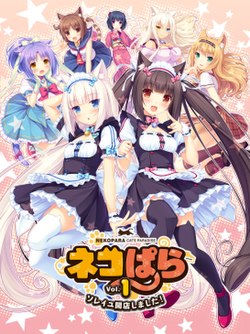

Nekopara Vol. 1 is the sort of game that smells faintly of sugar, cat ears, and the kind of slice-of-life optimism that insists even pastry shops solve existential crises with a perfectly glazed éclair. On Switch you get the all-ages port that trims the adult content but keeps the heart - and the catgirls. The core of the experience is less about win/lose and more about listening: it is a visual novel where the majority of your time is spent reading lovingly voiced lines, watching characters emote through E-mote animation, and occasionally being rewarded for not pushing any buttons at all. This review takes off its chef hat and instead of reviewing oven temperatures, dives into the characters: their personalities, how the story sets them spinning, and what Vol. 1 does with them on its way to becoming a full-fledged franchise.
If you want player agency, Nekopara Vol. 1 will very politely hand you none. The game is a kinetic visual novel: a single linear story with no branching choices, no routes to chase, no morality meters. What it offers instead is presentation - full character voice acting (the protagonist is unvoiced), smooth E-mote animations that make hair and ears jiggle like they are conspiring against gravity, and a steady stream of domestic, sugary scenes that double as character study. On Switch the experience is essentially the same as on PC, minus the adult scenes present in the original release. For most players this is a feature, not a bug - the narrative aims for warmth and familiarity, not branching romance complexity. That said, the gameplay loop is basically 'read, watch, and enjoy the small animations that make each line land.' Where Nekopara actually shines is in its cast. Kashou Minazuki, the protagonist and aspiring pastry chef, begins Vol. 1 with the most classic of premises: he moves out to start his own pâtisserie, La Soleil, and wants to make his mentor proud. That career arc is simple but effective; Kashou is the narrative fulcrum, and his clear, steady ambition gives the sisters something tangible to orbit. The story in Volume 1 uses his goal to reveal how each catgirl fits into his life and work, rather than bending them into routes. Chocola and Vanilla provide the immediate heartstring tugs: Chocola is exuberant, as if joy were a consumable she insists on giving to everyone, while Vanilla is the ice-cream-stillness counterpoint, a kuudere who offers subtle emotional calibration in the smallest facial expressions. Their twin dynamic is Vol. 1's emotional engine - Chocola's unconditional affection and Vanilla's quiet tether keep Kashou grounded and human. Secondary catgirls make their presence felt mostly through manner and problem. Azuki arrives as the oldest and unofficial manager: short, sharp, tsundere by trade, she is the 'I scold you because I care' archetype and acts as the structural glue when the shop starts taking shape. Coconut brings an aching insecurity that the narrative treats with surprising tenderness; she is tired of being 'cool' in others' eyes and wants to be accepted for her own clumsy, earnest attempts to help. Maple and Cinnamon add texture: Maple's quiet aspiration to sing gives her a self-doubt arc that feels relatable even without route-specific focus, and Cinnamon's habit of interpreting things lewdly is played for comic relief in Vol. 1 rather than becoming problematic. Shigure, Kashou's younger sister, is the narrative wildcard: she oscillates between familial support and the awkwardly written implication of romantic feelings, a choice by the source material that has sparked discussion among fans. Vol. 1 handles this lightly, mostly using Shigure to complicate family dynamics and add occasional rivalry. Because the story is linear, character development in Vol. 1 is incremental and communal: rather than granting major breakthroughs to a single heroine, the plot lets the pâtisserie open and the household gradually become a found family. The arc that matters is Kashou learning to accept help and love from those he thought were dependents, and the catgirls learning to take responsibility and find purpose beyond the family house. Later volumes expand these seeds into focused arcs (Coconut and Azuki's friction, Maple's dream, Kashou's apprenticeship and relationship to his mentor), but Vol. 1 is the pilot episode of that growth: an introduction that establishes who each catgirl is and why their presence is narratively meaningful. If you like character-driven comfort reads where growth is steady and collaborative rather than melodramatic, Vol. 1 does the job well.
The Switch port benefits from the series' signature character art: clean, colorful, and deliberately adorable. NEKO WORKs' designs translate beautifully to the handheld format. The E-mote system gives the characters lively movement without becoming a full 3D spectacle - think expressive sprites with layered animation rather than static CG postcards. Backgrounds are cozy: the patisserie interiors are saturated with warm light, and food is rendered like small edible trophies. The OVA and later anime adaptations polished these assets further for motion, but the game's visuals already straddle the cute and the polished. Voice acting is a highlight on Switch; the cast breathes life into lines that might otherwise have been read in comfortable silence. On the downside, if you were hoping for gameplay variety, the visuals occasionally feel like window dressing for a reading experience - but they dress it very well.
Nekopara Vol. 1 on Switch is not trying to be a complex relationship simulator or a branching epic; it is a character showcase packed into a warm confection of a story. The absence of choices forces the game to do its heavy lifting through dialogue, performance, and small scene craftsmanship, and in that regard it largely succeeds. Kashou is a steady, sympathetic center and the catgirls are written with distinct personalities: Chocola's infectious cheer, Vanilla's low-key gravity, Azuki's responsible snark, Coconut's identity ache, Maple's quiet yearning and Cinnamon's comic heat are all laid out clearly in Vol. 1. The result is a slice-of-life that doubles as a slow-building study in found-family dynamics. Fans of cozy, voice-driven visual novels will find a lot to love here; if you want mechanical depth or branching romance arcs, you may feel like you wandered into a bakery and forgot why you were on a diet. Worth a try on Switch for the presentation and personalities alone - consider it dessert first, plot afterward.
 Nekopara Vol. 4 on Switch
 Nekopara Vol. 2 on Switch
 MX vs. ATV All Out on Switch
 Tomoyo After: It's a Wonderful Life on PS3
 PlayStation All-Stars Battle Royale on PS3
 Sonic & Sega All-Stars Racing on DS










 Another SquareThought Site