

 Apr 2021


You show up at L.E.N.S. as an anonymous photographer with a camera and a blessed lack of responsibility. The world hands you Professor Mirror - equal parts scholarly wink and smug grading rubric - and two assistants, Rita and Phil, who together function as the game's conversational scaffolding, cheerleaders, and occasionally endearing foils. New Pokémon Snap is, on the surface, an on-rails safari where pressing the shutter is the main sport. Underneath that pleasant facade is a surprisingly coherent cast of characters whose tiny arcs the game sketches across its sun-drenched beaches, moody jungles, and Illumina-streaked nights. If you came for a cute reboot of the N64 classic, you'll get cute. If you care about people and motivations - or at least the Pokémon-equivalent - you'll find enough narrative breadcrumbs to make the whole thing feel like a cozy, low-stakes mystery about curiosity, stewardship, and the ego-busting sting of a B-ranked photo.
The player character starts as a blank-slate photographer, the classic RPG of self-identification: you are who the Photodex says you captured properly. The arc here is tiny but satisfying - a progression from casual snapper to L.E.N.S. contributor whose Expedition Points actually change the world around them. Professor Mirror is the catalyst for this growth: he grades photos on rarity and composition, handing out stars and ranking letters like a kindly bureaucrat awarding merit badges. His role is mentor and gatekeeper; he gives you the carrot of research levels and unlocks, which transforms player curiosity into measurable progress. Rita and Phil provide color notes - Rita the earnest co-researcher and Phil the practical analyst - they tease out the game's sense of purpose without ever demanding drama. Their arc is mostly steady encouragement, which is exactly the point: they're there to help the player grow, not steal the spotlight. Gameplay itself mirrors character development. Levels are on-rails excursions in the NEO-ONE, and every run is a short, tidy story beat where Pokémon behaviors are the plot points. The system nudges you to coax moments out of these creatures - toss a fluffruit to lure them, play a melody to start a dance, or fling an Illumina Orb to make them glow and sometimes change behavior. The Illumina phenomenon functions like a narrative MacGuffin: it's an ecological mystery that ties the Photodex entries to a larger, gently mystical purpose. Watching a shy Snorlax rouse with an Illumina Orb is less about scoring stars and more about witnessing a tiny emotional arc - sleepy creature, curious interloper, touched by bioluminescence, moment of wonder. Repeat that sensation across 200+ Pokémon and you have a thematic throughline about respect and discovery. Mechanically the game rewards repetition with meaning. Photos are graded one to four stars for rarity and given scores based on composition, proximity, and pose - Professor Mirror's evaluations become part of the narrative: a low score is a teacher's corrective glance, while a high score is an approving nod that unlocks new research tiers. Those research levels function like chapters; raising one opens new variants of the same area (different times of day, new routes, Illumina stages), which is also how the game advances its story: you're not only cataloging Pokémon, you're teasing out their behaviors as the environment changes. The Re-Snap feature lets you retouch and present the story you saw in better lighting and framing, which is a meta-commentary on how we curate memory. Online sharing and Sweet! Medals add a lighter, communal layer to character arcs. Your photos can be uploaded; other players can give them love. The player-turned-researcher moves from private discovery to public storyteller, and the game gently rewards the social act of saying: 'Look what I saw.' Development notes in the credits - Bandai Namco's prior work on Pokkén Tournament influenced their depiction of an interconnected ecosystem - explains why the game treats Pokémon as characters rather than mere props. The 2021 update that added three areas and 20 Pokémon (bringing the total to 234) is an epilogue of sorts; it extends the arcs of regions that felt finished, offering new scenes where your favorite stars can do something surprising again.
New Pokémon Snap dresses its characters in a very flattering coat of paint. The environments - jungles, deserts, beaches - feel lived-in, and they stage Pokémon encounters as if the camera were catching private moments. The Illumina stages give the game its most cinematic set pieces: glowing flora and luminescent Pokémon create tableaux that are inherently photogenic and narratively resonant. Visual storytelling is the backbone of character arcs here; a Pokémon's expression, small animation flourishes, and the way light plays across scales or fur provide emotional punctuation without a single word. Artistically the game favors expression over hyperrealism. The result is a living picture book where each frame reads like a line in a character biography. The NEO-ONE's autopilot routes are cleverly composed to stage emergent interactions - predators chasing prey, groups of Pokémon dancing after a melody, or solitary ones doing something inexplicably adorable. These vignettes are the episodic beats of the game's larger plot about research and the Illumina mystery. The Photodex entries, where you save up to four photos per Pokémon, feel like a scrapbook biography: each image shows a different mood, like a character's yearbook spread. The Re-Snap tools - zoom, blur, brightness, filters and stickers - let you craft not just a better photo, but a more convincing narrative portrait.
New Pokémon Snap's story isn't a high-drama saga; it's a series of micro-arcs about observation, patience, and a certain nerdy, scientific glee. Professor Mirror, Rita, Phil, and the mute protagonist form an ensemble that gently nudges the player toward curiosity without ever pretending to be heavy. The Pokémon themselves are the real scene-stealers, each behaving in ways that suggest habits, preferences, and personalities that a few well-timed frames can capture. The Illumina phenomenon provides a soft spine to the story - a mystery to poke at between runs - while the research-level progression gives the game the gratifying sensation of growth. If you want a sprawling narrative with plot twists, this isn't it. If you want a warm, episodic exploration of character through environmental storytelling and photographic composition, New Pokémon Snap is a rare bird: low-stress, narratively coherent, and genuinely charming. Its Metacritic reception (around the high 70s) and solid sales reflect that balance: a game that pleases critics and players without trying to remake the medium. The minor complaints - repetition, on-rails constraints - are also part of its charm: repetition trains the eye, and the rails let the game turn an open world into a sequence of scenes worthy of a portfolio. Ultimately, scoring it is like grading one of Professor Mirror's photos: you could quibble about a framing choice, but the emotion is there. This is a game that teaches you to look - and to care about what you see. For that, it earns an enthusiastic 8/10: a solid, heartwarming study in characters, both human and Pokémon, told through the simple, stubborn act of taking pictures.
 Ultra Street Fighter IV on PS3
 New Frontier Days: Founding Pioneers on Switch
 Pupperazzi on Xbox Series X/S
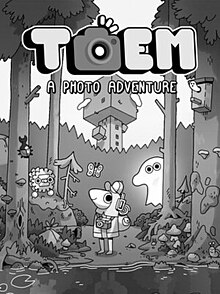
 TOEM on PS5
 Beasts of Maravilla Island on Switch
 Toem on Switch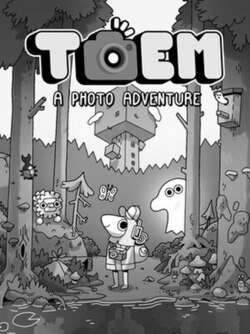
 Tales of Arise on Xbox Series X/S
 Ace Combat 7: Skies Unknown Deluxe Edition on Switch
 Puyo Puyo Tetris 2 on Xbox Series X/S
 Tekken 8 on Xbox Series X/S
 Tales of Arise on PS5










 Another SquareThought Site