

 Sep 2021
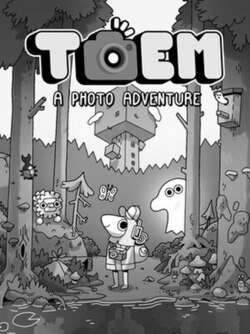

If you grew up reading game magazines in the 1990s you learned two eternal truths: a great gimmick can buy you attention, and presentation will either elevate that gimmick or expose it as a clever paperweight. TOEM, the debut from Swedish duo Something We Made, arrives like a thoughtful letter to that era - it trades polygon brawn for handcrafted charm and asks you to do something old-school and oddly radical: take pictures. This is not a shooter, a platformer, or the kind of sprawling epic that devours your life in contests of twitch and stamina. TOEM is tiny, polite, and fiercely confident in its little scheme: the camera is the joystick, the puzzle tool, and the narrative ladder. The pitch is disarmingly simple. You play a young photographer on a pilgrimage up a mountain to witness the eponymous phenomenon "Toem." Along the way you hop buses, collect stamps by solving vignette-sized problems for quirky townsfolk, and stitch together a road trip of small, human moments. That bare-bones description doesn't prepare you for how specific the game's personality is - somewhere between a hand-drawn pop-up book and a pocket-sized diorama, its world feels curated rather than generated. Critics have likened TOEM's compact, exploratory spirit to A Short Hike, and there's merit to the comparison: both games prize leisure, discovery, and the soft glow of an intimate world. But TOEM makes its stand with a camera and a monochrome palette, and that decision gives it a neat photographic identity that feels more like a carefully composed magazine spread than a quick snapshot. This review takes a hard look at the Switch edition. TOEM is written, photographed, and bound in monochrome, but it aims to brighten your mood. Does the camera gimmick hold up beyond a neat EGM sidebar? Does the Switch hardware curtsy to the game or stumble under its charm? Read on; we'll unpack the lens, develop the film, and then print the verdict.
TOEM's core gameplay loop is both elegantly minimal and deceptively clever. The overworld is viewed from a top-down perspective - think of the brisk top-down maps of old handheld RPGs - but when you bring up your camera the view snaps into a first-person, photographer's eye. This toggle is the engine of the entire experience. Objectives are delivered through NPC requests: they want you to capture a specific composition, reveal a hidden character by framing a scene the right way, or position objects within a photograph to complete a problem. The camera is not merely decorative; it becomes your puzzle-solving instrument, your lens to coax solutions out of a small cast of well-drawn characters and diorama-like environments. Progression is handled with a system that's charmingly low-drama. Help people, earn stamps. Collect enough stamps and the bus routes open to the next area. It's a tidy substitute for levels, XP bars, and the whole modern trappings of progress. You also get outfits for your protagonist, a small but welcome touch of customization that reinforces personality - if the '90s taught game designers anything, it was that cosmetic choice makes the player feel like the author of their own play-aloud diary. Puzzle design leans toward delight and experimentation rather than logic puzzles that chew and grind. Many of the solutions are visual: position a friend next to a landmark so the silhouette tells a joke; find a framed moment in a street scene that reveals an NPC's backstory; exploit depth or perspective to make disparate elements sit together in a single photograph. The camera tools are simple - zoom, frame, and snap - but the game layers these tools with micro-scenarios that reward curiosity. It's a design philosophy built around the idea that players should be free to fail and try again, which makes the title accessible to casual players and satisfying to explorers. There are, however, a few rough edges to consider. The game's puzzles trade on sometimes vague visual cues. A handful of tasks rely on the player making a leap of intuition rather than providing a scaffolded hint, and if you're the kind of player who wants airtight logic chains you will find moments of frustration. Multiple critical reviews and players have noted this: TOEM's charm is its strength, but occasional opacity in the puzzle solutions can leave you lingering in an otherwise breezy session. For Switch players, this is compounded by occasional framerate hiccups that Surface in dense areas; they don't ruin the game but they do remind you that this is an indie title brought to handheld hardware with a modest budget. The pacing is intentional and short. This is a compact journey, measured in vignettes rather than endless fetch quests. Expect a single playthrough to take only a few hours, with the kind of replay value that comes from savoring the soundtrack, hunting for every stamp, and taking the hundred tiny photos the game invites you to take. TOEM's length is one of its virtues: it doesn't outstays its welcome. It follows the old magazine rule - if you can't fill the spread, don't print the extra pages - and as a result the experience rarely feels padded. Beyond mechanics, the game's development backstory adds an affectionate indie gloss. Conceived by students Lucas Gullbo and Niklas Mikkelsen, TOEM grew from a university prototype into a finished game after winning a local Game Concept Challenge and using prize money and modest funding to iterate. That origin - a small budget, late-blooming core idea, four design revisions - is visible in the game's focused ambition. It doesn't try to be everything at once. It tries to be one well-crafted thing: a photography-driven adventure that nudges you to look, and in doing so, to care.
TOEM's visual identity is its signature and its most successful gamble. The game uses a monochrome, hand-drawn aesthetic that skews between 2D and 3D in a manner that evokes pop-up books and miniatures. Characters are stylized, environments feel like paper dioramas, and the act of framing a scene visually reads like composing a page layout. That design choice is more than a stylistic wink; it supports the gameplay. The camera-based puzzles rely on silhouettes, shapes, and negative space, and the stripped palette forces the player to pay attention to composition rather than color. On the Switch the art holds up remarkably well. Even with occasional framerate dips, the charm of the hand-drawn world is never lost. The Unity engine does a neat job of layering shadows and subtle depth cues to give tiny environments a sense of physical presence. Diagrams, signage, and environmental details act as micro-narratives; you can walk into a town and immediately read a dozen short stories in the placement of props and NPC attitudes. It's a brisk lesson in how restraint - a limited color scheme and focused visual language - can communicate more than a saturated palette and a thousand shaders. Audio complements the visuals. The soundtrack - provided by Jamal Green and Launchable Socks - is a soft bed of lo-fi, melancholy, and lighthearted chimes. It is designed for a calm tempo: the kind of music that encourages careful framing and slow exploration. That soundtrack, combined with clean UI and unshowy sound effects, turns TOEM into a portable zen garden. Critics and players praised this aspect, and the game's nomination for excellence in audio at the Independent Games Festival was deserved, even if it didn't take home the prize. Where the graphics falter is not in concept but in execution on the hardware. The Switch build took longer than planned - the team delayed release due to slow Switch development - and while the final port is competent, it sometimes shows its budgetary constraints. Dense scenes can stutter, and the frame drops are the only tangible way modern hardware reminds you this is an indie title, not a first-party blockbuster. Those hitches don't shatter the experience, but they're noticeable to players accustomed to smooth handheld performance.
TOEM is the kind of game a 1990s reviewer would have called a 'quiet gem' in margin notes and tucked away as a recommendation for the discerning reader. It's small, purposeful, and finished with an attention to tone that many larger projects forget. The camera mechanics are clever and consistently rewarding, and the game's world - inspired by pop-up books and built by two students who turned a prototype into an award-winning title - is full of personality. The Switch version is the ideal way to experience TOEM's pace; it invites handheld snapshots on a bus ride or a sleepy night at the kitchen table. Be aware, though: there are occasional framerate issues on Switch and a few puzzles that prefer intuition over clear instruction. If those two things make you twitchy, you might not enjoy every page of this photo album. If you like small, comfortable adventures that encourage curiosity instead of punishing it, TOEM will warm your heart and stay with you in the way a single great photograph does. The game won the BAFTA for Best Debut and earned positive reviews across the board - fair accolades for a title that understands what it wants to be. Scorewise, TOEM earns an 8 out of 10: not perfect, but a standout in its lane. It's proof that a focused concept, a sensitive soundtrack, and a willingness to restrain can make an indie game feel like a carefully curated magazine spread - neat, memorable, and worth shelving in a special place. For players who can appreciate a slow-developing smile over a glazing, bombastic finale, TOEM is a picture-perfect little adventure.
 Tintin: Destination Adventure on PlayStation
 One Piece Grand Adventure on PS2
 Taiko no Tatsujin: Don to Katsu no Jikū Daibōken on Switch
 Taiko no Tatsujin: Dokodon! Mystery Adventure on Switch










 Another SquareThought Site