

 Oct 2021


Nickelodeon All-Star Brawl arrives on Switch as a clearly engineered attempt to bottle the addictive chaos of platform fighters and sell it in a neon-branded can. Built in Unity by Ludosity with help from Fair Play Labs, the game swaps in 25 Nickelodeon icons - from SpongeBob to Aang - and drops them onto a handful of stages with a ruleset that's deliberately close to the Super Smash template. This review takes a technical scalpel to the Switch release: input and control fidelity, core systems, online implementation, and whether the visual and content compromises are justifiable on Nintendo's weakest current-generation hardware.
Under the hood, All-Star Brawl is a platform fighter in the classical sense: movement on a 2D plane, jump/double-jump mechanics, air-dash, and an emphasis on knockback-driven ring-outs. But the game isn't just paint-by-numbers. Ludosity's primary mechanical contributions are twofold: a consciously simplified control scheme and a handful of systems aimed at competitive clarity. Controls are mapped across three attack strengths - light, strong, special - and context-sensitive inputs (up, down, run combinations) modify outcomes. That design reduces input bloat for newcomers while preserving a framework for combos and tech. Light attacks are fast and combo-friendly; strong attacks trade speed for damage and knockback; specials are character specific, bringing the unique signature moves fans expect. The consequence of this triage is a learning curve that's approachable but with room for optimization and depth for players who pursue frame data and spacing. One of the more interesting mechanical choices is the 'strafe' function. It lets a character move in one direction while facing the other, meaning you can retreat without turning your hitbox away from an opponent. From a technical perspective, strafe reduces forced pivoting, offers defensive options that don't require awkward rotational cancels, and makes ranged or poking characters feel steadier during retreats. It's a small change but shifts neutral-phase design: zoning characters can maintain pressure at distance while backpedaling, which in turn affects stage control and the value of approaches. The game's knockback model is classic: damage percentage ramps up knockback. The trade-offs are well telegraphed and consistent, which is crucial for a platform fighter where spatial positioning and percent thresholds are everything. Grabs and throws work both grounded and aerially, and guard has no direct penalty beyond positional pushback. That choice (no shield-staleness or guard meter) simplifies defensive decision trees but also removes certain high-level mindgames present in other fighters - effective for reducing complexity, less so for high-tier meta variety. Movement options include eight-directional mid-air dashes and a standard run; there's a double-jump for recovery and combo extension. Stage design plays into movement tech: each stage has a distinct layout and some possess hazards. That variance feeds into match planning and stage pick/ban for competitive play. The Switch release supports local and online multiplayer up to four players, and crucially, uses rollback netcode on supported platforms. Rollback is the single most important technical feature for a modern fighting game's online viability, and its inclusion signals the devs' competitive ambitions. Modes are functional but sparse on launch. Arcade mode and an inventive 'Sports' mode (a Slap City-inspired Slap Ball variant where you knock balls into goals) add variety, while unlockable gallery images, music, and profile icons provide light meta-progression. Crucially, post-launch support filled several holes: free updates added new characters (Garfield and Shredder), paid DLC expanded the roster further, and a June 2022 patch introduced English voice acting and items. The early absence of VO and a thin suite of modes were common criticisms, and from a systems engineering point of view, they reflect scope and resource allocation choices - core mechanical polish prioritized over presentation and content depth. Another notable ecosystem factor is the PC modding scene: within days of release modders were altering gameplay values, adding costumes, and even injecting voice lines. While that doesn't directly affect Switch players, it does illustrate that the game's architecture and assets were mod-friendly on PC, and that the community was capable of iterating on balance and presentation faster than an official patch cycle.
Technically, All-Star Brawl is a Unity project with a deliberately cartoony aesthetic meant to echo Nickelodeon's 2D/3D hybrid IPs. Characters get their own stages, often themed tightly to their source material, which helps the game feel like a Nick reunion rather than a generic roster swap. On Switch, the visuals lean into clarity over spectacle: character models are readable, hitboxes and hurtboxes feel visually matched to animations, and stage hazards are generally clear in their telegraphing - all essential for a platform fighter where split-second spatial judgments matter. Where the presentation trips is in polish and breadth. Reviews frequently pointed out that the game felt 'a bit cheap' at launch due to the lack of voice acting and thinner array of cosmetic and UI flourishes compared to more AAA platform fighters. Those are legitimate criticisms, but they're less about rendering limits and more about content scope and production values. Unity's rendering pipeline on Switch is capable of better fidelity than what's on offer here, but Ludosity appears to have traded visual bells-and-whistles for consistent performance and tight animation timing. That's a defensible technical choice: stable frame timing and precise animation keyframes are more valuable in a competitive fighter than extravagant shader work. Performance specifics for Switch are not exhaustively documented in the provided materials, so I won't invent framerates or resolutions. What matters is that the game's asset and animation fidelity prioritize hit clarity, and that optimization seems to have been focused on ensuring competitive responsiveness rather than pushing console-specific visual features. Post-launch additions - costumes, VO, and DLC stages - improved the visual and audio package, and the eventual 'Ultimate Edition' physical release consolidated those improvements for Switch owners.
Nickelodeon All-Star Brawl on Switch is a technically coherent platform fighter with a clean mechanical spine, sensible design trade-offs, and a clear focus on competitive viability. Ludosity prioritized input clarity, a simplified but expressive control scheme, rollback networking, and predictable knockback and movement systems - the exact ingredients a serious platform fighter needs. That framework makes the game enjoyable and balanced enough to support both casual chaos and competitive optimization. The game's main weaknesses are not technical liabilities so much as production and content decisions: minimal launch-mode variety, the initial absence of voice acting, and a presentation layer that felt underbaked compared to competing products. Those are fixable with continued investment, and Ludosity demonstrated that by shipping updates that added VO, items, free characters, and paid DLC. The active mod scene on PC also suggests the core mechanical design was sound enough to attract community-driven refinement. If you want a mechanically satisfying, competitively-minded Smash-style fighter on Switch and you're willing to forgive a lean launch package that improved over time, All-Star Brawl is worth the price of admission. If you prioritize a deep suite of single-player modes, lavish presentation, or an out-of-the-box content buffet, this isn't the most polished pick on the market yet. As a technical foundation and a proof-of-concept for a Nick-branded fighting franchise, it earns a solid 7/10 - competent, promising, and ripe for expansion, but not quite the fully-featured knockout some expected.
 All-Star Baseball 2004 on PS2
 PlayStation All-Stars Battle Royale on PS3
 Sonic & Sega All-Stars Racing on DS
 ACA Neo Geo: Art of Fighting 2 on Xbox One
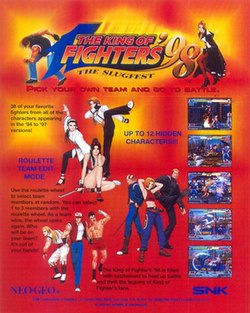
 ACA Neo Geo: The King of Fighters '98 on Xbox One
 Touhou Hyoibana: Antinomy of Common Flowers on Switch
 ACA Neo Geo: Art of Fighting on Xbox One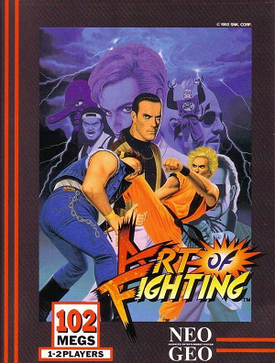










 Another SquareThought Site