

 Oct 2022


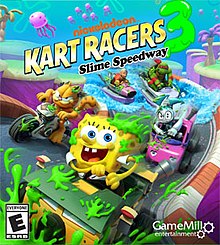
Nickelodeon Kart Racers 3: Slime Speedway is the third karting party in the Nicktoons universe, and on Switch it feels like a rowdy birthday party that sometimes trips over its own streamers. The core idea is everything you expect: familiar cartoon faces, colorful tracks, items to lob at your friends, and a generous helping of slime. If you are playing casually with mates, it delivers goofy fun. If you are chasing challenge, precision, and consistency, Slime Speedway asks for more than just button-mashing enthusiasm. This review zeros in on the challenge elements and the specific skills you need to climb the podium, and it keeps one eye on how the Switch version handles the whole slippery circus.
Slime Speedway doubles down on the karting fundamentals that separate casual chaos from skilled racing. Drift, boost, item management, track knowledge, and split-second decisions are your toolkit. First thing to learn: drifting is not optional. It is the core speed mechanic. You need to master the arc, release timing, and the subsequent boost windows. Unlike some kart games that reward button-spam drifting, this one rewards angle control and anticipation. Land your drift into a straightaway and that tiny speed edge compounds over several corners into a gap you can defend. Midair tricks are another small, high-skill lever. They are less flamboyant than a stunt show and more of a micro-optimization: time a ramp, pop a trick, get a tidy burst of speed. Skilled players chain drifts, tricks, and slime boosts to eke out milliseconds. If you want to compete in Time Trial or push up the leaderboards, that chainability becomes the difference between silver and gold. The pit crew system returns and is where strategic thinking shines. You can equip up to three active and passive abilities via pit crew characters. Activating those abilities requires filling a meter by driving through slime on the track. This creates an interesting risk-reward loop: do you swerve into slime to charge your meter and get a game-changing ability, or do you stick to the dry racing line and preserve your momentum? Advanced players learn to reshape their racing lines to graze slime patches without sacrificing speed, and to time ability uses to break combos or to deny opponents an opening. With up to 90 pit crew unlockables, there's a surprising depth of builds. Finding synergies between vehicle parts and crew abilities becomes a mini meta: are you stacking passive defense to shrug off item attacks, or are you maximizing burst to capitalize on slipstreaming? Vehicle customization matters. Karts and bikes now both exist, and parts alter speed, handling, and acceleration. On paper this sounds like stat tinkering for completionists, but in practice remapping your setup to the demands of a track is crucial. Tight, twisty tracks reward handling and acceleration; open tracks reward top speed. The Switch performance caveats mean that handling-focused setups are often kinder to the platform, since frame drops make precision top-speed timing hellish. A good player will rotate setups and learn which parts accentuate their driving habits. Track knowledge and memorization are fundamental. Slime Speedway includes 36 tracks, 16 from the previous entry and plenty of new material. Many tracks have transformation points where karts become watercraft and you continue without breaking pace. These transitions are not cosmetic: they alter braking zones, line priorities, and item placement. Learning where to drift before or after a transformation is textbook skill improvement. If you skip memorizing a key slime patch, or mistime a transformation, you will watch first place shrink into an explosion of item spam and regret. Items are a chaotic equalizer, but they are not purely luck. Effective item management is a skill. Some items reward defensive positioning: holding an item until an incoming projectile is imminent, then using it as a shield. Others are offensive and require prediction: throw a banana where you think an opponent will flee, or bait a counter with a fake lane change. Arena modes and the Slime Scramble Grand Prix force you to adapt: offensive aggressors need to learn when to commit and when to fold to avoid getting sandwiched by multiple opponents. Multiplayer skill scaling is interesting here. Local four-player splitscreen on Switch is a perfect testbed for social skills-trash talk, lane hogging, and opportunistic slime grabs. Online multiplayer supports up to 12 players and introduces different stressors: latency, variable player behavior, and match length. On Switch the game's reduced frame rate can blunt the effectiveness of fine mechanical skills online, because precision timing is harder when input and visual fluidity stutter. That does not remove the skill ceiling, but it raises the barrier for translating practice into consistent competitive success. Challenge modes such as Time Trial and the packaged Challenges are where the game reveals its teeth. Time Trial rewards ruthless optimization: the perfect drift angle, the exact trick timing, and the optimal pit crew activation become a choreographed routine. Challenges tend to be puzzleified races where you're forced to adapt to gimmicks or constrained kit choices. These modes reward patient repetition, good telemetry of where you lose time, and the humility to retool your kart and crew rather than blaming RNG. Progression is also part of the challenge. Unlocking new racers, pit crew, and parts requires winning cups in Slime Scramble, completing specific challenges, or buying with slime tokens. That economic loop encourages skillful play, because the better you get at the game modes, the quicker you build a toolbox of parts and crew that let you tackle harder challenges. If you like gradual mastery, the unlock system feels rewarding; if you prefer instant access to all toys, the grind might annoy you. Practical tips for Switch players chasing challenge: favor handling and acceleration parts on tracks with lots of corners; learn the slime meter locations so you can charge abilities without wildly deviating from speed lines; treat pit crew abilities as cooldowns you must time for pivotal moments; and, most importantly, practice clean racing lines in Time Trial rather than relying on items to bail you out. In short, Slime Speedway is less about pure chaos and more about disciplined chaos if you want to climb beyond kiddie karting.
Visually, Slime Speedway leans into Nicktoons nostalgia with bright, cartoony tracks and faithful character models. The art direction is playful, and the 36 tracks mix return favorites with new slime-splattered playgrounds that are fun to look at. Unreal Engine 4 provides the bones, and the game generally nails the personality of its roster. Full English voice acting for most characters adds polish and helps each racer feel alive. On Switch, however, presentation is uneven. Reviews and benchmarks called out a severely reduced frame rate compared to previous entries. That sluggishness does more than make things look less crisp; it impacts gameplay. Lower and inconsistent frame rates hinder your ability to time drifts, line up tricks, and react to fast item plays. In a game where small mechanical windows separate podiums, the Switch performance issues are the single biggest visual and mechanical blemish. If you own a more powerful console or play on PC, you will get the cleaner frame pacing that makes the art and the mechanics sing together. On Switch, the charm is still there, but it feels like it's trying to race in platforming shoes.
Nickelodeon Kart Racers 3: Slime Speedway is a competent kart racer with surprising depth under its candy-colored surface. The pit crew system, vehicle customization, and track variety create genuine strategic and mechanical challenges for players willing to invest time. The game rewards learning: better drift control, tighter trick timing, smarter pit crew management, and track memorization all pay dividends. However, the Switch version's frame rate issues blunt the reward curve, turning some of those fine mechanical skills into frustrating exercises in imprecision. If you are an 18-year-old who wants couch chaos with pals, a ridiculous roster of Nicktoons, and a decent toolbox of unlockables, Slime Speedway will give you hours of hooting fun. If you are the kind of player who folds your hands together, spends evenings shaving tenths off Time Trial runs, and enjoys optimizing builds, be prepared to suffer a bit on Switch or consider a smoother platform. For what it tries to do it mostly succeeds, but technical compromises and middling review consensus keep it from breaking the finish line with style. It's goofy, occasionally demanding, and worth a rental or a sale at a discount. If you take it seriously, it will take your patience back, politely and with slime on its shoes.
 Nickelodeon Kart Racers 3: Slime Speedway on PS5
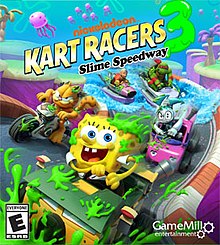
 Nickelodeon Kart Racers 3: Slime Speedway on Xbox Series X/S
 Roary the Racing Car on DS
 Team Sonic Racing on Switch
 Garfield Kart: Furious Racing on Switch
 Ben 10: Galactic Racing on PS3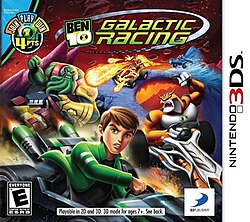
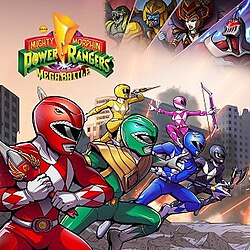
 Mighty Morphin Power Rangers: Mega Battle on PS4
 Mighty Morphin Power Rangers: Mega Battle on Xbox One










 Another SquareThought Site