

 Nov 2018


Nidhogg 2 on Switch is the sequel that trades the original's spartan paper-cut silhouette for something that looks like an aggressively illustrated medieval fever dream. Built in GameMaker Studio by Messhof and released on the Switch in November 2018, it preserves the original's one-screen, tug-of-war dueling loop while bolting on more weapons, a character creator, and a deliberately grotesque visual makeover. It remains a match-based, twitch-heavy fighting game designed first and foremost for local competitive play; as a technical package on the Switch it asks you to value input fidelity, hit resolution, and readable animations over single-player bells and whistles.
At the heart of Nidhogg 2 is a binary spatial contest: each player tries to push to the opponent's end of a linear arena and be devoured by the eponymous worm. The design is gloriously simple on paper, but delivered in-game through very precise mechanical systems. Movement options include walking, sprinting, sliding and leaping, and the entire equilibrium of matches leans on timing windows for attack startup, recovery, parry (deflect) frames, and the interaction of different weapons. Weapons added in the sequel - daggers, throwing knives and bows - change the engagement envelope more radically than a fresh coat of paint. A dagger shortens reach and favors quicker, closer exchanges; a bow extends the fight into ranged territory and forces players to wrestle with stage spacing; throwing knives introduce resource and zoning layers without abandoning the close-quarters knife-and-sword chaos the series is known for. From a systems perspective Nidhogg 2 is about deterministic interactions and readable risk. Hit detection is pixel-precise in the way a platform fighter's collision needs to be: tiny differences in horizontal position can mean the difference between a parry and a death. That makes frame consistency and input latency central to the experience. On Switch, that translates to two developer-imposed requirements: the game must keep a tight input-to-action loop so slide cancels, backwards-leap parries, and blink-of-an-eye ripostes feel fair rather than lag-misjudged; and the animation readouts for attack telegraphs must remain uncluttered despite the sequel's more elaborate artwork. Nidhogg 2's gameplay loop rewards micro-optimizations: advancing under feints, baiting a parry with a dagger feint, or committing to a longbow shot and punishing the whiff. The character creator is cosmetic in mechanical terms, but it plays into spectator readability by allowing players to stand out in chaotic matches. Local multiplayer is where the game's technical and design decisions coalesce best. The original concept was a spectacle around a single screen; the sequel leans even harder into that by increasing on-screen detail so an audience has 'things to look at.' That shift carries technical trade-offs. Higher-resolution assets and more detailed backgrounds demand more VRAM and careful culling of off-screen sprites to preserve frame timing. Since the Switch is a hybrid console with limited GPU bandwidth compared to a desktop, the port needs to balance art fidelity with consistent 60Hz logic updates. The game's pugilistic nature punishes any variance: a dropped frame or micro-stutter can invalidate a parry window, and therefore a round. For players who care about competitive integrity, the Switch build's internal tick rate, controller polling cadence, and how it maps Joy-Con or Pro Controller inputs to the game's action are critical. Nidhogg 2's design minimizes ambiguous states - players are either in an attack, a deflect, or a neutral posture - which helps the engine avoid complicated state desynchronization that more complex fighters often suffer. Solo players should temper expectations. The documentation and reception both note that the meat of Nidhogg 2 is multiplayer. Single-player offerings are sparse and feel like warm-ups or practice rooms rather than a full campaign. Technically the AI's primary function is to provide consistent reaction timing and move variety as a sparring partner, not to replace human ingenuity. The real technical challenge the game addresses is making each one-on-one interaction feel consequential, which it achieves by keeping inputs tight, animations clear, and the consequences of actions immediate and legible.
The sequel deliberately abandons the minimalism of the original and embraces a higher-resolution, more detailed art direction designed by Toby Dixon. Technically this is both a UX and performance choice. From a UX standpoint, richer sprites and background tableaux increase the amount of visual information for spectators and participating players, which is essential for a title that courts LAN nights and streamable matches. The extra detail helps separate hit animations from decorative noise when implemented well: sword arcs, blood splatter, and ragged silhouettes can communicate so much more about intent than a single flashing pixel. On the performance side the art overhaul changes resource allocation across the stack. GameMaker Studio - the engine used for development - is extremely accessible for 2D work and cross-platform ports, but it imposes certain constraints on how aggressively an artist can push texture memory and draw calls before the platform's renderer becomes the bottleneck. For a Switch port, careful asset atlasing, sprite trimming, and efficient use of palette swaps were likely necessary to keep the runtime responsive. Animations must be baked to preserve exact frame timing because the hitboxes are often tied directly to specific frames; frame-perfect parries and counters depend as much on art pipeline choices as on input handling. The art style's grotesque, high-contrast characters and Mux Mool's soundtrack (a tech-house-ish pulse underpinning duels) together form an audiovisual identity that makes each match feel like a tiny theater piece. That theatricality is an intentional tech-design coupling: richer visuals demand careful rendering budgets, while the audio cues serve as additional telegraphing for attacks and, crucially, add perceptual feedback that helps players calibrate timing. The net result on Switch should be judged by how consistently the build maintains animation fidelity and audio-visual synchronicity under local multiplayer stress.
Nidhogg 2 on Switch is a surgical refinement of a compact competitive idea. Technically it is built to put precision first: exacting input windows, frame-tied hitboxes and readable telegraphs underwrite the game's competitive integrity. The sequel's graphic leap is not a mere cosmetic flourish - it is a conscious trade that seeks to render matches more legible and entertaining for spectators, at the cost of a tighter performance budget on consoles. If you cherish local competitive nights and want a game where micro-decisions and frame timing are everything, Nidhogg 2 delivers on Switch, provided the port holds its frame rate and controller polling steady. If you are a solo player after single-player depth, the package will feel thin; the tech shines brightest when two friends (or enemies) are sharing the same screen. The game's Metacritic reception and award nominations reflect this balance: critics recognized a deeper, more layered sequel that still remembers its one-screen roots. For technical-minded players, the important takeaway is this: Nidhogg 2 is an exercise in precision engineering disguised as a blood-splattered party game. On Switch it becomes a portable duel box - delightful, exacting, and best experienced with someone across the table and a spare controller at the ready.
 ACA Neo Geo: Art of Fighting 2 on Xbox One
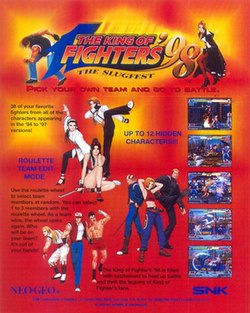
 ACA Neo Geo: The King of Fighters '98 on Xbox One
 Touhou Hyoibana: Antinomy of Common Flowers on Switch
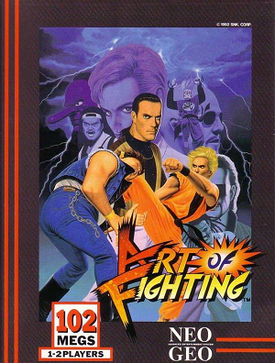
 Art of Fighting Anthology on PS2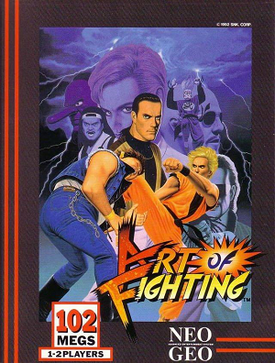










 Another SquareThought Site