

 Sep 2018

If you like games that boil combat down to one razor-sharp idea and then mercilessly test your ability to not be a walking target, TowerFall on Switch is your kind of cruelty. It dresses itself in pixel-y medieval backdrops and cute little sprites, but beneath that adorable exterior is a tournament-grade demand for split-second decisions, spatial awareness, and a cruelly honest referee named physics. The Switch port brings the original's couch brawling to handhelds and big-screen sessions alike, and the core gameplay still feels like someone took Super Smash Bros, Spelunky, and Nidhogg, then told them to hold hands while they beat you at archery.
TowerFall is a four-player archery arena where the win condition is gloriously simple: shoot, stomp, or outplay everybody else until you're the last person standing. That simplicity is a lie, but a very fair one. The game strips away complex HUDs and long reload animations and leaves you with a handful of brutal systems that interact in beautifully nasty ways. First, resource management. You do not have infinite arrows. Every shot is a commitment and your arrow stock is both ammo and poker chip. When you shoot you create a physical resource that other players can pick up and use against you, or you can catch to deny them. Learning when to fire and when to hold is more chess than twitch; waste arrows and you become a sitting duck, hoard them and you lose pressure and initiative. The fact that arrows can be grabbed off the floor and caught in midair adds a layer of supply-line cat-and-mouse to the chaos. Good players will feint, bait, and punish the greedy. Aiming is intentionally constrained: shots register in the eight cardinal and ordinal directions rather than giving you the full 360-degree precision of a modern shooter. This might sound limiting, but it refines skill into something tangible. Mastery comes down to impeccable timing and positioning, not pixel-perfect analog aiming. You learn to lead opponents across platforms, to anticipate their recovery, to angle shots so they bounce off a wall and become suicidal little missiles. Catching arrows is a muscle memory skill that separates competent players from the ones who yell 'lag' after every death. Movement and platforming are deceptively important. The maps are compact and vertical, with platforms, ledges, and environmental hazards like lava and spikes. Jump-stomps are a classic kill option; you can leap and press down to stomp an incoming enemy into the floor. That single-frame window of stomping versus getting stomped teaches you humility very quickly. Mobility skills include not only jumping and dashing but also using power-ups intelligently. Shield power-ups can turn a suicidal charge into a bait-and-switch, and wing power-ups grant aerial control that fundamentally alters rock-paper-scissors engagements. The game rewards yomi, the Japanese fighting-game concept of mind games and reading your opponent. Is your opponent going to waste an arrow to try and ladder up? Do they expect you to catch and punish? Will they feint a jump to bait a stomp? Experienced TowerFall players win more often by predicting mistakes than by out-aiming people. This makes the competitive scene interesting: the mechanical skill floor is approachable, but the ceiling is deep. Matches can tilt on a single misread. For solo players, TowerFall's single-player modes feel like practice ranges for the real thing. Break-the-target style challenges and Trials teach you platform navigation and shot placement, and Ascension added Quest mode for score attack-style survival. These modes build mechanical skills but they don't replace the intensity of playing human opponents. TowerFall is a social game at heart; it shines when everyone is within elbow reach, yelling and laughing as arrows whiz and egos evaporate. On Switch specifically, portability means you can easily drag a game to a party, dorm room, or couch. Local multiplayer is the meat and potatoes; however, if you were hoping to show off in ranked online games you might be disappointed, because TowerFall has famously shunned online multiplayer. That absence actually sharpens the skillset it emphasizes: no netcode excuses, only local mastery and the ability to psych out the person whose cat just walked across their keyboard.
TowerFall dresses its ruthlessness in very pretty pixels. The art team polished the sprites into expressive little archers whose idle animations and death flops tell you whether your opponent is smug, panicked, or about to throw their controller. Backgrounds are atmospheric without being distracting: stone castles, lava pits, and medieval parapets set the tone and help you quickly parse stage layout. Visual clarity is a strength here; you always know where yourself and others are, even as chaos spirals. The visual feedback for arrows and power-ups is crisp, which matters because the game communicates a lot through particle effects and tiny animations. Good hits land with satisfying pop sounds and simple screen shake, and the stage hazards are readable so you feel punished but not cheated. The Switch version includes characters borrowed from other Maddy projects, which is a cute nod for fans and doesn't affect the competitive flow, though it does make the roster feel like a little indie family reunion.
TowerFall on Switch is brutally honest about what it wants to be: a local multiplayer crucible that rewards timing, prediction, and resource smarts more than raw aim. The challenge curve is kind to beginners but unrelenting to anyone who wants to get good. Expect to learn how to manage arrows like they are oxygen, to perfect catches that feel miraculous, and to develop psychological warfare tactics that are legally indistinguishable from cheating in some circles. The single-player additions and expansions give you structured practice, but the game truly comes alive in couch sessions where communication, trash talk, and fast reflexes collide. If you prize depth that arises from tight systems rather than flashy complexity, TowerFall will be a revelation. If you exclusively want massive online ladders, it might frustrate. For parties, late-night rivalries, and the kind of muscle-memory practice that trains you to think two moves ahead, this is one of the best local fighters you can put in a Switch. It will punish you, it will make you laugh, and it will make you suspiciously proud when you pull off a three-arrow economy comeback. Just bring controllers, friends, and a willingness to be humbled in the most entertaining way possible.
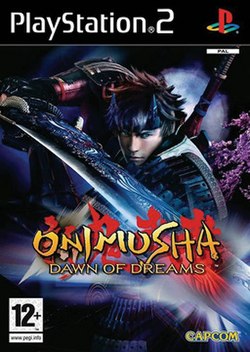
 Onimusha: Dawn of Dreams on PS2
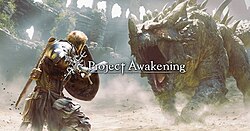
 Project Awakening on PS4
 Orphen: Scion of Sorcery on PS2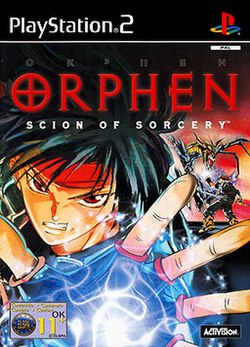










 Another SquareThought Site