

 May 2018


Nihilumbra is the sort of indie game that sneaks up on you like a quiet friend who then reveals they can juggle chainsaws - unsettling, impressive, and somehow you're now invested. Originally born on mobile, remastered and pushed onto multiple platforms, it arrived on Switch in 2018 for anyone who wanted a moody little platformer that hands you paint as a toolkit for survival. You play as Born, a shadowy little protagonist who wanders five distinct worlds, each gifting you a new colour that permanently changes how the environment behaves. Those colours are the puzzle engine: paint the floor, paint the wall, and the world obeys. The setup is simple, but the challenge is not. If you like platforming that doubles as a logic test, and enjoy learning whole new mechanics with each chapter, Nihilumbra is basically a tiny, melancholic bootcamp for your brain and thumbs.
At the mechanical heart of Nihilumbra is a delightful one-sentence idea: you can paint the terrain to alter physics and interactions. That single conceit blooms into a steady string of tightly-crafted puzzles and platforming challenges. The game is split into five worlds - Frozen Cliffs, Living Forest, Ash Desert, Volcano, and The City - and each world gives Born one new colour ability. Blue makes surfaces slippery, green gives bouncy properties, brown makes things sticky and slow, red can burn enemies and objects, and yellow conducts electricity. Learning to combine those effects is the core of the game's challenge. The challenge curve mostly trades on two things: learning new rules and executing them under platforming pressure. Early levels are tutorials in disguise; you get introduced to a colour and its effect, then asked to use it in increasingly clever ways. The moment you stop thinking of the environment as static and start seeing it as a toolbox, the puzzles open up. That mental shift is the first skill you need: pattern recognition and systems thinking. You're not just timing jumps anymore - you're mentally layering physics modifiers on top of geometry and predicting outcomes. Precision platforming is another constant. Nihilumbra isn't about twitch-heavy wall-climbing or marathon-speed runs, but the game rewards clean inputs. Surfaces that become slippery by painting them blue will betray sloppy timing, and sticky brown tiles will punish overly eager hops. This means you'll need good timing and fine motor control, especially in sections where you alternate between colour effects mid-jump. Expect to re-run short sequences as you learn the exact timing windows; the game's checkpoints are generous, but the satisfaction comes from getting a sequence right on execution. Resource management and planning also sneak in. While the Wikipedia summary notes you paint by touching the screen, the strategic element is that you must choose when and where to lay down a colour to create the right chain reaction. Puzzles that require multiple effects in sequence force you to plan your route - sometimes retreating to paint a platform, sometimes saving a burn for a monster you'll encounter later. That forethought turns some brilliant moments into little mini heists: paint here, lure the enemy there, ignite that thing, bounce your way out. Enemy encounters raise the stakes. Early on enemies are hazards you must avoid because Born has no offensive options. Later, with red paint, you get a direct answer to some foes: burn them. But defeating a monster is rarely as simple as slapping red everywhere. Often you'll have to manipulate the terrain to get the enemy where your red will be effective, or combine sticky and bouncy tiles so the foe becomes vulnerable. This blends combat with puzzle design and nudges players toward creative solutions rather than brute force. Adaptability is the unsung skill the game demands. Every world's colour reorients how you approach platforming. You might build muscle memory for a section using slippery blue surfaces, and then, five minutes later, the game expects you to switch gears for sticky brown physics. The quicker you can switch modes - from ''bounce on a green spring'' to ''slow, careful brown creep'' - the less frustrating the spikes feel and the more clever the solutions appear. Difficulty spikes are present, but more often in the form of layered puzzles than unfair platform traps. Nihilumbra's designers prefer to test your cognitive flexibility rather than simply throw impossible jumps at you. That said, some levels ask for near-perfect execution of a plan; if you're the type who hates repeating a sequence because you flubbed one tiny timing window, be prepared to exercise patience. Clear communication of each colour's effect helps here: once you grok the rule, the rest is practice and polish. Finally, the game rewards experimentation. Not every puzzle has a single obvious solution; the paint mechanic invites players to try wild combinations. That freedom is both a blessing and a challenge. It's a blessing because it makes the game feel alive and playful, and a challenge because you must evaluate dozens of possible interactions to find the elegant one. If you enjoy lateral thinking and low-stakes trial-and-error, you'll thrive. If you prefer linear instruction manuals, the game's open-ended use of effects may feel like a mildly judgmental teacher handing you a box of crayons and saying, ''Go.'"
Nihilumbra's aesthetics are understated but effective. The remastered versions (the game was polished for desktop releases before being ported elsewhere) added updated graphics and soundtrack and even narration in some builds, which gives the whole experience a cinematic polish without turning it into an art-demo. The worlds each have a distinct palette - icy blues for Frozen Cliffs, lush tones for Living Forest, ashy ochres for Ash Desert, molten reds in Volcano, and industrial yellows in The City - and those palettes do more than look pretty. They make it immediately obvious what kind of gameplay behaviour you're likely to encounter, which is an important design choice for a game built around environmental rules. Visual clarity matters when you're about to paint a tiny patch of terrain and hope physics cooperate. Animations are simple but readable, which matters more than flash when split-second platforming and physics are involved. Enemies are visually distinct enough that you can prioritize threats on sight, and the painted surfaces have clear visual feedback so you never wonder what effect you've applied. On Switch the resolution and frame rate are stable enough that the game's precision-oriented demands feel fair rather than jittery. The soundtrack is quietly atmospheric and the narration (when present) adds a melancholy flavor that keeps the stakes emotionally grounded rather than turning the game into a mere mechanical puzzle box.
If you're buying Nihilumbra on Switch for easy pick-up-and-play comfort, you'll get some of that, but you'll also get something smarter: a compact, well-designed test of timing, planning, and creative problem-solving. The challenge isn't masochistic; it's pedagogical. Each new colour is a lesson and each level an exam where the grading curve rewards adaptability and cleverness. Expect to practice precise inputs, think about cause-and-effect, and combine physics effects in ways that feel downright mischievous. For players who relish the blend of platforming and puzzles, Nihilumbra is an emotionally resonant, brain-tingling package that earns its positive reviews. It's not the longest title you'll play, but it's a tight, thoughtful ride that will sharpen your timing and your ability to see the world - or at least the in-game terrain - as something you can bend to your will, one painted brushstroke at a time.
 Twinbee Taisen Puzzle Dama on PlayStation
 Tokimeki Memorial: Taisen Puzzle-Dama on PlayStation
 Professor Layton and the Last Specter on DS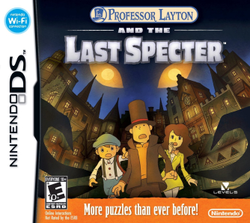










 Another SquareThought Site