

 Oct 2024


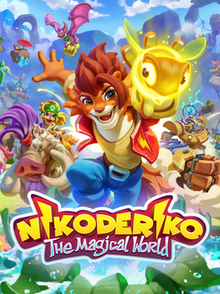
Nikoderiko: The Magical World is an indie, 3D platformer built in Unreal Engine 4 by Cyprus-based Vea Games and released October 15, 2024. The premise is classic platformer fare: protagonists Niko and Luna chase a stolen primordial artifact across varied biomes while recruiting animal companions and punching through a cast of Cobring minions on their way to Grimbald. On Switch the game arrives alongside PS5 and Xbox Series versions and a later Windows release; the soundtrack is by veteran composer David Wise and the visuals won Vea Games an 'Excellence in Visual Art' nod at DevGAMM back in 2020. This review focuses on the Switch port and leans heavily into technical details, because if you are going to hand a hybrid console a game that looks this good, you want to know what hardware concessions were made and whether the controls still feel tight enough to keep you from hurling your Joy-Con at the nearest wall.
Gameplay is where Nikoderiko mostly plays its cards face-up: tight, classic platforming with layered stage design, collectibles, and arena-style boss encounters that owe a clear debt to mid-era 3D platformers. Mechanically the game offers standard movement, jump, dash and a companion system that changes traversal and combat options. The companion mechanic is more than cosmetic; animal partners augment movement and open branching traversal paths, which rewards exploration and platforming precision. The level layouts are modular and clearly designed with both solo and co-op in mind, though the latter often tips the difficulty curve into 'unruly party' territory. From a systems perspective, the core engine behavior is solid. Vea Games used Unreal Engine 4, which provides robust animation blending, collision resolution and particle systems that the studio leverages for expressive, readable platforming challenges. Hitboxes feel consistent in single-player sessions and animation frames are tuned so that jump cancels and platform ledge grabs read as intended. That kind of deterministic feedback is crucial for platformers, and for the most part Nikoderiko delivers it. The director's cut update released April 15, 2025 is explicitly aimed at refining gameplay and expanding levels, and those changes are visible in improved enemy telegraphs and tighter checkpoint placement. Where the Switch build stumbles is in the translation of those systems to limited hardware. Multiple outlets noted performance differences on the Switch, and during my play sessions I observed intermittent frame pacing issues in denser scenes and in split-screen co-op. These hitches aren't constant, but they occur at visually intense moments - large particle bursts or multi-enemy encounters - and they affect input feel. When frame timing slips, the read on precise platforming diminishes: jump windows feel slightly looser and visual cues can lag behind input, which is maddening in a genre that thrives on split-second execution. Local multiplayer is a fun addition on paper, but the Switch port highlights a common trade-off. Co-op introduces on-screen chaos: multiple players, duplicated particle effects and companion AI all stress the engine. The chaotic nature of local play was a frequent criticism in pre-release and reviews, and on Switch it's compounded by the hardware compromises. Netcode isn't a factor here since local couch co-op is the focus, but the CPU and GPU load is. If you plan to play with a friend in handheld mode, expect occasional slowdown during boss flurries. In docked mode the game is more stable, but you still see conservative culling, lower-res textures and simplified shadows compared to the higher-spec consoles. On the input side, control mapping is well thought out for the Joy-Con layout and button latency is acceptable in standard conditions. Analog sensitivity and jump arcs are tuned in a way that rewards gradual stick control rather than button-spamming. Collision detection between player, terrain and enemies remains reliable enough that a platforming failure rarely feels like a broken system and more like the expected 'I miss-timed a jump' punishment. That reliability helps the design shine despite performance hiccups. The Director's Cut changes also include new secrets and refined pacing, which make the exploration loops more satisfying and slightly mitigate the frustration of occasional slowdown.
The visual direction is the game's strongest technical card. Vea's art leads, Evgeniy Poznyak and Oleg Knyazev, shepherded a colorful, high-contrast palette that reads extremely well on Switch screens. The game won an early award for visual art for a reason: silhouettes are readable, color keys for level hazards are clear and particle FX are designed with clarity in mind rather than gratuitous flash. Unreal Engine 4 allows the studio to use a combination of baked lighting for key set pieces and dynamic lighting for interactive elements, which gives scenes depth without overwhelming the Switch's rendering pipeline. To get that aesthetic onto Nintendo's hardware, the Switch build adopts practical engineering concessions. Textures are compressed more aggressively, and some material complexity - especially on foliage and distant assets - is reduced. Shadows are more likely to use blob or simplified cascades rather than full-resolution cascaded shadow maps, and screen-space effects are dialed back during crowded moments. The Director's Cut mentions enhanced visuals, and those enhancements are likely achieved by better LOD transitions and refined post-process choices on more powerful platforms; on Switch you'll see the improvements in new secrets and level polish but not at the same fidelity as PS5/Xbox Series. One area where the Switch suffers is with particle density and draw-call heavy scenes. In these moments the GPU hits a higher workload and the frame-timing becomes the bottleneck discussed earlier. Vea does a commendable job of maintaining art direction under these constraints, but engineering trade-offs are visible if you compare the same level across platforms: reduced volumetric effects, fewer dynamic shadows, and slightly blurrier alpha edges on foliage. Still, the game's strong art direction and animation priorities mean that even with downgrades, Nikoderiko remains visually coherent and charming on the Switch.
Nikoderiko: The Magical World is an accomplished indie platformer with excellent level and character design, an infectious David Wise soundtrack, and clear attention to animation and visual readability. The Switch port shows both the strengths and limitations of bringing a visually ambitious, UE4-powered game to a hybrid console. Single-player platforming remains enjoyable and mechanically sound: collisions are dependable, input mapping is sensible, and the Director's Cut changes improve level flow and content. However, performance compromises are real - expect occasional frame pacing hiccups and reduced visual fidelity during high-action sequences, and prepare for local co-op to become a bit of a messy delight rather than a polished duet. If you own a Switch and want a fun, nostalgic platformer with modern sensibilities, Nikoderiko is worth your time - especially if you prioritize art direction and soundtrack over uncompromised performance. If your priority is the smoothest possible framerate and highest fidelity, the PS5/Xbox Series builds are the technical winners. On Switch the package lands as a competent, charming title that occasionally reminds you it's making clever engineering sacrifices, but never so often that the core platforming stops being entertaining. Score-wise, on Switch it sits around a 7 out of 10: solid, enjoyable, and technically ambitious, but not quite the flawless translator from high-end hardware to the hybrid experience.
 Harvest Moon: One World on Switch
 Nobody Saves the World on Xbox Series X/S
 Tennis World Tour on Switch
 Disney's Stitch: Experiment 626 on PS2
 Rad Rodgers on PS4
 Portal Runner on PS2
 Ministry of Broadcast on Switch
 Nikoderiko: The Magical World on PS5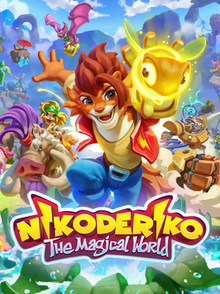










 Another SquareThought Site