

 Sep 2025


In an era when multiplayer meant gathering around a living-room television with a crate of drinks and an opponent who took button-mashing as a personal philosophy, Nippon Marathon arrives like a cheeky postcard from that golden age. Developed by the British studio Onion Soup Interactive and brought to the Switch by PQube, this party racer wears its ambitions plainly: provoke chaos, provoke laughter, and provoke the sort of table-flipping arguments that used to accompany split-screen domination. The critical consensus has been mixed - Metacritic pegs the Switch version at 44/100 - yet there is an almost cultish fondness for the game among those who play it with friends. Nintendo Life called the visuals and the physics "an acquired taste" while lauding the multiplayer; Steam users, by contrast, have embraced the title enthusiastically, delivering a very positive reception. As a reviewer thinking back to the earnest write-ups of the 1990s, I am inclined to evaluate Nippon Marathon on two fronts: its pedigree as a party game intended to be consumed socially, and its performance as a piece of interactive design in the often less-forgiving solo context. This is not a simulator of athletic prowess; it is a toybox of mayhem that occasionally forgets it promised a race. If you want a calm, measured sprint with photo-finish precision, you will not find it here. If you want bedlam, laughter, and a title that rewards throwing controllers at the right moment (metaphorically, please), Nippon Marathon has a case to make.
Nippon Marathon bills itself as a party/action/racing hybrid and, at its heart, that label is accurate. The game features both single-player and multiplayer modes, and in its original form mixes racing with mini-games that punctuate the proceedings. The Turbo arcade incarnation, released in 2021, strips the package back to its competitive core: multiplayer racing courses only, no mini-games, plus two extra characters - Hato and Princess - and refreshed art courtesy of Tatsuya Ishikawa, famed for his work on Numan Athletics. Playing Nippon Marathon on the Switch, you quickly realise the title is designed around unpredictable interactions rather than textbook racing mechanics. The controls and physics are intentionally oddball; Nintendo Life described their nature as "an acquired taste," which is a charitable way of saying the game will occasionally behave like a mischievous cousin who refuses to follow the rules. This is where the game's personality emerges. Footraces become slapstick routines: collisions, physics quirks and the minute-to-minute absurdities are the point. The inclusion of mini-games in the non-Turbo release aims to pad out the party experience with short bursts of different rulesets, which is welcome for variety but can make the overall package feel a touch scattered. Multiplayer is where Nippon Marathon genuinely sings. The Switch's portability and split Joy-Con accessibility fit the game's social DNA: a quick match with friends or strangers devolves into raucous competition in the best way. The Turbo version's focus on multiplayer feels like an admission of what works and what does not; when stripped of single-player padding the core races sharpen into memorable encounters. Critics and players disagree on longevity - the Metacritic score suggests many found the experience shallow - but for short bursts, particularly in a group, the game delivers fun that is difficult to quantify. Single-player suffers by comparison. The game's physics and collision systems that make local matches so entertaining become a source of frustration when one is trying to learn tracks and master timing. There is limited reward structure to push a solo player into monogamous devotion, and progress feels less satisfying when every triumph can be credited as much to chance as to skill. That said, for players who enjoy the novelty of mastering a deliberately unruly control scheme, Nippon Marathon offers the type of challenge that is equal parts memorisation and improvisation. It is worth noting that Turbo's arcade-only approach removes the mini-game experiments and leans into streamlined competitive courses. For fans of head-to-head chaos who do not care for the single-player fluff, Turbo represents the more focused experience. Additional character models and the Namco-linked art direction lend a slight veneer of classic arcade pedigree, even if the underlying systems remain defiantly modern in their weirdness.
Visually, Nippon Marathon refuses to masquerade as a technical showcase. Nintendo Life's "acquired taste" line applies to the aesthetics as much as the physics: the game opts for a cartoony, exaggerated look rather than realism. Turbo's artwork, refreshed by Tatsuya Ishikawa (whose credits include work for Namco), introduces a sheen that nods to arcade poster art of old - bold lines, playful silhouettes and character designs that read well at a glance. This is useful in multiplayer, where clarity of character and environment helps the chaos remain comprehensible. On the Nintendo Switch specifically, the game holds up acceptably. The switch between docked and handheld modes does not fundamentally alter the experience, though framerate and visual fidelity are less important here than the responsiveness of controls and the legibility of on-screen action. For players who came of age with sprite-scaling and chunky polygons, the aesthetic will likely register as charming rather than lacking. Players who demand cutting-edge visuals, however, will find the package wanting. It is a deliberate artistic choice, and one that serves the game's party ambitions: clarity of expression and exaggerated animation trump the pursuit of photorealism.
Nippon Marathon on Switch is a polarising title because it wears its intent on its sleeve: this is a party game first, a racing game second, and a solo endurance trial last. Critics were split; Metacritic's Switch aggregate sits low, and reviewers pointed to uneven mechanics and a loose approach to physics as sticking points. User reception on Steam suggests the opposite - a devoted player base that celebrates the game's chaotic moments. For those who take game nights seriously, or for anyone who enjoys slicing 20 minutes out of an evening for unpretentious, noisy fun, Nippon Marathon makes a compelling case. If you are buying for the disciplined single-player experience, manage your expectations. If you are buying for the sort of multiplayer silliness that produces long-term, fond memories, grab an extra set of Joy-Con and a willing friend; the Switch is a fine home for this manic footrace. The Turbo arcade release, the extra characters, and the Namco-linked art nod reinforce that Nippon Marathon is happiest on a cabinet or a living-room floor with people who laugh when things go sideways. It is not flawless, and at times it feels like a game still finding its balance, but in an age of hyper-serious, feature-bloated releases, its reckless commitment to slapstick competition is oddly refreshing. In short: bring friends, leave your need for precision at the door, and enjoy the chaos.
 Tetris X on PlayStation
 Tokimeki Memorial: Forever With You Emotional on Switch
 Disney's Chicken Little: Ace in Action on PS2
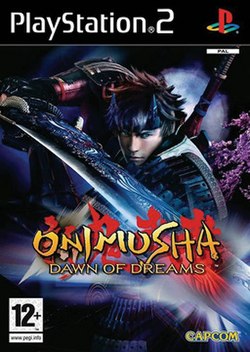
 Onimusha: Dawn of Dreams on PS2
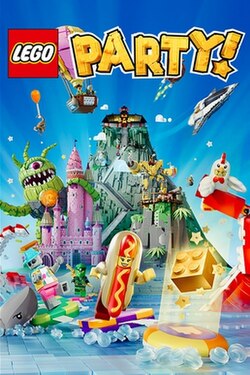
 Lego Party on PS4
 Action Man: Operation Extreme on PlayStation










 Another SquareThought Site