

 Jan 2022
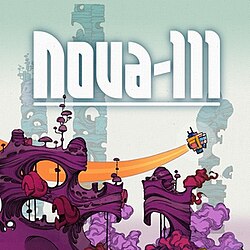

Nova-111 is the kind of small, brainy game that wears a spacesuit and refuses to take off its helmet even when the party starts. Developed by Funktronic Labs and brought to Switch by No Gravity Games, it landed on Nintendo's hybrid machine nearly seven years after its original 2015 debut on other platforms. The ostensible plot is simple: you pilot an orange spaceship across miniature planetary arenas to search for lost scientists in the aftermath of something the game politely calls 'science experiments.' What the blurb doesn't promise is the game's real trick: treating every tile, every alien obstacle and every power-up like a character in a micro-drama. If you like puzzles that read like tiny, polite tragedies, Nova-111 has a whole fleet of them.
At heart Nova-111 is a turn-based puzzle-action hybrid. You point your orange ship, you shoot, you move. Each planet is a handcrafted puzzle-room that layers movement, line-of-sight shooting and a collection of special abilities into a surprisingly theatrical performance. The ship itself becomes the protagonist. Call her Nova for shorthand: she begins as a bright, eager probe-nimble, cheerful, and a little overconfident about what a little thrust and a laser can fix. Early planets let Nova learn the ropes, meet the supporting cast of obstacles and pick up gadgets that feel like plot points rather than inventory clutter. The lost scientists are the game's emotional engine, even though they're more hinted at than fully CGI-ed into existence. Each scientist represents a motif: the Idealist lost to hubristic experiments, the Absent-Minded Professor who left clues in the wrong places, the Mad Researcher whose lab is an obstacle course of poorly tethered inventions. You don't read long soliloquies from them; instead, their arcs are told through level design. Unlocking a scientist is less a narrative reveal and more a cathartic puzzle resolution. Rescue one and you get the sense of an arc closing: the cunning puzzle that kept you from them is resolved, and Nova's world gains a new small truth. It's a clever way of making story arcs out of mechanical hurdles. Where the game really earns its keep is in forcing you to think in new spatial ways. Reviewers who liked it praised how it makes players reinterpret movement and shooting constraints. That praise is deserved: the level design is meticulously layered so that an early ability can be reframed as a devastatingly useful tool in a later context. There is, however, a flip side. The abundance of abilities and the somewhat awkward way they stack can make Nova feel like a freshman with too many gadgets: promising, a little unwieldy, and occasionally hard to master. Several critics noted a 'cumbersome amount of abilities' and a tendency toward small design mistakes that keep the whole from reaching perfection. You'll find moments when the game seems to overstay its welcome on an idea, or when the lacklustre auto-save leaves you cursing after a long, brilliant run is lost. Difficulty is a patient teacher here rather than a tyrant. Nova-111 isn't piled with optional timers or reflex checks; it wants you to puzzle your way out of its rooms. That makes for satisfying 'aha' moments and the occasional cruel puzzle that feels like a professor setting a final exam with a smile. The single-player focus keeps the cast tight and the stakes personal: this is Nova and the universe of small tragedies and minor triumphs she drifts through, and the game's pacing treats each scientist rescue like a scene change in a one-ship play.
Visually Nova-111 prefers the charmingly compact to the flashy. The Switch port retains the game's bright, carefully chosen palette; reviewers praised its 'beautiful colours' and the way each planet reads like a postcard from an abandoned lab. The aesthetic is minimalist but affectionate: simple shapes, clear visual cues and a retro-futuristic vibe that lets level hazards and power-ups communicate their intent without needing a user's manual. This clarity is part of the game's personality. Levels are 'characters' too, with colour schemes and layout choices that suggest mood-sterile blues for laboratories that went wrong, warm oranges for safer zones, and acidic greens for areas that feel morally dubious. The end result is a world that looks like it was painted by someone who loves science fiction and tasteful geometry. On the Switch hardware the visuals scale well: nothing taxing happens, but nothing needs to. The charm is in the design, not in high-fidelity textures. If you're after spectacle, Nova-111 won't nod at your request. If you want a universe where every hue and tile supports a narrative beat, you'll be pleased.
Treat Nova-111 like a short, clever indie novella: it's neat, occasionally funny, often thoughtful, and focused on doing one thing well. The game's greatest success is in making mechanics feel like character beats. Nova herself is an endearing lead-bright, logical and gradually more thoughtful as you shepherd her from planet to planet. The missing scientists are revealing not through dialogue but through the puzzles that guard them; rescuing them rewrites the tone of the levels and delivers little narrative payoffs that feel earned. There are rough edges. The aspiration to cram many abilities into a tight system sometimes leads to clutter, and the auto-save choices could have been smarter. Critical reception has been mixed to generally favorable across platforms, and the Switch version's Metacritic score settles around the high 60s, which I translate to a 6.7 out of 10. That number isn't a death sentence; it's a realistic appraisal that Nova-111 is intriguing and clever but not flawless. If you enjoy puzzle games that read like short stories, if you appreciate a game that treats level design as a script and abilities as character development, Nova-111 is worth the modest ticket price on Switch. If you need sprawling narratives, cinematic set pieces, or perfectly balanced ability systems, you might find it a little too eccentric for nightly couch escapades. For everyone else who likes their games smart, a little weird, and packed with tiny, satisfying arcs, Nova-111 is a charming rescue mission worth piloting.
 Resogun on PS4
 Anodyne 2: Return to Dust on PS4
 Coloball 2002 on PS2
 Puzzle Kingdoms on DS
 Nobunaga no Yabou Online: Haten no Shou on PS2
 Puzzle de Harvest Moon on DS










 Another SquareThought Site