

 May 2018
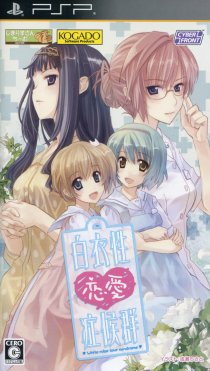

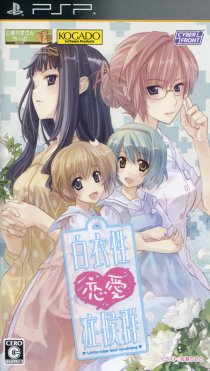
If you reached for your Super Nintendo controller expecting a cartridge full of polygonal nurses sprinting through a hospital with a soundtrack that sounds suspiciously like a dial-up modem, recalibrate your expectations. Nurse Love Addiction is not an action romp; it is a visual novel - a slow, deliberate conversation dressed in scrub whites. Released in the latter half of the 2010s for modern platforms but wearing the solemn, earnest sensibilities of classic narrative-driven Japanese storytelling, this entry in Kogado Studio's "White Robe" series trades swords and health bars for hospital corridors and whispered confessions. For players who care more for the turn of phrase than the turn of a joystick, it offers a focused, oft-affecting experience. For those who measure value by the number of interactive toys in a box, it will feel lean.
At its mechanical core this is a traditional visual novel: the player's primary interaction is to advance text with a button press and occasionally make choices from a menu that steer the story toward different endings. There is no pretending this is anything other than a reading experience with branching paths - the game offers limited interactivity beyond selecting dialogue options and deciding which character's route to pursue. Some contemporary visual novels cushion this minimalism with flowcharts or elaborate route-management systems, but Nurse Love Addiction keeps things primitive in that regard. That austerity can be a virtue: narrative focus, not widgetry, is the point. The common route - the shared portion of the story before individual romances blossom - is where the game's strengths lie. Kogado's writers take the mundane logistics of nursing and turn them into steady, believable beats: duty, memory, the patient-and-professional ethical tightrope. These details ground the cast and make their quieter emotional turns feel earned. The romance routes are where opinions diverge. The follow-through for certain love interests occasionally underwhelms compared to the strong setup in the common route. Some routes resolve into genuinely affecting conclusions; others read as uneven, leaving a taste of potential not fully realized. If you buy the game for the delicacy of interpersonal drama and the study of vocational identity, you will be satisfied. If you were hoping for a wide array of mechanical systems, replay toys, or a flowchart to keep your progress tidy, you might call the package "primitive," borrowing the exact word critics have used to describe the game's spare interface.
Visually, Nurse Love Addiction benefits from the iterative care developers gave to the series. The RE:Therapy editions brought improved character sprites and refreshed event scenes, and these visual upgrades carry over into the Switch presentation. The art leans toward clean, expressive character portraits rather than flash; faces are where the game earns its emotional currency. Backgrounds and event art are serviceable and focused on atmosphere rather than spectacle, rendering hospitals as lived-in places rather than antiseptic stage sets. A later entry in the series featured a new cast and a noticeable art redesign that gives that particular chapter a somewhat different aesthetic fingerprint, but on Switch the overall package reads as polished for a visual-novel production rather than ostentatious. If you judge a game's graphics by how much they call attention to themselves, Nurse Love Addiction will seem modest. If you judge them by how well they let the characters' expressions and moments land, this release passes with merit.
In the manner of earnest 1990s criticism - the kind that took its time and measured games against their own ambitions - Nurse Love Addiction reads as a respectable, occasionally brilliant visual novel that knows what it wants to be and mostly succeeds. Its strengths are the careful writing in the common route and the believable, workaday details of nursing life that give the characters weight. Its weaknesses are structural: the thinness of gameplay systems and a handful of romance routes that don't always match the quality of the setup. Critics have praised its writing as among the sharper examples in the medium and criticized its lack of modern conveniences like a flowchart, and those assessments are fair and rooted in what the game actually offers. On Switch the title is convenient and presentable, and the physical compilation that bundles it with its sister game gives collectors something tangible to treasure. Give this one to readers and story-first players; those chasing complex mechanics or action will want to look elsewhere. For an experience that prefers a whispered exchange in the staff room to a boss fight on the roof, Nurse Love Addiction delivers a delicate, mature drama - and for that it earns a solid score.
 True Love Story 2 on PlayStation
 True Love Story ~Remember my Heart~ on PlayStation
 Otometeki Koi Kakumei * Love Revo!! on PS2
 Root Film on PS4
 Tokimeki Memorial Drama Series Vol. 3 Tabidachi no Uta on PlayStation
 Oshiete! Popotan on PS2
 Princess Princess on PS2










 Another SquareThought Site