

 May 2019


Octogeddon is a compact, aggressively silly action-strategy roguelike from All Yes Good, the indie studio formed by Plants vs. Zombies veterans including George Fan. Designed around the idea of an ever-mutating octopus that picks up new limbs and becomes a one-entity arsenal, the game first launched on PC in February 2018 and landed on Nintendo Switch in May 2019. The premise is gloriously simple: Octogeddon watches sushi being made, gets legitimately offended, and proceeds to stomp (or tentacle-slap) humanity into submission across five stages. The Switch port packages the same bite-sized loop - rotation-based aiming, limb upgrades between stages, and a permadeath-forward progression loop - into a portable format. Fans of tight arcade loops and deterministic chaos will find a lot to like here, but the technical guts of the design are where Octogeddon really earns its stripes (and its tentacles).
Octogeddon is built on a deceptively minimalist mechanical core: the player controls a single octopus avatar with multiple weaponized limbs, and the only aiming mechanic is rotating the octopus to direct whatever tentacles you currently have attached. This rotation-as-aiming design is a neat constraint that does two important things: it makes positional decisions meaningful (which side to face, when to pivot to handle a flank) and it forces the player to think of limbs as spatially contextual tools rather than generic pop-up abilities. The game map is composed of five stages, each with six levels. The first three levels of each stage are oceanic, which subtly changes enemy types and movement vectors, and the last three are land-based. The rigid division keeps the encounter palette predictable enough to learn yet flexible enough to surprise you with varied attack patterns as you go. Hit points and lives are finite; getting hit chips away at hit points, losing all hit points costs a life, and exhausting all lives triggers permadeath. That permadeath is the roguelike spine: it makes every decision - whether to buy another life, which limb to accept, how much to spend on temporary buffs - carry weight. Between levels you enter a shop phase where coins collected during a run can be used to purchase new limbs and abilities. The twist is that limb selection is randomized: you don't pick from a full catalog, you pick from a small, RNG-driven subset. On a systems-design level that is clever because it forces adaptive play. Players can't always turtle into a single optimal build; they must exploit synergies created on the fly. To soften the RNG and reward long-term play, the meta-currency shells are earned across playthroughs and bought forward into future runs to purchase more base lives, permanent hit points, or DNA. DNA increases the number of limb choices offered at stage transitions, which effectively reduces frustrating randomness while preserving the moment-to-moment surprise. This mix of temporary upgrades and persistent meta-progression is where Octogeddon emulates the best of modern roguelikes: sessions are short and aggressive, but the shell-driven persistence loop ensures the player keeps unlocking incremental advantages. There's also an escalating difficulty curve where later playthroughs populate earlier stages with stronger enemies, which both increases replayability and makes the grind feel like mechanical progression rather than repetition for its own sake. The combat feels satisfying because of the tactile feedback created by the limbs' variety and the rotation mechanic. Different limbs provide different attack patterns and utilities - some arms are flamethrowers, others fire homing shots, others spin like buzzsaws - and rotating the octopus to present the right limb at the right time creates emergent choreography on-screen. From a technical perspective, this requires tight, deterministic hit detection and enemy pathing; the game mostly delivers that, and the enemy AI is intentionally simple so the focus remains on player-directed chaos. There are, however, design trade-offs. The randomized limb offerings can create steep spikes of luck: a couple of bad rolls early can make a run feel grindy, and because of the permadeath structure you might be forced to replay the first, easier levels several times to regain momentum. Several critics noted this repetitiveness, and it's a legitimate complaint if you dislike replaying low-complexity segments. The balance attempts to mitigate this through shells and DNA, but the core loop still leans on the player's tolerance for reruns. On the technical reliability front, reviewers have reported occasional crashes and glitches in earlier versions of the game. Those kinds of stability issues undermine an otherwise tight mechanical package, because a crash mid-run hits harder when the game's appeal is short, focused sessions. The Switch port benefits from the console's stable runtime environment, but players should be aware that earlier reception did mention stability concerns on other platforms.
Octogeddon's visual identity is deliberately cartoony and hyper-expressive, leaning into chubby silhouettes, oversized facial expressions, and a palette that screams seaside-madness. The art director Rich Werner's lineage from Plants vs. Zombies is obvious: the octopus itself is a character design study in comedic excess - chunky, readable from a distance, and easy to parse even when surrounded by frantic particle effects. That readability is important technically: the game piles projectiles, enemies, and limb effects onto the screen, so clear silhouette language prevents visual noise from obfuscating gameplay-critical information. Enemy design, by contrast, drew some criticism for being functionally bland compared to the main character. The enemies fulfill their role in the gameplay loop - they provide distinct threats and movement patterns - but they don't have the same personality density as Octogeddon himself. From an animation and feedback standpoint the limb effects and explosions are punchy enough; the particle work and sound design (Jimmy Hinson's soundtrack gives the proceedings an appropriately bouncy muscle) walk the line between arcade clarity and personality. The Switch's hardware is more than capable of running the game's 2D-heavy, sprite-and-particle-driven visuals with a steady framerate. Because Octogeddon doesn't attempt photorealism or heavy 3D geometry, the visual fidelity on portable hardware preserves the core aesthetic without trading off performance. The game's simple shader and sprite system is a good match for the platform, helping maintain consistent frame pacing during the chaos-heavy set pieces.
Octogeddon's strengths lie in its execution of a single mechanical premise: rotating an ever-evolving octopus into a personal weaponized orchestra. The tightness of the rotation-based aiming, the variety of limb effects, and the meta-progression systems (shells and DNA) mean each run feels like a short experiment in improvisational power fantasy. The game's humor and art direction sell that fantasy hard, and the addictive loop of 'one more run' is real. The primary weaknesses are structural: RNG can occasionally feel punitive, and the permadeath/restart cycle forces repeated play of low-complexity early levels, which some players will find grindy. Historical reports of crashes and glitches also temper enthusiasm, though the Switch port stabilizes the experience for the most part. If you come from George Fan's Plants vs. Zombies pedigree expecting that same profundity of design, Octogeddon might feel less polished in terms of enemy variety and long-term replay value. If you want a focused, technical arcade roguelike where mechanical clarity and emergent limb synergies matter more than sprawling systems, you'll have a lot of fun. Recommendation: Recommended for players who enjoy short, mechanical roguelike loops, clear visual feedback, and a self-aware sense of humor. The Switch is a natural home for quick sessions of tentacled rampage - just be prepared for the occasional run-ending RNG sting and, in older builds, an occasional stability hiccup. Score: 8/10.
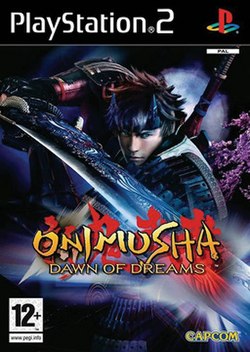
 Onimusha: Dawn of Dreams on PS2
 Action Man: Operation Extreme on PlayStation
 Nobunaga no Yabou Online: Haten no Shou on PS2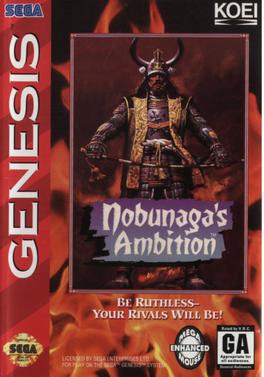










 Another SquareThought Site