

 Dec 2022
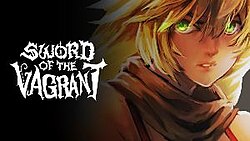

Sword of the Vagrant arrives on the Switch with the kind of confident art swagger that makes you want to stop and stare, and then mildly reprimands you for expecting anything else. Originally released on PC as The Vagrant in 2017 and developed by Beijing-based O.T.K Games, this single-player side-scroller wears its Vanillaware influences on its sleeve: if you like Muramasa or Dragon's Crown, you will recognize the lineage immediately. The plot is straightforward in a classical, pulp-adventure way - Vivian, a sellsword, travels to the island of Mythrilla in search of her missing father, only to be cursed into serving a witch - and the game proceeds to tell this story in a hand-drawn visual language that almost conceals some of the rougher edges beneath. Released on consoles in December 2022 and built on Unreal Engine 4, Sword of the Vagrant is a polished little package with a personality split between showy illustration and mechanically modest combat. For players who buy games for the art and atmosphere first and systems second, this is a tempting offer; for those who want deep, innovative mechanics, the temptation may wear off faster than a wooden sword against plate mail.
The heart of Sword of the Vagrant is its hack-and-slash side-scrolling action, dressed up in RPG clothing. Combat is immediate and familiar: light and heavy attacks, a modest array of special moves, and some unlockable skills that expand Vivian's repertoire as you progress. The early game, however, is noticeably 'barebones' - a phrase used by contemporary reviewers that holds true. Vivian's moveset arrives in stages, and until she receives the full complement of abilities the combat feels thin and repetitive. When the full moveset arrives, fights gain variety and boss encounters become more manageable, but the basic loop rarely transcends competent execution into something truly original. This is not a faultless monotony; there are moments when the game's systems click and you feel the satisfying rhythm of chaining attacks and special moves, but these moments are intermittent rather than constant. Difficulty spikes are a recurring complaint. Several reviewers found boss encounters to be frustratingly hard or unevenly balanced. The game will occasionally toss a prolonged boss structure at you that feels long and tedious, turning a satisfying duel into endurance. On the other side of the coin, many regular encounters feel manageable enough to be background noise - a steady rhythm of enemy encounters that rarely compel you to fundamentally change playstyle. The lack of an autosave feature on the Switch version is an unfortunate design choice in an era when convenience is a virtue. It doesn't break the game, but it introduces an avoidable annoyance: a hard-fought stretch can be erased by a misstep or a console mishap, forcing repetition that feels punishing rather than rewarding. Narrative presentation is competent but heavy-handed. The localization work has been praised, especially the Japanese version's care; nevertheless, some critics pointed out that large blocks of dialogue sometimes crowd the screen and make character emotions harder to parse. The story itself - Vivian's quest to find her father and free herself of a curse - is serviceable and occasionally earnest, albeit told with a level of exposition that can slow the forward momentum. Mechanically the game is not trying to reinvent the genre. It stakes its claim on clarity and charm rather than systemic depth. For players interested in short, single-player action with a strong visual identity and a manageable learning curve, Sword of the Vagrant delivers. For those expecting the layered complexity of a deep ARPG or the mechanical novelty of an indie wunderkind, it can feel disappointingly conventional.
The most talked-about aspect of Sword of the Vagrant is, without question, its visuals. The game draws heavy, obvious inspiration from Vanillaware's luminescent paintings - think Muramasa and Dragon's Crown - and it executes that aesthetic with impressive fidelity. Characters, backgrounds, and animation frames are rendered in a hand-drawn style that frequently looks as if it was lifted from an illustrated folio. Reviewers praised this artwork as 'wonderful' and in some quarters even 'flawless.' The production values here are high: lighting, color palettes, and the character portraits used in cutscenes all contribute to an atmosphere that is sumptuous and evocative. Given the game's modest ambitions elsewhere, the graphics serve as its raison d'être and do most of the heavy lifting in terms of player engagement. A word on performance: ported to consoles and built on Unreal Engine 4, Sword of the Vagrant generally behaves itself. There are no widespread reports of catastrophic frame-rate drops on the Switch version, though the platform does introduce the usual compromises compared to PC. The game's art direction masks many of the technical simplifications - fewer particle effects and tighter draw distances become stylistic choices rather than limitations. If you purchase this game for its visuals, you will not be disappointed; the visuals are the selling point and the developers knew it, delivering a package that looks like it belongs on a shelf next to the games it admires.
Sword of the Vagrant is a study in trade-offs: it gives you gorgeous hand-drawn visuals, a tidy narrative, and competent side-scrolling combat, but it does not give you a deep mechanical playground or consistently balanced encounters. Critics were mixed upon release; some lauded the value proposition of the original, low-priced PC release and the respectful homage to Vanillaware, while others found the gameplay monotonous and the pacing uneven. On the Nintendo Switch, the game is solid but unremarkable - an aesthetic triumph with gameplay that occasionally disappoints. If your primary criteria are art and atmosphere, and you enjoy a straightforward action-RPG that never tries too hard to be innovative, Sword of the Vagrant will reward your time. If you demand novel systems, tight difficulty calibration, or modern conveniences like autosave, you may feel the game's limitations quite keenly. The recommendation is guarded: buy it for the art, tolerate its faults, and enjoy the parts that sing. Final score: 7/10.
 Black Knight Sword on PS3
 Sword Coast Legends on PS4
 PlayStation Home on PS3
 Gaelic Football '25 on Xbox Series X/S
 Together! The Battle Cats on Switch
 Ōkami on PS2










 Another SquareThought Site