

 Oct 2017
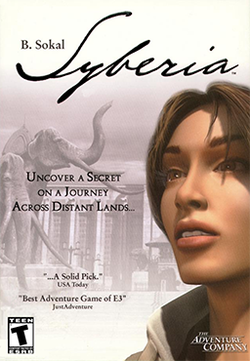

There is a particular breed of adventure game that arrives fully grown, like a curmudgeonly cat that has somehow learned to recite poetry. Syberia is such a beast. Originally released in 2002 and designed by Belgian artist Benoît Sokal, it arrived on the Nintendo Switch in October 2017 - not as a gimmick, but as an artifact. This is a game that does not pester you with twitch reflexes or microtransaction prompts; it invites you to sit, observe, and decipher. A serious reviewer of the 1990s would recognise here the old virtues of the genre: atmosphere, character, and puzzles that are less brain-teasers for keyboard addicts and more keys to narrative doors. For those approaching Syberia on Switch, expect the same patient, melancholic voyage of a woman named Kate Walker across Europe and into a mechanical version of legend. The train waits. The clockwork man, Oscar, waits. You should probably wait too, but not for too long - there are mammoths to find.
Syberia is, at its operational core, a point-and-click affair grafted onto a third-person camera. You assume the role of Kate Walker, an American lawyer dispatched to the provincial French village of Valadilène to process a corporate takeover of an automaton toy factory. What begins as contract law quickly swerves into a classic adventure narrative: a missing heir, a family curse of eccentric inventiveness, and an obsession with mammoths. Gameplay adheres to the traditions that adventure aficionados of the '90s cherished. You walk Kate through tableau-like screens, examine items, engage NPCs, and combine artifacts to advance. The puzzles are never presented as arbitrary roadblocks; they are framed as logical - if occasionally oblique - extensions of the world. A clockwork locomotive must be serviced, an animatronic named Oscar must be fed emotional and mechanical necessities (one of which is, regrettably, his hands), and assorted music boxes and prehistoric trinkets must be procured to placate obsessions and unlock passage. The game's structure is chaptered and episodic: you will visit Valadilène, the failing university town of Barrockstadt, the industrial Komkolzgrad, and the Aralbad spa, among other locales. Each stop introduces a self-contained suite of problems, character interactions, and environmental storytelling. One feature worth noting is the game's gentle nonlinearity. Chapters begin and end in a prescribed fashion, but within them you are free to decide the order of your investigations. This is not open-world freedom; it is selective agency - the sort that allows you to feel ownership of the investigation without being burdened by aimless wandering. The Switch port, for all intents and purposes, plays like the original: point-and-click mechanics translate into joystick movement and button presses. If you are a modern player who expects seamless context-sensitive prompts, Syberia will feel like a study in restraint: pointing, examining, and thinking before acting. For players raised on instant gratification, this can be either a restorative tonic or an exercise in old-fashioned patience. Narrative is the engine of the game more than mechanics. Kate's evolution from corporate agent to reluctant companion of Hans Voralberg's dream is gradual and credible. Her interactions with Oscar - part automaton, part surrogate companion - are the emotional centerpiece. Puzzles are woven into personality; helping an opera singer recover her voice or procuring clockwork parts for a mad inventor are not just chores but revelations about who these people are. There are moments when the game's logic stretches credulity, and there will be puzzles that prompt an old-school 'pixel hunt' or two. The Switch's screen real estate and control mapping mean the occasional tiny hotspot might be fiddly to locate, but the game is generous with clues and rewards patience with narrative payoff.
Syberia made critical waves at launch for its artistic direction, and that recognition is not hyperbole; the game wears Art Nouveau and clockpunk influences like a winter scarf. The world is designed - rather than merely rendered - and it shows. Backgrounds feel hand-crafted, a collage of faded grandeur, rust, and ivory gearwork that suggests histories rather than merely serving as stage dressing. Characters are expressive in the manner of pre-rendered adventure protagonists: they do not move like motion-captured avatars, but their faces and gestures carry personality. On the Switch, Syberia sits in an interesting middle ground. The port is not a remake: this is the original game's visuals adapted to current hardware, rather than a ground-up reimagining. That means the art retains its original charm and composition, but close inspection reveals age: texture resolution is of a previous console generation, and certain animations - which once read as lovingly stylised - may now seem a touch stiff by contemporary standards. Yet those perceived flaws are also part of the game's aesthetic; Syberia never attempted photorealism. Instead, it cultivated a tableau-like atmosphere, a kind of illustrated novella come to interactive life. Reviews tallied at the time of the Switch release placed the port in respectable territory (Metacritic lists a Switch aggregate at 76/100), which is to say the integrity of the presentation carried over. If you prize fidelity to Sokal's original art and composition, the Switch version is a faithful ambassador. If you are hunting for high-definition polish and modern animations, the game will not impersonate a next-gen title. The sound design, however, remains a highlight: a restrained score and robust voice work (where the original release included it) bolster the sense of place. The Nintendo Switch, with its hybrid portability, oddly suits Syberia: its episodic pacing makes it suitable for handheld sessions in which the player can dip in for contemplative half-hours and then slide the cartridge back into a pocket of memory.
Syberia on Switch is a modest miracle: a 2002 graphic adventure that behaves like one, available on a modern machine that mostly respects its pace and tenor. It is not a triumphant technological showcase, and it does not pretend to be. What it offers instead is a well-told, carefully paced narrative marked by distinctive art, memorable characters - Kate Walker and the obligingly mechanical Oscar chief among them - and puzzles that serve story rather than obstruct it. The game's pedigree is visible in its development: Benoît Sokal's artistic hand, a €2 million production in Montreal by a 35-person team, and an original engine (Virtools) that allowed the title to stand out among its peers. Critics in the early 2000s heaped awards upon Syberia for story and visual direction, and the sales figures - half a million copies worldwide by mid-decade, and a franchise that extended into sequels - attest to its staying power. A 1990s reviewer would likely admire Syberia for conversing with the player's intellect rather than shouting for attention. Modern players who approach it with the patience typical of the classic adventure era will find themselves rewarded; those expecting constant mechanical novelty may find the experience slow. The Switch port preserves the experience faithfully and makes it portable for trips where trains and mammoths are metaphors for the journeys we choose to take. For anyone nostalgic for the era when games asked you to think in sentences rather than combos, or for newcomers curious to see how narrative and design can carry a game, Syberia remains a worthwhile stop on the map. Board the train, wind the clockwork, and do keep an eye out for mammoths - they are not as extinct in this world as you might suppose.
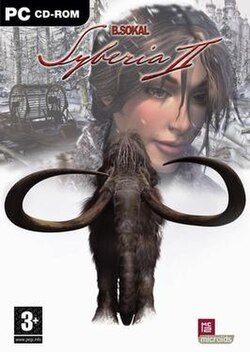
 Syberia 2 on Switch
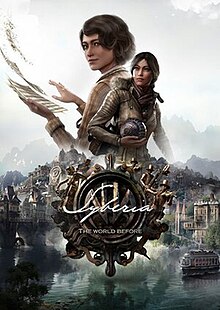
 Syberia: The World Before on PS5
 PlayStation Home on PS3
 Ōkami on PS2
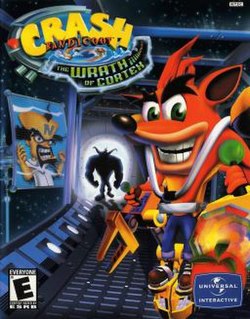
 Crash Bandicoot: The Wrath of Cortex on PS2
 MLB The Show 22 on Switch










 Another SquareThought Site