

 Jan 2021
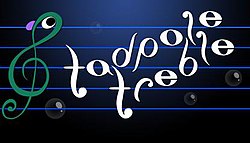

Tadpole Treble Encore arrives on Switch like a small amphibian with a big soundtrack, a compact rhythm adventure that dresses up sheet music as a platforming playground. At its core it is disarmingly simple: you are a newly hatched tadpole who surfs along musical staves, switching between lines to avoid obstacles and tapping a kick at the right moment to pad your score. The game was sculpted by Matthew Taranto-the brains behind the Brawl in the Family webcomic-who also composed the soundtrack and drew the visuals. That auteur-level involvement leaves a distinct imprint: the game feels like a short, lovingly illustrated musical fable, and Encore is the Switch port that brings that charm to handhelds with a few small compromises. This review will treat Tadpole Treble Encore not only as a gameplay package but as a tiny narrative ecosystem, focusing on character and arc in places the game only hints at. If you're coming for pure rhythm-action chops, you'll find them. If you're in for a story about growth, music as community, and the strange, gentle melancholy of a feature being politely excised (I'm looking at you, level sharing), then read on. The pond in Tadpole Treble is small, but within it live characters with clear motivations: the tadpole protagonist, the musical staff that both confines and cradles them, the notes and obstacles that double as minor antagonists, and the creator who sings the world into being. Their arcs intersect over short levels to form a compact, oddly moving tale.
Tadpole Treble Encore wears its mechanics on its sleeve: you control a newborn tadpole moving at a constant speed along horizontal staves that double as stages. The player's primary agency is switching between lines of the staff and timing a single 'kick' action to interact with stage elements. The rhythm is literal and mechanical-hit the lines and kicks in time and the score rises, miss them and your run sputters. Simplicity is the design manifesto here, and it has consequences worth unpacking in character terms. The tadpole is not a blank cursor; it's a protagonist with an arc of agency. At the outset the tadpole is small, plopping onto the staff with no more power than a twitch. As the player learns the pacing of each level and the precise timing of kicks, the tadpole grows into its role: from vulnerable hatchling to a confident musical presence that navigates melodies as if they were safe currents. The game's progression is less about leveling stats and more about a metamorphosis of competence. The character's development is mirrored by increasingly complex patterns in the music. Early stages are nursery melodies-slow, forgiving, and generous with scoring opportunities. Later tracks layer faster rhythms and tighter timing windows, forcing the tadpole's newfound poise to prove itself. Mechanically, the kick is the tadpole's voice. It isn't a jump, dash, or flashy special move; it's an interaction with the world that amplifies score and opens rhythmic opportunities. In narrative terms, each timely kick reads like a confident syllable in the tadpole's growing vocabulary. The staff itself is both stage and storytelling device. It's homey and constraining at once: the horizontal lines feel like rails, a system that the tadpole learns to surf. World-building is minimalist-there are no dialogue trees-but the tactile satisfaction of executing combos creates emotional feedback that stands in for a spoken arc. Notes and obstacles function as supporting characters. Notes are fleeting allies that invite you to sync with the music; they reward attentiveness and timing. Obstacles are the antagonists: snags and hazards that require you to change lanes or suffer the consequences. Their appearances are choreographed to the soundtrack, so their personality is music-dependent. A percussive snare might be a grumpy, prickly obstacle; a legato phrase becomes a line of velvet notes offering a smooth ride. The way you respond to them-precise kicks, lane changes, calculated risk-tells the story of the player-tadpole relationship. Tadpole Treble also once carried a meta-character: the community. The original game shipped with a level editor that allowed players to craft levels and share them via QR codes. That editor was a promise of an extended life beyond the composer's own tracks, where the tadpole could swim through countless community-made melodies and narratives. On Switch, that level-sharing feature is gone, which changes the story of the game's world. Instead of an open-ended commune of creators, Encore's pond is more closed, a curated playlist of the designer's voice. The community arc, which could have transformed the tadpole into an avatar for global creativity, is cut short-an amputated subplot that makes the port feel like a director's cut with a deleted scene. Difficulty-wise, Tadpole Treble Encore is generous in its forgiving approach but still exacting when it matters. Because the player moves at a constant speed, the game rewards anticipation and rhythm training more than twitch reactions. The level structure encourages replay as you chase higher scores and tighter combos. Metacritic and critics noted the short length of the experience-there's truth to that-but the compactness works narratively. The tadpole's story is a short, bright burst rather than an epic saga, and the game respects that form. It's the kind of game you beat in an evening, then replay to polish your performance, rather than one that eats weeks of your life. Where the gameplay frays is in the small technical rough patches some reviewers reported in earlier builds, and in the Switch-specific omissions. Bugs were noted in other versions, and while Encore is largely polished, the absence of level sharing is the clearest mechanical narrative casualty: a gameplay promise that is present in spirit but absent in function. That loss is felt more by players who imagine the tadpole growing through community interaction-without it, the title becomes more of an intimate musical short story than a sprawling participatory epic.
Visually, Tadpole Treble Encore is a hand-drawn postcard from the pond. Matthew Taranto's aesthetic-familiar to fans of his Brawl in the Family comic-imbues the world with clean lines, warm colors, and a whimsical sense of proportion. The staff is rendered with graceful minimalism, which matters because the visual clarity directly supports gameplay. When your life depends on switching lanes at a moment's notice, you want readable lines and obvious obstacles, and Encore delivers both with style. Characters are primarily expressed through design economy rather than exposition. The tadpole has personality in a few well-placed frames and motion cues: delighted flips, brief squawks, and a posture that shifts with success or collision. The notes and hazards are stylized icons that convey purpose without fuss-notes shine and pulse, obstacles bristle. This is art that's functionally beautiful: it sacrifices intricate environmental detail in favor of clarity and charm. On Switch, Encore's visuals hold up well. Nothing here is pushing the hardware, nor does it need to; the engine (Unity) serves the aesthetic and performance requirements capably. Animations are crisp when they matter-especially the little celebratory bursts when a streak is maintained. The presentation also ties into the game's emotional register: the world is cozy and friendly, as critics described, and the visual tone supports the short, intimate arc of the tadpole's journey. If the tale had been about despair or heavy stakes, the art would feel mismatched; because the story is small and personable, the art hits the sweet spot between cute and purposeful.
Tadpole Treble Encore is, in the best sense, a focused little game. It doesn't pretend to be a sprawling RPG or a self-containing music creation suite; it offers a precise rhythm-action experience wrapped in warm, hand-drawn skin and a soundtrack that sings. The central character-the tadpole-follows a satisfying arc from unsure hatchling to rhythm-savvy voyager. The staff, notes, and obstacles are supporting cast members whose personalities are written in beats and timing rather than dialogue. The Switch port shines where it needs to: controls are responsive, the look and sound land beautifully, and the experience is perfect for short play sessions. The things that pull the score down-a relatively brief campaign length and the removal of the level-sharing feature-are meaningful but not devastating. The shaved community feature reads like a lost chapter in the tadpole's story: a dream of expansion that Encore cannot fully realize. Critics and aggregators praised the game for its charm and soundtrack, and those plaudits are deserved; the few rough edges and the truncated community promise prevent it from being flawless. If you value personality over bloat, concise creative vision over lengthy grinding, and melodic gameplay that rewards timing and patience, Tadpole Treble Encore is an excellent buy on Switch. It's the sort of game that will make you smile, tap along, and maybe feel a little wistful when the credits roll-because sometimes a short, artful story about a tiny amphibian learning to sing is precisely the kind of gentle, focused joy a gaming afternoon needs. Score: 8.5 out of 10.
 MX vs. ATV Supercross Encore on PS4
 Karaoke Revolution Presents: American Idol Encore on PS3
 Tintin: Destination Adventure on PlayStation
 Taiko no Tatsujin: Dokodon! Mystery Adventure on Switch
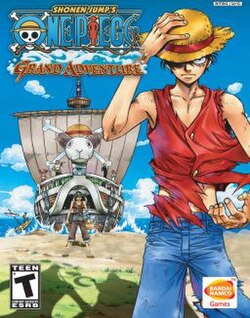
 One Piece Grand Adventure on PS2
 Taiko no Tatsujin: Don to Katsu no Jikū Daibōken on Switch










 Another SquareThought Site