

 Aug 2025


Taiko no Tatsujin has always been an exercise in precise percussion and pure, unpretentious fun: hit the face (don) for the reds, the rim (ka) for the blues, and try not to make your living room the scene of a Joy-Con homicide. Don to Katsu no Jikū Daibōken-originally a Nintendo 3DS title-gets a second wind in the Rhythmic Adventure Pack for Switch, bundled with its sequel and finally localised for Western players with the story mode translated into English. If you cared about whether a Taiko game could double as an RPG-lite and still keep its timing window clinically fair, this is the crossover experiment to inspect. This review focuses on the technical underpinnings that make the game tick: input mapping and fidelity, notechart design, scoring and difficulty systems, and how those 3DS-era mechanics translate (mostly faithfully) to the Nintendo Switch environment.
At its core, Taiko no Tatsujin is a deterministic time-matching system: notes scroll horizontally, you provide discrete impacts, and the engine judges the timing. The franchise's taxonomy of notes-red "don" for drum-center hits and blue "ka" for rim hits-remains the primary mapping here. Supplementary note types (balloon/burst notes, yellow bars for rapid taps, and kusudama/mallet equivalents for multi-hit sequences) provide temporal density and require the engine to manage both discrete event detection and short high-frequency input sequences. The 3DS originals in this pack present a useful case study because they blend touchscreen mechanics (a continuous spatial input surface) with classic button-based hit detection logic. On the Switch, the Rhythmic Adventure Pack exposes Taiko Mode and the two RPG-like adventure campaigns from the 3DS titles. The Switch port preserves the notecharts and overall encounter design, with six new Taiko-mode songs added for the bundle. Input fidelity and latency: The fundamental metric for any rhythm title is the perceived and actual latency between player action and the game's audio/visual response. The source document makes it clear the original 3DS games relied heavily on the console's touchscreen for drum simulation, while console releases historically used buttons or dedicated peripherals. Because the Rhythmic Adventure Pack is a re-release of 3DS content, players should expect notecharts designed around the 3DS's timing tolerances and tactile expectations. On Switch hardware, the input path depends on whether the player uses buttons, Joy-Con motion (where supported in other Taiko entries), or the touchscreen in handheld/tabletop modes. The adaptive nature of the series' control paradigms means accuracy windows are forgiving enough to be playable across different input methods, but anyone seeking pin-point competitive precision will notice the difference between a custom taiko peripheral (or well-calibrated Bluetooth drum input) and button/touch approaches. The game includes modifiers and practice tools across the franchise lineage-such as Auto, Perfect (song ends on first miss) and Spartan (song restarts on first miss) options-which indicate a scoring engine that can be tuned for either casual or hardcore use. Notechart architecture and difficulty: Taiko's notecharts are structured into the canonical four difficulties-Easy, Normal, Hard, and Oni/Extreme-with many songs offering inner or "ura" charts that act as higher-intensity variants. The maps in Don to Katsu are classic Taiko fare: rhythmic motifs that mirror the musical phrase structure rather than instrument-specific solos, which means charts are closely tied to beats-per-bar and subdivisions. The game also used branching mechanics in other series entries-for example, charts that adapt mid-song based on player accuracy-which is a design that rewards consistent performance and encourages dynamic play styles. Inside the Switch package, those mechanics survive intact: space-time Adventure Mode sequences tie random-encounter drum battles with chart-based combat, while Taiko Mode provides the pure score chase. Because these charts were authored for a handheld CPU/GPU, the complexity ceiling is bounded by the 3DS-era design choices: dense Oni charts are challenging, but they often emphasize pattern memorization and hand-motion conditioning over extreme microsecond timing sequences seen in some modern rhythm shooters. Scoring, gauges, and progression: The franchise uses a spirit gauge (tamashii geeji) that fills with accuracy and depletes with misses; reaching the target at song end yields a clear. Historically, the scoring system rewarded combos and accuracy-but some later arcade revisions shifted focus more to hit accuracy than long-combo bonuses. The Rhythm Adventure Pack preserves the RPG progression hooks of the 3DS originals: random-encounter meets rhythm-battle where clearing encounters nets recruitables and progression items. From a technical perspective this hybrid requires the rhythm engine to handshake with a higher-level attrition/progression system: a successful song clear must trigger the RPG state machine to apply rewards, trigger story beats, and update battle states. This coupling is handled gracefully; it's deterministic and contains no sign of desynchronization between audio playback and state updates-an important item because audio desync would break both the rhythm feedback loop and the game's reward timing. Practice and meta-features: While some later Taiko entries added advanced training tools (e.g., fast-forward/rewind practice in Vita versions), the Rhythmic Adventure Pack includes standard unlock systems and downloadable content mechanisms influenced by the 3DS original. The pack explicitly excludes the original games' DLC songs, so the base songlist is finite (plus the added six Taiko-mode tracks). The RPG modes offer a level of content longevity distinct from pure score-chasing: random encounters, unlockable companions, and quasi-Pokémon-style collecting drive replay. That's a smart engineering trade-off-offering two gameplay vectors (score optimization and collection/progression) without artificially inflating the on-disc song roster. Network and platform implications: The original 3DS games used Spot Access and QR code unlocks for extra content; the Switch re-release leans on the convenience of modern eShops for additional content distribution-though, again, DLC from the 3DS versions isn't automatically included. The Rhythmic Adventure Pack releasing as digital only in some regions (physical in Japan and parts of Asia) is a distribution choice with technical consequences: online patches and future updates are easier to deliver for digital builds, but physical owners may rely on periodic eShop downloads for fixes. The porting process for this title appears to be conservative: keep the gameplay and charts faithful, translate the story and UI, and add a handful of exclusive tracks: exactly what you'd expect when the engineering priority is functional parity and audience reach rather than wholesale engine rework.
Graphically the Rhythmic Adventure Pack is an exercise in cross-platform conservatism. The two bundled 3DS games were authored with the handheld's modest polygon and texture budgets, so the Switch versions look like lovingly upscaled relatives rather than ground-up remasters. Character models, background stages, and UI elements retain their original proportions and designer intent; the Switch's extra pixels and smoother upscaling primarily benefit HUD clarity and text legibility for the English-translated story. Visual effects tied to note hits (flashes, particle bursts for balloons/kusudama) remain faithful and do the job of providing immediate visual feedback for timing-crucial for human perception of latency. From a technical standpoint, there's no evidence of high-refresh redesigns, advanced lighting, or performance-targeted upgrades: this is not Rhythm Festival's 120fps arcade-class overhaul. Instead, expect stable frame pacing, consistent animation timelines, and UI scaling tuned to both docked and handheld modes. Those are the right priorities for a rhythm game because jitter and frame pacing inconsistencies are far more disruptive to timing perception than raw shader quality. The pack's art direction leans into the series' bright, approachable aesthetic; the result is perfectly serviceable for both couch play and portable sessions.
Taiko no Tatsujin: Don to Katsu no Jikū Daibōken in the Rhythmic Adventure Pack is not an engineering spectacle, but it doesn't need to be. This is a technical exercise in fidelity: carry over the core timing systems, preserve notechart integrity, translate the story and UX for new audiences, and add a few songs to justify a console rerelease. For players who love the tactile simplicity of don/ka inputs, the RPG-lite Adventure modes add tangible replay value without undermining the purity of the rhythm engine. The port is conservative-asset upscaling rather than a visual overhaul-but that's actually smart given the genre's sensitivity to latency and frame pacing. Missing DLC from the original 3DS titles and the lack of a full native reauthoring for Switch are the main practical downsides, but they don't meaningfully harm the core experience. If you are buying this as a rhythm fan who also enjoys light RPG progression and an English-localised story, the Rhythmic Adventure Pack is an excellent match: it keeps the timing windows honest, the notecharts well-designed, and the feedback loops immediate. If you are a graphics-first player or expect the kind of performance overhaul seen in the latest arcade iterations, temper your expectations. Overall, the game nails the technical basics that make Taiko a dependable rhythm franchise while throwing in enough side-content to keep repeated sessions engaging-hence the 8/10. It's a drum you can rely on; it won't reinvent the kit, but it will make you want to play until your wrists file a formal complaint.
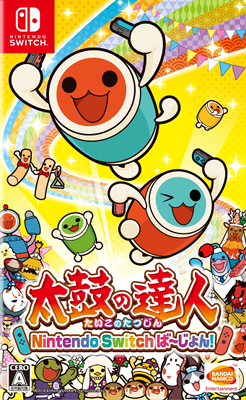
 Taiko no Tatsujin: Drum 'n' Fun! on Switch
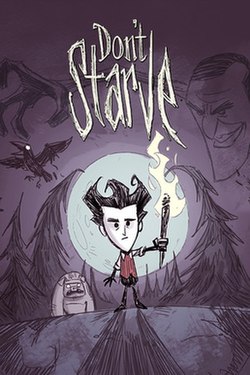
 Don't Starve on Switch
 Moon: Remix RPG Adventure on PlayStation
 RPG Maker on PlayStation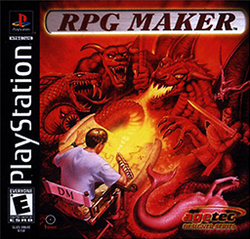










 Another SquareThought Site