

 May 2019
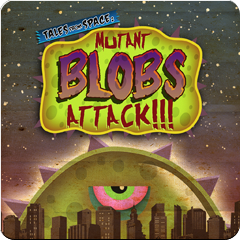

Tales from Space: Mutant Blobs Attack is a game with a career trajectory that would make reality-TV contestants uncomfortable: born as a PlayStation Vita launch title in 2012, it grew into ports across multiple platforms and eventually waddled onto the Nintendo Switch in 2019. The premise is refreshingly direct. You are a grumpy mutant Blob. Your hobbies include eating everything in sight and swelling in proportion to your appetite. The narrative does not linger on motivations, which is efficient; it saves time that would otherwise be wasted on character therapy and backstory. The Blob has a clear career path: eat, grow, roll over the level, repeat. If you are seeking existential drama, you may have chosen the wrong gelatinous protagonist. If you are seeking a compact, cleverly designed platformer that treats physics like a mischievous toy and your thumbs like competent professionals, you have chosen correctly.
Gameplay is built around a very simple, almost primal loop: consume loose objects to increase size, then use that increased girth to overcome bigger obstacles. The Blob starts life small and vindictive. The Blob ends levels as an increasingly alarming domestic menace. Between those bookends are a series of stages that set up clear numerical goals: reach a size, push through something, crush a thing, or tip an entire set of environmental scales. The controls marry traditional 2D thumbstick platforming with touch-based powers. On the Vita that meant using the rear or front touch to manipulate the Blob in tactile ways; on the Switch those interactions translate cleanly whether you prefer touchscreen gestures in handheld mode or mapped buttons and sticks in docked play. The game never expects more dexterity than your hands can reliably provide, but it does expect you to think a few moves ahead. Levels are effectively short puzzles disguised as platforming gauntlets. You've got physics-based obstacles everywhere: crates to topple, levers to pull (or be pulled by), and environments that tilt or collapse once you reach an ungainly mass. The satisfaction comes from the feel of cause and effect. Rolling a Blob of the correct size into a precarious stack and watching it collapse in a domino of consequence is quietly delightful-like setting off a Rube Goldberg machine you are allowed to eat afterward. The Blob's growth mechanic is more than a numbers game. Objects have practical sizes and placements that force you to think about sequencing. If you eat the shiny red thing now, you'll be able to bash through that gate later, but you may have missed the chance to chew a heavier item that would have made a specific puzzle trivial. This creates small decisions that feel meaningful without requiring a PhD in platform strategy. There are also designated powers that use touch controls to pull, fling, or stretch parts of the Blob to reach otherwise inaccessible areas. These abilities are used sparingly and designed as variations on the core premise rather than separate mini-games. The game is polite enough not to pretend it is more complex than it needs to be. Difficulty is calibrated to be approachable. You will fail a few times, usually as the result of underestimating how much mass you actually need, or because you misjudge a jump while juggling the Blob's burgeoning weight. However, the learning curve is gentle and rewards experimentation. The level design encourages you to take advantage of the environment and to reuse mechanics in slightly different ways so that each new challenge feels familiar and fresh at the same time. There is a tactile pleasure in sliding a Blob under a barrier and watching the UI respond with the quiet approval of a puzzle that has been properly solved. If you played the predecessor, Tales from Space: About a Blob, you will notice that Mutant Blobs Attack refines rather than revolutionizes. There are new levels, new powers, and a new player character, but the meat-and-potatoes of the design-the growth, the physics puzzles, the sense of increasing threat as you balloon in size-remains the glorious center. That consistency is a feature, not a flaw: the sequel tightens the screws and polishes the slapstick mechanics until the Blob's antics feel like a well-rehearsed sketch. The game is short by modern standards, which is not a bad thing. It understands its length and doesn't overstay its welcome. Each level is structured for compact satisfaction rather than bloat. For players who prefer a satisfying platformer session that can be completed over a few commutes, or for completionists who will stubbornly revisit stages for score and thorough chewing, the time investment is reasonable. The Switch conversion handles input translation well. Touch features are optional in docked mode; in handheld they are a natural fit. The physics are stable and predictable, which is important because a lot of the humor and fun comes from watching controlled chaos play out. Crashiness would break the joke. Fortunately, the Blob behaves like a well-trained disaster.
DrinkBox Studios dresses its Blob in a pleasingly cartoonish aesthetic that leans heavily into bold colors and exaggerated proportions. The art direction is clever in a modest way: backgrounds are detailed enough to be interesting without stealing focus from the Blob, and environmental objects are designed so you can mentally catalog their edible potential at a glance. The Blob itself is an expressive lump-surprisingly emotive for an entity whose primary animation is 'more or less wobble.' That wobble is handled with care; the physics-driven animation convinces you, with minimal graphics budget, that this thing has weight and mood. On the Switch the visuals are crisp. The port keeps the frame rate steady, a welcome choice given how much of the game's feedback relies on consistent motion. There aren't many jaw-dropping graphical showstoppers, because the game never pretends to be aiming for photorealism. Instead it chooses to be charming, and it succeeds. Level themes vary just enough to remain interesting: industrial zones, suburban nightmares of a world-sized snack, and the occasional setting that feels like a diorama full of delicious possibilities. UI elements are clear and unobtrusive, which is appreciated when the Blob is in the middle of consuming your patience along with the scenery. If you have a soft spot for animation that doubles as a personality trait, the Blob's mannerisms-the little noises, the stretch, the reluctant bounce-add character without the need for dialogue-heavy exposition. This is efficient storytelling. It tells you everything you need to know about the Blob's temperament without forcing you to read a single emotional memoir entry. The overall visual package supports the gameplay clearly and cheerfully, which is the whole point.
Tales from Space: Mutant Blobs Attack is a concise, well-crafted platformer with a mischievous mechanical heart. It delivers on the premise it sets up: you are a blob that gets bigger the more you eat, you use that size to solve puzzles and smash obstacles, and you do so with the solemn commitment of someone who takes donuts very seriously. Critics liked it for good reasons-IGN scored it a 9, GameZone handed it a 9.5, and it earned placements on several year-end lists, including Best Handheld Game of 2012 from Digital Trends. The Switch version is a tidy way to experience what made the original stand out without demanding that you learn new rituals. If you like platformers that emphasize clever level design and physics-based puzzles over needless complexity, you should enjoy this. If you want a sprawling adventure with moral quandaries and side quests that remind you of your own missed potential, this Blob will disappoint you only in those very specific ways. The game's brevity is a design choice rather than a budgetary apology, and its humor is deadpan enough to make even very loud people laugh quietly. For portability, playability, and pure, unadulterated chewing satisfaction, it's hard to argue with a 9/10. The Blob does what it does extremely well, and if you are prepared to let a gelatinous organism out-eat your responsibilities for a few hours, you will be rewarded with a polished, satisfying ride. Recommended for anyone who enjoys platformers with personality and puzzles packaged in snack-sized levels.
 Kerbal Space Program 2 on PS4
 Mars Horizon on Xbox One
 Kerbal Space Program: Enhanced Edition on PS5
 Door Kickers: Action Squad on PS4
 Prince of Persia: The Forgotten Sands on DS
 Pumped BMX + on PS4
 Dragon Ball Z: Kakarot on PS5
 Guacamelee! 2 on PS4
 Nobody Saves the World on Xbox Series X/S
 Nobody Saves the World on PS5










 Another SquareThought Site