

 Jan 2019
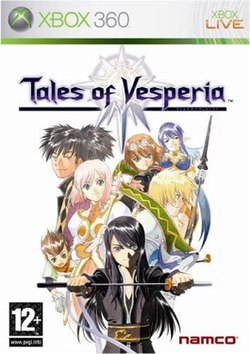

Tales of Vesperia arrived on the Switch as the Definitive Edition, and with it came the full package: expanded story bits, the PS3 additions, and the sort of comfort‑food JRPG experience that makes you nostalgic for an era when enemy encounters still looked like polite knockouts rather than spreadsheet optimizations. Set in the world of Terca Lumireis, where aer and blastia do all the heavy lifting for civilization, Vesperia wraps a morally febrile story about resource abuse, ancient horrors, and personal justice around a cast who might be the franchise's strongest group therapy session yet. If you care about characters more than edge cases in combat math, this is the Tales entry that will keep you reading through every skit and cutscene like you owe them money. It is also the game that asks whether doing the right thing and doing the legal thing are the same thing, and then politely punches you in the face with the answer.
Vesperia is an action RPG in the classic Tales mold, but insist on calling this section gameplay and you better be ready for a long conversation about people, because Vesperia uses its fights and side quests like a therapist uses metaphors. The battle system itself, the Evolved Flex‑Range Linear Motion Battle System, is tight, combo friendly, and wonderfully arcadeish, but it is the characters whose actions in and out of battle animate the plot in ways that matter. Yuri Lowell is the game's economic center of moral friction. Designed as a more mature protagonist than the series had recently shoved at players, Yuri is the vigilante with taste. He sees corruption and smashes it, often with his own hands. This is not the boring kind of moral certainty; the script makes Yuri an uncomfortable mirror. He murders two officials tied to blastia abuse, and the game refuses to let you shrug and call it a cutscene. Those killings put him on a collision course with Flynn, his former comrade. Flynn, the by‑the‑book Imperial knight, is the foil whose belief in institutions and procedure is a deliberate contrast to Yuri's street level justice. Their conflict turns what could have been a simple hero versus villain plot into an argument about systems versus people. The dialogue actually makes both positions sympathetic, and the resulting tension gives the player moral whiplash that plays out over dozens of hours. Estelle, whose arc is the personal heart of the plot, starts as a noble woman who mostly wants to live without drama. The reveal that she is a Child of the Full Moon, a living formula for converting aer to magic, turns her into a walking environmental hazard. The game handles this with surprising grace: instead of turning Estelle into a plot device, it makes her central to the theme of responsibility. Her power causes aer krene to overproduce aer, which ties her to the world in a literal ecological way. You watch her go from naive healer to someone who must accept that her very existence can hurt the planet, and yet she chooses partnership and care rather than exile. Watching Estelle wrestle with the guilt and the literal consequences of her gifts is one of the rare JRPG beats that feels closer to modern environmental storytelling than it does to melodrama. Rita is the brains and the plot's deus ex machina in the best sense. The blastia researcher who can turn cores into spirits, Rita evolves from eccentric scientist to the person whose discovery actually saves the day. She represents the hope that technology and invention can be retooled for healing rather than exploitation. Her arc is a quiet one: scientist tinkers, problem grows, scientist finds better thing. It is understated but essential, and it lets the narrative avoid the tired choice between nature and technology by giving the player a third way. Raven plays the grizzled wildcard. A Great War veteran and enigmatic figure, Raven initially appears to be morally flexible, and is even revealed to be an agent of Commandant Alexei at one point. But Raven choosing to side with Brave Vesperia and stick around after helping Estelle escape deepens the theme that people can change sides when they see the human cost. His arc is less about revelation and more about slow, earned loyalty; he functions like a character who kept a lot of scars and is finally beginning to find reasons to heal. Judith is the absolutist in the party who would like to set the blastia factories on fire and burn every schematic. She calls blastia a poison and wants to destroy them outright. In a game obsessed with balance, Judith gives the narrative a blunt perspective: sometimes systems are the enemy. Over time her interaction with Estelle, Rita, and the rest complicates that view; she learns that annihilating a technology that society relies on without a plan to replace it can create new victims. That evolution from single‑minded destruction to conditional pragmatism is small but satisfying. Karol is the series stock adorable yet brave kid, whose growth arc is the kind that quietly sells the idea that ordinary people can become extraordinary friends. Patty, in the PS3 and Definitive Edition content, adds flamboyance and comic timing, but more importantly she gives the cast an extra axis of loyalty and greed for treasure that never becomes mean‑spirited. Duke is possibly Vesperia's best written antagonist because he is not strictly an antagonist. A survivor of the Great War who lost his Entelexeia friend Elucifer to fearful humans, Duke becomes disillusioned and seeks to remake the world by converting humanity into energy to power a weapon that will end the Adephagos threat. His ends are oddly sympathetic, and the game stages a moral faceoff between methods and outcomes. The best writing here lets you understand Duke without making you cheer for his plan. When he ultimately provides the extra energy to finish off Adephagos, the payoff is messy and human; he remains a tragic, complicated figure rather than a pantomime villain. Alexei, the imperial commander who engineers the use of Estelle to activate Zaude, and the Adephagos itself, the ancient consequence of blastia excess, are the larger forces of the story. Alexei embodies the tendency of institutions to hide messes under a veneer of righteousness, while Adephagos forces the world to reckon with ecological limits. The Entelexeia, ancient beings who become spirits at the end, provide the metaphysical edge that makes the game's conclusion feel earned rather than magical hand‑wavey. The game intertwines these arcs with gameplay via skits, optional conversations, and battle scripting. The specialty missions and Over Limit system add mechanical tension to fight sequences, but the real tension is narrative. Yuri's willingness to break laws translates in combat to aggressive play; Flynn's adherence to rules is mirrored in the PS3 content where Flynn becomes a permanent character and you see the alternative lived side by side. This interplay of mechanics and character writing is where Vesperia shines for players who like their battles to feel like character moments, not just numbers.
Vesperia's aesthetic is cel‑shaded anime wrapped in a mid‑2000s cosmetic renaissance. The Definitive Edition sharpens textures, but the soul of the visuals is the Production I.G cutscenes and Kousuke Fujishima character designs. Backgrounds sometimes show their age - the team themselves admitted the final polish lacked some of their early goals - but the art direction is deliberately stylized, and it leans into that strength. The character models animate with expressive faces during skits, giving the dialogue weight and punchlines alike. Combat arenas are readable and let the action flow, which is all you want in a game where chaining artes into Fatal Strikes matters more than whether a leaf has a photorealistic shadow. If you buy Vesperia for the personalities, the game delivers those personalities with a look that reads like a favorite long‑running anime you would happily rewatch.
Tales of Vesperia: Definitive Edition on Switch is not merely a remaster, it is a chance to play a JRPG that treats its ensemble like an argument worth hearing. If your main hobby is getting the best DPS numbers possible, you will still find a satisfying combat system. If your main hobby is relating to a ragtag band of people who disagree on ethics and still choose each other, this game is essentially a masterclass. The narrative gives you a morally gray hero who is disturbingly attractive, a friend who believes in institutions, a scientist who invents salvation, and a tragic veteran whose plan forces good people to make terrible choices. The game asks serious ecological and ethical questions while giving you enough skits and side content to smile through the philosophical indigestion. There are spots where structure and pacing hew to JRPG convention, and translation quirks remain in the script here and there, but the Definitive Edition's additions and improved presentation make this the version to own. Consider it required reading for anyone who wants character‑driven JRPGs that can make you think, laugh, and, yes, occasionally wince at a protagonist who thinks he's right even when his hands are dirty. Score: 8.5 out of 10.
 Cris Tales on PS4
 Tales of Arise on PS5
 Coloball 2002 on PS2
 Press Your Luck on PS3
 Constantine on PS2
 Game Dev Story on PS4
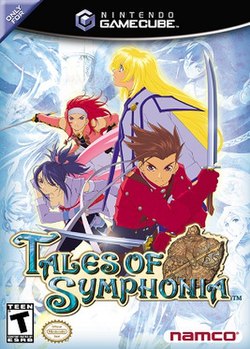
 Tales of Symphonia Remastered on Switch
 Tales of Graces f Remastered on Switch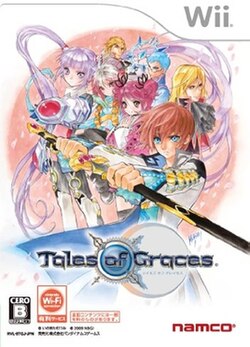










 Another SquareThought Site