

 Oct 2019
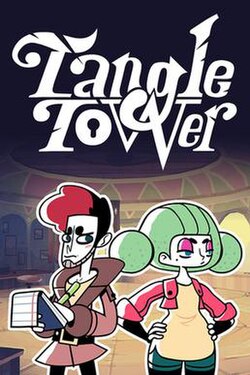

Tangle Tower is the kind of cozy murder mystery that sneaks up on you wearing a tweed jacket and a smile, then stabs you with charm. It follows Detective Grimoire and his quick-witted assistant Sally as they bumble, cajole, and occasionally stare dramatically at portraits while solving the very unusual murder of Freya Fellow - apparently offed by a painting. On the Switch, this game is a compact confection of sharp dialogue, stylish art, and cleverly staged interrogations. It wears its influences (classic point-and-click adventure and whodunit fiction) proudly but folds them into a very modern, very British sense of comic timing. At heart, Tangle Tower is not just about 'who did it?' but about how people tell their own stories and how those stories tangle with each other. If you care more about motives than minigames, and you enjoy a good verbal duel as much as a puzzle, this is a title built for you. The writing is consistently personable, the voice acting is so good it makes you forgive the occasional inventory-hunting detour, and the game's pacing is designed to prioritize character beats over twitch reflexes. That makes it an unusually character-forward mystery: the rooms are sets for people to perform their arcs in, and the evidence is as much emotional as it is physical.
Mechanically, Tangle Tower is classic point-and-click adventuring with some elegant modern touches. You explore richly drawn rooms, click around until a curious detail lights up, and solve environmental puzzles to reveal new evidence. Where it distinguishes itself is its interrogation system: when you unlock a 'something they're hiding' thread, you can pull on it by asking suspects about specific pieces of evidence and watch the characters shift. Those shifts are the game's beating heart, because each revelation doesn't just clear space on the clue board - it redraws relationships. Detective Grimoire himself is an archetype done deliberately. He's not a cold, brooding genius; he's an earnest man whose confidence teeters between theatrical and genuinely baffled. His arc in Tangle Tower is subtle: the game invites you to see him not only as an engine of deduction but as a social instrument. He coaxes secrets, comforts suspects, and sometimes fumbles empathy. His presence anchors the proceedings. The writing leans into his slightly pompous sensibilities while allowing him to be genuinely perceptive, and that balance makes each moment where he's wrong or surprised feel earned rather than merely a plot device. Sally is a revelation if you played the earlier Detective Grimoire and expected a sidekick who only holds the flashlight. She's sharp, impatient, and affectionately sarcastic - a foil who often says the unsentimental truth Grimoire skirts around. Her character arc is not about becoming someone else; it's about revealing that she has always been the most grounded person in the room. The game quietly shifts some of the emotional labor onto Sally, letting her reactions and offhand observations reframe suspects' testimonies. The rapport between Grimoire and Sally is a highlight: it's written like a friendship that has survived a few embarrassments and several small triumphs. The suspects populate Tangle Tower like a miniature repertory company, and the game smartly treats them as performers. The Fellows - Fitz Fellow in particular - are designed to be both eccentric and human. Fitz's design changes during development (the team removed his opaque red glasses after voice acting tests to make him appear more vulnerable) mirror his narrative role: he looks guarded until voice and context strip away the defenses. That design decision is emblematic of the team's approach: character audio and animation informed visual design, not the other way around. Freya Fellow, the murder victim, is a ghost character in the traditional sense: present everywhere but only speaking through memories, paintings, and the people who loved or feared her. The ''murder by painting'' conceit gives the plot a theatrical, almost surreal hook, and the suspects' relationships to Freya become the true evidence. As you interrogate, you realize the case is less a single crime and more a knot of resentments, artistic ambitions, and family secrets. The game excels when it lets you linger in that knot, watching how suspects rewrite their actions to fit the story they want told. Puzzles in Tangle Tower are often motivated by character needs. You don't just pick a lock because there's a chest; you solve a mechanical brain-teaser because Fitz needs to hide something, or because a suspect's vanity forces them to create a prop. That makes problem solving feel narratively coherent. The game also rewards careful listening - the voice acting and dialogue cues are packed with clues, and the localization into 17 languages (a result of the Apple Arcade partnership) is evidence of how much the team cared about preserving tonal nuance across cultures. There are legitimate caveats. The ending, while dramatic, has been criticized for feeling abrupt and for leaving a few threads dangling. Some players will be delighted by the twisty final reveal; others will groan at the sense that not every loose end got a satisfying tying-up. That said, the journey - the micro-arcs for each suspect, the way secrets slowly detangle into motives - is consistently satisfying. Interrogations escalate gracefully, and the final moments land emotionally even if a few explanatory beats feel rushed. Because the game was developed in Unity and exported with a mix of Flash-based art pipelines (FlAn exporter, spritesheets, and a 'squigglevision' outline effect), the team preserved a hand-animated warmth that serves character moments well. The interface never gets in the way: it's simple, context-driven, and built so you can focus on the human stories rather than fighting a cursor. Overall, gameplay is a series of staged conversations and set-piece revelations, and if you like character arcs more than inventory lists, you will find yourself deeply invested.
On the Switch, Tangle Tower looks like an animated graphic novel that remembers to smile. The art direction is a deliberate pastiche of noir-ish stage sets and eccentric portraiture, and it plays beautifully with the theme of a murder supposedly committed by a piece of art. Characters were drawn by Adam Vian and Catherine Unger, finished in Flash, then exported into Unity as sprites. That production lineage could have resulted in a brittle, static look, but the team added layers of motion - bobbing poses, multiple head positions, and inbetweened animations by Jonathan Harris - to keep faces alive. The white outline with a squigglevision effect that surrounds characters was a small but genius choice: it prevents costumes from sinking into similarly colored backgrounds and gives everyone a lived-in, breathing presence. The character designs are expressive without being caricatured. Small design choices informed by performance testing - for example, Fitz losing his opaque glasses to feel more vulnerable after voice tests - reveal a development process that prioritized voice and personality. Those nuances show up in the moments when a suspect's eyes slide away, or when Sally delivers a punchline and her posture stiffens. The backgrounds are richly detailed and often tell small subplots of their own: a torn poster here, a neglected easel there. Music is used sparingly but effectively, giving scenes a theatrical sweep and underpinning reveals with the right amount of melodrama. Technically, the Switch handles the game's assets without hiccups. The spritesheets and timeline tools the developers used allow dialogue-driven scenes to play smoothly, and the tactile satisfaction of pointing, clicking, and revealing a new animation holds up on a handheld. The fonts, UI elements, and color palettes are all chosen to preserve legibility and mood. If the visuals are the cinema, the animation is the actor, and Tangle Tower gets both working in harmony.
Tangle Tower is a murder mystery that cares about people more than puzzles, and that makes it a refreshing, human-sized game. Its strengths lie in its writing, voice acting, and the way character design and performance informed each other throughout development. Detective Grimoire and Sally are a delightful duo with complementary arcs: he is competent but theatrical, she is incisive and grounding. The Fellows and the other suspects are crafted as theatrical personalities whose stories unfold as you prod at their contradictions. If you want absolute closure and a forensic autopsy of every dangling subplot, you may leave the final scene wishing for more. The ending can feel sudden and a little too tidy for the messy human web the game builds. Still, the trip through Tangle Tower is charming, funny, and emotionally resonant - and it was recognized for that quality with awards attention and a BAFTA nomination. The game also stands as a nice case study in iterative character design: audio informed visuals, localization was taken seriously, and the small animation flourishes make dialogue scenes sing. On Switch, Tangle Tower is worth the ticket price for anyone who loves clever dialogue, memorable suspects, and mysteries that reveal more about people than plots. It's compact, witty, and frequently warm; a mystery that invites you to spend time with its cast rather than merely solve a puzzle. That focus on character earns it a solid 8.5 out of 10: not perfect, but deeply likable and often surprising in the best ways.
 Defense Grid 2 on Switch
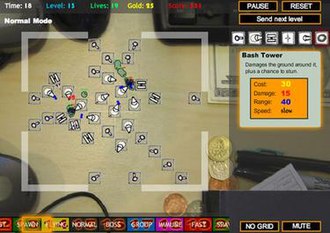
 Desktop Tower Defense on DS
 PlayStation Home on PS3
 Ōkami on PS2
 Crash Bandicoot: The Wrath of Cortex on PS2
 MLB The Show 22 on Switch
 Crow Country on Xbox Series X/S










 Another SquareThought Site