

 Aug 2025
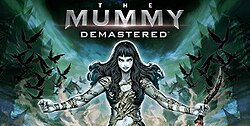

If you handed a pixel artist, a Metroidvania fan, and the marketing department of an ancient-curses studio a crate of hieroglyphs and said "go wild," you'd get something not entirely unlike The Mummy Demastered. WayForward Technologies took the cinematic disaster-I mean, big-budget reboot-of 2017 and gave it a much kinder afterlife: a side-scrolling, exploration-heavy, slightly sadistic but always charming Metroidvania that somehow respects both the source material and the player's fragile sense of dignity. You play as an unnamed Prodigium soldier under Dr. Henry Jekyll's orders (yes, the Russell Crowe-ish presence looms large in-scenario) trudging through a map that steadily unfurls like a badly wrapped tomb. The core promise is simple: explore, die a lot, level up a tiny bit, and become intimately familiar with every room's background pixel. If you like classic Castlevania vibes mixed with Ghosts 'n Goblins' cheerful cruelty, this game will whisper sweet, terrifying nothings into your headset.
The Mummy Demastered is a Metroidvania in the old-school sense: large interconnected map, progression gated by weapons and temporary powerups, and a nagging feeling that you've missed a door because you ran past it while being chased by a giant scarab. The twist WayForward adds is a roguelite-ish death mechanic that either causes you to sigh dramatically or to adopt the time-honored habit of blaming the controller. When you die your old body gets zombified. Your next life is a new Prodigium soldier who must track down the zombified former self and reclaim equipment. It's basically body-snatching with paperwork, and it changes how death feels: instead of being a throwaway moment that sends you back to a save point, every demise leaves a trace in the world and creates a mini quest to tidy up. There's a satisfying tension to running back to your corpse-knowing you could be ambushed by the same trap or enemy that murdered you in the first place. It turns death into a mechanic with personality, rather than a punishment with bad Wi-Fi. Combat and movement are straightforward but have enough meat to stay interesting. You collect a variety of weapons and gadgets, all of which change your approach to fights and exploration. The design leans more Castlevania than Super Metroid: you'll find yourself in well-designed platforming rooms that test timing and patience rather than overcomplicated traversal puzzles. Enemies have patterns that reward observation; bosses in particular feel like learning puzzles rather than RNG swings. There's a dash of Ghosts 'n Goblins influence in the way the game can be merciless at times, daring you to prove your mettle. The narrative is a side story that runs parallel to the movie's events, which is actually a relief. WayForward used the film's trappings-Ahmanet, Dr. Jekyll, ancient Egyptian nastiness-without being enslaved to the script, so the game doesn't collapse under the weight of trying to retell a blockbuster plot. Your job is clean: stop Ahmanet and Set, survive the collapsing tomb, and maybe keep your helmet on. There are multiple endings: two are decided by whether you survive the escape sequence, and a third emerges if, remarkably, you never die throughout the entire save file. That rare "pure run" ending is a little pat on the back for masochists with impeccable timing and an iron will. Controls on Switch are tight enough, and the map is helpful without being spoon-fed. Exploration is rewarding: finding weapon upgrades, new ammo types, and clever shortcuts feels earned. If the game has a mild flaw, it's how some rooms lean into the difficulty spike-occasionally a combo of platforming and enemy placement feels designed to trip you up in a way that's more annoying than clever. Still, each tough sequence is short and recoverable; the game rarely ever feels unfair, just demanding. WayForward clearly leaned on references-both ancient and gaming. The team reportedly used thousands of photographs from the film set for visual reference, and that obsessive research shows up not in photorealism but in the richness of background details. Likewise, the designers took inspiration from late-era sidescrollers, and that lineage helps the game stay accessible to players who remember their childhoods in pixels. The Mummy Demastered isn't reinventing the wheel; it's putting Egyptian hieroglyphs on it and making it roll satisfyingly down a sand dune.
If you play video games for eye candy, The Mummy Demastered serves pixel art the way a good barista serves coffee: with care, flair, and the occasional hipster wink. WayForward's pixel work is gorgeous throughout the game-layers of parallax backgrounds, varied color palettes for different biomes, and character sprites that carry both weight and personality. It's the kind of retro aesthetic that doesn't feel retro for retro's sake; the pixel style is a deliberate choice that lets the artists tell atmospheric stories in every scene. Enemies and bosses are well-animated and often delightfully grotesque: mummies that unfurl like bad tablecloths, giant scarabs that feel like angry beetles from a museum diorama, and other monstrosities that look like they were drawn in the margins of an archaeologist's notebook. Fonts, interface, and menus are crisp and functional, and the UI never gets in the way of discovery-which is what you want when you're sprinting back to reclaim your zombified kit. Performance on Switch is solid. The port landed in Japan in July 2020 after the original 2017 release, and it holds up: no conspicuous frame drops, quick load times, and responsive controls even in handheld mode. If anything, the Switch's portable nature makes the game's bite-sized trials even more addictive-you can die, resurrect, and get revenge during a bus ride, which is both morally and technically impressive. The soundtrack and sound design support the visuals nicely, giving each area its own mood without drowning out the action; think moody, synth-adjacent ambiance with percussion that makes you slightly more heroic when you swing your rifle.
The Mummy Demastered is the rare licensed game that quietly does the genre proud. WayForward took elements from Castlevania, Ghosts 'n Goblins, and general Metroidvania tradition, then wrapped them up in excellent pixel art and a death mechanic that adds emotional resonance to every failed attempt. It's not perfect-the occasional difficulty spike and the inevitable repetition that comes from revisiting rooms can drag a bit-but the overall package is polished and charming. On Switch it feels especially tidy: the visuals pop on the docked screen and stay readable in handheld, controls are responsive, and the game's bite-sized progression loops make it ideal for short sessions or longer benders. Critics largely agreed: Metacritic scores hovered in the mid-70s with outlets like Nintendo Life even handing it a glowing 9/10. For anyone who enjoyed classic sidescrollers, or who wants a Metroidvania that treats death like an interesting narrative tool instead of a punishment, this one's a no-brainer. If you went to see the 2017 movie hoping for thrills, you might have left sore and confused. Play The Mummy Demastered instead. You'll get a smarter, more respectful adventure where the ancient curse is actually the least of your problems-your own hubris and impatience are the bigger threat. In short: WayForward turned an undead IP into something alive, well-crafted, and fun. That's a resurrection story even Dr. Jekyll would tip his hat to.
 The Mummy Demastered on PS4
 The Mummy on PlayStation
 Timespinner on Switch
 Monster Boy and the Cursed Kingdom on Switch
 Teslagrad 2 on Switch
 Mighty Switch Force! Collection on Switch
 Mighty Switch Force! Collection on Xbox One
 DuckTales: Remastered on PS3
 Double Dragon Neon on Switch
 A Boy and His Blob on PS3










 Another SquareThought Site