

 Jun 2019
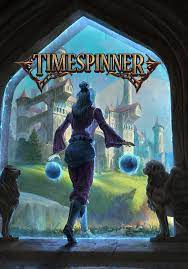

Timespinner arrives on the Switch as a love letter to classic Metroidvania design with a time-twisting hook. Developed by Lunar Ray Games and shepherded to players by Chucklefish, it's clearly inspired by Castlevania: Symphony of the Night and invests heavily in tight platforming, unlockable traversal upgrades, and a compact but deliberate set of combat tools. On paper the mechanical pitch is simple: you play Lunais, a Time Messenger who can pause time for short bursts, using a sand resource harvested by dispatching enemies. The Kickstarter roots and indie scope show in the focused ambition-Lunar Ray didn't try to build an open-world time machine, they tuned a clockwork castle instead. What follows is a technically minded walkthrough of what Timespinner does under the hood, where it nails design fundamentals like control responsiveness and systems cohesion, and where its deliberate conservatism becomes repetition.
At its core Timespinner is a systems puzzle wrapped in pixel art and 2D platforming. The primary mechanics are classic Metroidvania staples: gated progression via permanent upgrades, a sprawling map to explore, and a steady drip of abilities that change what previously inert spaces mean. The concrete examples listed in the documentation read like a checklist any genre fan would expect: a double jump, a water mask for underwater sections, and a familiar that functions as an autonomous damage source. Those mechanics are straightforward, but the twist is the time-pausing ability. Mechanically, pause-to-platform is elegant: the player can freeze local simulation for a handful of seconds, converting dynamic entities into static geometry for traversal. That is both a traversal mechanic and a combat avoidance/mitigation tool, which makes the ability feel like a Swiss Army knife rather than a single-use gimmick. From a technical-design standpoint the sand economy that fuels time-pausing is crucial. Because sand is gained by defeating enemies, the game encourages active engagement with enemy placement rather than passive avoidance. This creates a feedback loop: fight enemies to get sand, use sand to create movement options, reach new areas with created platforms, then confront rooms specifically designed for sand-efficient or sand-intensive traversal. Effective economy tuning here is non-trivial. Too little sand and the mechanic feels punitive and gating; too much and it trivializes level design. Timespinner's approach, as described in source material and corroborated by critics, leans toward sparing-players must be mindful of when to freeze time and when to conserve resources. That trade-off adds a thin strategic layer to otherwise reflex-driven platforming. Controls and input feel are the sinews of any action-platformer, and Timespinner gets frequent praise for responsiveness. Push Square's notes about "satisfying, responsive controls" are important because they imply low input latency and precise collision/hitbox interactions. In a pixel-platformer, jump arcs, air control, and the timing windows for double jumps all depend on a consistent physics timestep and predictable inertia. The game's physics model favors predictability over slippery simulation-momentum is present but not punishing, making sequence-based platforming reliable. Combat also benefits from tight hit detection, which helps in situations where you are juggling familiar assists, sword swings, and time-freeze windows. Enemy design appears to be deliberately tuned for combo risk-reward. Because enemies both oppose progress and supply the sand resource, their placement is dual-purposed: they are obstacles and currency fountains. This creates design spaces where an enemy's difficulty is proportional to the reward they provide, which is an effective way to make encounters meaningful beyond mere life-drain. The familiar system further layers combat by offloading part of the damage-dealing role to an autonomous ally. Technically, familiars usually function as independent agents with simple state machines: follow, attack on sight, and respond to player commands or situational context. If implemented well-as reviews suggest-they reduce cognitive load without trivializing threats. Map structure and gating are classic. Players explore a castle and surrounding grounds, unlocking shortcuts and new regions as they acquire abilities. The Metroidvania architecture here is conservative but well-executed: backtracking is purposeful rather than tedious, and upgrades like the double jump materially change how prior rooms are approached. Critics have noted repetitive environments, which is a technical design consideration: tile reuse and palette variation are sensible for small teams to conserve resources, but they can introduce difficulty in navigation if landmarks are insufficient. Timespinner mitigates this to a degree with level layout variety and the time-freezing mechanic that actively changes traversal conditions, but players sensitive to visual repetition may find the traversal loop less exciting over long sessions. The game's mode list includes both single-player and multiplayer support, though the documentation doesn't elaborate on how multiplayer integrates with core systems. Practically speaking, adding multiplayer to an engine tuned for single-player precision introduces synchronization challenges: deterministic physics vs. networked entity states, and the need to keep sand economy coherent across players. Whether Timespinner's multiplayer is local or online affects these constraints; the source doesn't specify, so it's safe to say multiplayer exists but remains a secondary facet compared to the single-player, tightly tuned experience.
Visually, Timespinner opts for polished pixel art that leans into JRPG-like character presentation and lavish sprite work. Multiple outlets praised the art direction and atmospheric presentation, and the acclaim is justified by several technical choices. First, the game uses layered parallax backgrounds to create depth without taxing the GPU-smart for cross-platform indie releases. Second, sprite fidelity and animation frames are handled with care: characters and bosses exhibit frame counts that make movement readable and telegraphed, which is essential for a game that depends on precise timing. Third, palette and lighting choices support the narrative tone; darker, richer palettes for castle interiors and high-contrast colors for interactive elements help players visually separate hazards from traversal aids. From an implementation perspective, the team appears to have balanced texture memory and runtime performance carefully, enabling ports to hardware like the PS Vita and Nintendo Switch. Pixel art scales well when the team controls the game's native resolution and scaling algorithm; Timespinner's assets are designed to avoid blocky artifacts on the Switch's handheld screen while retaining crispness on docked displays. Reviewers singled out the visuals as a strength, but the documentation also mentions criticism about repetitive environments. That criticism likely stems from tile reuse-an economic necessity for indie teams that can nevertheless reduce the distinctiveness of exploration. The art team counters this with ornate set-pieces and boss rooms that break repetition with unique silhouettes and animation behavior. Audio design and composition by Jeff Ball provide another technical layer that elevates the experience. Well-mixed audio cues are indispensable in a platformer; they communicate successful hits, enemy tells, and ability readiness. If the mix balances diegetic music with queued SFX priorities correctly, the player gains informative sound feedback without suffering masking issues. Review praise for music suggests that the soundtrack is both thematically cohesive and technically integrated with gameplay, supporting pacing in combat and exploration.
Timespinner is not trying to reinvent the Metroidvania wheel; instead, it polishes a few key mechanics until they shine. The time-pausing mechanic, married to a sand-based economy, is the game's primary statement and is implemented in a way that meaningfully interacts with traversal and combat. Control responsiveness, precise hitboxes, and a predictable physics model make platforming reliable and satisfying. Visuals and audio receive high marks for production value, even if environmental tile reuse occasionally introduces sameness in long plays. Critical reception reflects that balance: conservative in ambition, but strong in execution, especially on console ports like the Switch where the game earned generally favorable scores. For players who appreciate technically sound design and a tight, familiar-feeling Metroidvania with a mechanically interesting centerpiece, Timespinner is a very good trip through a well-gated castle. For those hunting radical innovation in level design or environmental variety, it may feel comfortably familiar rather than revolutionary. Either way, Lunar Ray Games built a mechanically coherent title that respects the fundamentals, and on Switch it makes for a compact, technically tidy experience.
 The Mummy Demastered on Switch
 Teslagrad 2 on Switch










 Another SquareThought Site