

 Apr 2023
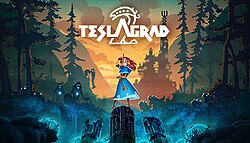

Teslagrad 2 drops you into a chilly Scandinavian-flavored landscape as Lumina, a teslamancer-wannabe who somehow managed to misplace the concept of "home" and now spends the game trying to find it again. On paper that's a simple set-up: stranded protagonist, electromagnetic powers, platforming puzzles, occasional boss faces. In practice the sequel leans into atmosphere and puzzlecraft rather than melodrama and long monologues, so Lumina's emotional arc is told mostly through the world she navigates, the upgrades she collects, and how the game forces you to think about power and belonging. This review is less about listing every mechanic and more about unpacking the characters - both human and environmental - and the story arcs the game actually delivers on the Switch. Expect some levity, a bit of nerdy analysis, and more talk about Lumina than you probably ever wanted.
Lumina is the story and the gameplay wrapped in one neat magnetic bow. Mechanically, Teslagrad 2 keeps things tight: a 2D side-scroller with Metroidvania trimmings that nevertheless plays through in a mostly linear fashion. You move, you solve puzzles, you teleport and manipulate electromagnetic fields, and you collect power-ups that expand what Lumina can do. Those power-ups function on two levels: as literal tools for opening new paths and as narrative beats in Lumina's arc. Each new ability is a trophy of progress that signals subtle internal change - the child who only dreamed of a way home becomes an agent of return. The game intentionally centres Lumina. There are almost no chattering companions, no long exposition dumps, and no sprawling cast of named supporting characters to yank the plot into soap-opera territory. That minimalist storytelling can frustrate players who want cutscenes, bonding moments, or sympathetic sidekicks, but it also allows the designers to treat the landscape as a character in its own right. The environment is written with the sort of care usually reserved for major NPCs: crumbling ruins shudder with backstories, frozen fjords feel resentful, and a persistent Viking-age aesthetic suggests a society that could have become something else entirely if history had taken a different route. Your interactions with this world are the conversation you have with Lumina's fate. Where the game flirts with classic Metroidvania design it also politely refuses to go full open-world. The linearity sharpens Lumina's arc: rather than diluting her journey with endless optional detours, the game places pressure on key moments. The puzzles are the trials of the arc - not just gatekeeping, but character tests. Many of them are clever and satisfying, rewarding observation and timing rather than twitch reflexes. Combat, by contrast, is deliberately muted. Reviews noted that the combat feels limited and that the game almost seems unsure whether to call itself a Metroidvania or a puzzle-adventure. That's a fair criticism, and from the angle of character analysis it actually enhances Lumina's portrayal. She is an explorer first, a fighter only when absolutely necessary. That creative choice reframes boss encounters: they become rites of passage rather than gladiatorial showdowns. Unfortunately, some of those boss fights are less fun than the rest of the game and occasionally interrupt the contemplative mood more than they build it. Narrative economy is a virtue and a vice for Teslagrad 2. Because the story is sparse and mostly environmental, players project more onto Lumina and the world; her arc is therefore subjective. If you enjoy reading mood and metaphor into gameplay, those moments where you gain a teleportation upgrade or learn to manipulate polarity are emotionally resonant - they feel like personal growth. If you want a more explicit arc with dialogues and character beats, you'll walk away wanting more names and faces. The developers' Norwegian background and their choice to amplify Scandinavian and Viking-age influences give the world a distinct cultural identity that acts like a chorus character: it not only comments on Lumina's journey but at times pushes her in directions the script never says aloud. On the Switch, the experience is slightly uneven. Puzzles and core platforming are intact and enjoyable, but performance hiccups reported by reviewers can blunt the smoothness of Lumina's movement and the timing-heavy moments that make her arc feel earned. If you play on Switch and get frame drops during a puzzle or a boss fight, it undermines those emotional payoffs. Despite those issues, the mechanics themselves - teleport, magnetism, puzzle interactions - do a solid job of aligning player growth with character growth, which is the thematic backbone of the whole title.
Teslagrad 2's visual choices are where it most convincingly communicates story without words. Reviewers singled out the art direction as a highlight, and it's easy to see why: the Scandinavian influence isn't just skin-deep wallpaper, it's woven into architecture, color palettes, and environmental storytelling. The world looks like someone asked 'what if Viking-age aesthetics had never been domesticated by modern Europe?' and the answer is gorgeous, atmospheric, and oddly melancholic. Lumina herself is designed to be expressive in a minimalist way: stance, motion, and the way light plays off her abilities communicate mood better than a running monologue ever could. Backgrounds shift from moody palettes to harsh metallic tones during electrical puzzles, and the contrast visually echoes Lumina's inner adjustments as she gains new powers. Critics praised this visual storytelling, and it is indeed the game's strongest card. The Switch port, however, introduces a practical wrinkle. Touch Arcade and other outlets called it "an okay port of a pretty good game," pointing out performance problems that can occasionally erode the presentation. On a machine like the Switch, which is portable and invites short bursts of play, choppy performance during precision puzzles or boss sequences can shatter immersion. The beauty is still there, but sometimes it stutters, and that stutter translates into emotional micro-friction - an ill-timed frame-drop turns a subtle emotional beat into a mild annoyance. On more powerful platforms the visuals and animations breathe without restraint; on Switch they sometimes feel held back.
Teslagrad 2 is a modest, thoughtful sequel that prefers whispering to shouting. Its strength lies in aligning mechanical progression with Lumina's character arc: power-ups are emotional milestones, puzzles are trials, and the Scandinavian-inspired world functions as a living supporting cast. If you enjoy games that let you read between the environmental lines and appreciate visual storytelling over blunt exposition, there's a lot to love here. The game's brevity, limited combat, and a handful of less enjoyable boss fights mean it won't satisfy players hungry for sprawling narratives or brutal action. The Switch edition is enjoyable and portable, but performance hiccups blunt the experience enough that, if you own another platform, it might be worth playing there for a smoother run. For Switch owners without alternatives, the game's atmosphere and puzzle design still make it worth a rental or cautious purchase - just don't go in expecting a 40-hour Metroidvania with a sprawling cast. Instead, expect a focused, artful little journey about a stranded girl learning to bend magnets and, in the process, finding a way back to herself. It's charming, occasionally frustrating, and quietly sincere - like Lumina after a long day of puzzling, standing in the rain and realizing home was a puzzle she could solve all along.
 Tintin: Destination Adventure on PlayStation
 One Piece Grand Adventure on PS2
 Taiko no Tatsujin: Dokodon! Mystery Adventure on Switch
 Onimusha: Dawn of Dreams on PS2










 Another SquareThought Site