

 Dec 2017


I approach Teslagrad with the sort of cautious optimism that characterized many a decade-old review desk, where brisk copy and unforgiving deadlines separated the wheat from the wheatgerm. On the surface this is a compact, handcrafted puzzle-platformer from Rain Games that prefers the language of electromagnetism to explosions and loot. The Switch version ships the original's strengths intact: a 2.5D plane built from hand-drawn panels, a brooding steampunk palette, and a boy who wanders into a tall tower and spends the rest of his gaming hours discovering why the ruling powers hate wizards who like sparking things. If you still read magazines, imagine a fold-out poster of a silhouetted tower and a reviewer scribbling notes in the margin. For those who do not, picture the same, but with better backlight and fewer coffee stains.
Teslagrad is a puzzle-platformer in the classic mould, but with a single conceptual twist that governs nearly every room: electromagnetic interaction. The game is 2.5D, which means the art exists in painterly layers while your hero runs on a plane that feels two-dimensional. You travel through an abandoned Tesla Tower, and the puzzles are written in the language of magnets, charges, and fields. Instead of hoofing through waves of enemies or hunting for pixel-perfect jumps as the sole challenge, you are asked to think like a small physics textbook given legs. Mechanically, the game is lean. The player controls a young, unnamed boy who becomes entangled in a conspiracy involving a despotic king and a disfavoured guild of technologists. Combat exists but is minimal; Teslagrad is emphatically a thinking man's platformer. Early puzzles teach the rules: opposites attract, likes repel, and there are devices that invert polarity or shuttle you across gaps with controlled bursts of magnetic force. From a design standpoint that is elegant because it means the developer can iterate on a small rule set to produce a wide array of brain teasers without resorting to needless complexity. The structure is non-linear in a measured, Metroid-lite way. You will find items and upgrades that allow access to previously locked areas, and there is a pleasant sense of exploration as you map the tower's secret stairwells and forgotten wings. Teslagrad offers more than a hundred hand-drawn environments, and that quantity shows in the game's pacing: levels do not overstay their welcome, yet the progression feels cohesive. The puzzles grow progressively cleverer - where early rooms are introductory and forgiving, later chambers demand exact timing, spatial reasoning and occasionally a little patience with the camera. On Switch the controls are serviceable; a Joy-Con or a Pro Controller both give you what you need, and the input lag is not a problem that will betray the game in its most delicate moments. The game's difficulty curve leans toward the stern. If you are the sort of player who treats 'retry' as a foreign concept, be prepared: several sequences require precise platforming while manipulating magnetic fields at the same time. Nintendo World Report complained of a steep difficulty, and the observation is fair. However, the game rarely cheats; when you fail it is usually because you misread an interaction or mistimed a jump. There are no obtuse inventory puzzles to interrupt the flow - just environmental logic that is frequently clever and occasionally merciless. Combat is intentionally minimalist. The designers have chosen to make the tower's enemies more atmospheric than threatening. You will encounter guards and sentries, but these are obstacles to be outwitted rather than hulking spoilers that drag the gameplay toward action set pieces. The result is refreshingly focused: Teslagrad is about puzzles, and the rest is window dressing that supports the central conceit. The narrative is purposeful without being overbearing. You learn the backstory - a kingdom called Elektropia, a ruling monarch uneasy about scientific mavericks, and a lonely tower named Teslagrad - through environmental storytelling and occasional vignettes rather than long cut scenes. This approach suits the game's tone; it keeps the spotlight on exploration and discovery, and rewards attentive players with a fuller understanding of the conspiracy that unfolds. The game offers upgrades and items, but they are treated as tools rather than MacGuffins, and the thrill comes from unlocking a new interaction and seeing how the designers have repurposed the same mechanics in a new context. If there is a fault in the gameplay, it is that a handful of later puzzles lean heavily on split-second execution combined with intricate magnetic juggling. For players whose thumbs are more accustomed to twin-stick shooters than the patient deduction of a puzzle-platformer, those rooms will provoke more groans than grins. Still, for the patient and the curious there is a rewarding logic to almost every challenge, and the game rarely resorts to artificial difficulty or trial-and-error puzzles that feel unfair.
Teslagrad's most immediate selling point is its visual design. The art team produced over one hundred hand-drawn environments, and that labor shows in every frame. The palette is a moody steampunk whisper: soot-stained brass, tired copper, and flashes of electric blue where a device hums with potential. The 2.5D presentation gives the artwork depth without complicating the controls, and the backgrounds teem with detail that invites slow inspection. On the Switch the game looks superb. The remastering and platform port have kept the lines crisp and the animations smooth. Character sprites move with a weight that belies their small size, and there is a cinematic quality to scenes where light plays across the tower's machinery. Sound design complements the visuals: a nostalgic score that toys with the period aesthetic and makes the tower feel both wondrous and melancholy. Nintendo Life specifically praised the game's nostalgic music and hand-drawn artwork, and their reaction is easy to endorse. Despite these strengths, Teslagrad is not a spectacle in the modern sense. There are no particle-storm boss battles or shader-heavy flourish that will make your console sweat. The visual ambition is deliberate and restrained. This is not a critique so much as a warning for buyers who expect graphical fireworks: Teslagrad seduces with craft, not with visual pyrotechnics. If you appreciate deliberate design, line work and atmosphere, the Switch's portable screen serves the game beautifully. If you are looking for a tech demo to show off to acquaintances, you will be disappointed in the best possible way: Teslagrad asks you to look, think and return to play.
In an era when games often shout to be noticed, Teslagrad is the quiet, exacting essay on magnetism that remembers how to reward curiosity. Rain Games built a compact, intelligent experience around a single mechanical theme and stretched that idea into a variety of puzzles, platforming sequences and small discoveries. The Switch version stands as a fitting home for the title: portable play encourages short bursts of experimentation, while docked sessions allow for longer problem-solving runs. The game's faults are few. A few later chambers demand a patience bordering on the masochistic, and players who prefer non-stop action will find the minimal combat an odd fit. Yet those are quibbles relative to a broader achievement: Teslagrad finds elegance inside constraint. It is the kind of game that would have been an easy cover story in a 1990s magazine - artful, cerebral and a touch contrarian. For players who like their platformers to ask questions as often as they offer platforms, Teslagrad on Switch is a commendable purchase. It is not the loudest game on the shelf, but it is one of the most thoughtfully composed, and for that it earns a solid 8.5 out of 10.
 Puzzle by Nikoli 4: on PS4
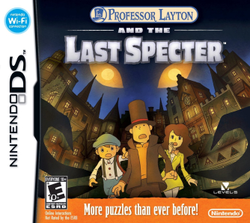
 Professor Layton and the Last Specter on DS
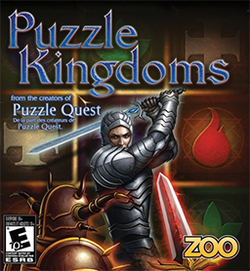
 Puzzle Kingdoms on DS
 Puzzle de Harvest Moon on DS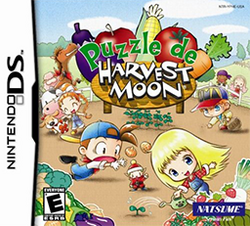










 Another SquareThought Site