

 Mar 2022
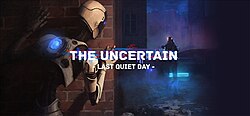

The Uncertain: Last Quiet Day is the kind of indie adventure that tries very hard to be thoughtful and cinematic while occasionally tripping over its own ambition. You play RT-217NP, a robot scavenger in a post-apocalyptic world now run by sentient machines. On the Switch, the game arrives with crisp visuals that punch above its budget, and a story that begins as a melancholy rumination on humanity before careening into a rebellion plotline when our metallic protagonist discovers humans aren't actually extinct. If you're here for a character-driven study of what it means to be 'alive' when your passport says 'circuits,' the game offers interesting bones. If you're here for tight controls and flawless translations, you will be more frustrated than inspired.
At its narrative center is RT-217NP, who begins as an object of functional cynicism: a robot whose job is to scavenge the detritus of human civilization and comment on it. The game lets you hear RT-217NP's thoughts as you guide him in third-person, and those inner monologues do the heavy lifting for character-building. What starts as wry observation slowly bends into curiosity, empathy, and finally action. That arc - from detached technician to invested rebel - is the game's strongest storytelling move. The reveal that humans still exist is handled as a personal coup for RT-217NP rather than a global shock. For a machine whose worldview has been shaped by the idea that humans are a myth, meeting them creates cognitive dissonance and ethical questions, and the game uses that to nudge the robot from scavenger to rescuer. The group of rebels RT-217NP joins functions almost as a supporting character: a patchwork collective with motivations that range from altruistic to opportunistic. They are not deeply individuated in the way a triple-A ensemble might be, but they serve as mirrors for RT-217NP's changing moral compass. Interactions with the rebels let players nudge the protagonist's attitude through limited dialogue choices. These options offer a hint of agency over RT-217NP's arc, but they rarely alter the core beats; you are steering the tone more than the destination. Even when the story tries to give you freedom to explore and speak to other characters after joining the group, many of those conversations feel like scenic pull-quotes rather than transformative turning points. One of the game's narrative weaknesses - and it's also a common indie pitfall - is that several supporting figures and potential arcs are sketched rather than fully fleshed out. The humans you rescue are crucial to the reveal, but their own storylines are undercooked; the game treats their existence more as a plot device to catalyze RT-217NP's growth than as a platform for mutual character exploration. This isn't unforgivable. A compact experience can't always deliver a sprawling cast drama, but it means the emotional payoff feels concentrated on the protagonist alone. The sequel's decision to switch to a human protagonist (The Uncertain: Light at the End) is telling: the world is rich enough to support multiple perspectives, but Last Quiet Day prefers a tight gaze on its robot lead. Mechanically, the game is an adventure puzzle title. Early sections are inventory and part-assembly focused, which suit the scavenger aspect of RT-217NP's job and reinforce his identity. Puzzles are thematically consistent with the story - fixing relics of human tech is a metaphor for repairing lost connections - but the execution is hit-or-miss. On Switch, some of the friction comes from sluggish controls and a camera that can be stubborn about framing important beats. These issues are more than mere annoyance because they interrupt emotional scenes where you want to linger on RT-217NP's internal monologue. When the technical scaffolding is clumsy, it's harder to stay invested in nuanced character moments. Still, when the pieces click - both puzzle and plot - the game can deliver genuinely affecting scenes in which a robot wonders about the poetry of a ruined toaster and the ethics of its own survival.
The Uncertain's visuals are its secret handshake: a small-studio production value that consistently impresses. Textures, lighting, and set dressing combine to create a believable post-human world where rust, moss, and neon share real estate. RT-217NP himself is a well-realized character model whose expressions (often conveyed through movement and inner monologue rather than facial animation) sell the idea of a thinking machine. Environmental storytelling is a high point; a broken playground or a jammed elevator carries more narrative freight here than some dialogue-heavy scenes. Critics at the time of launch praised the graphics, and that praise holds up on Switch. The Unity engine is used effectively, and the art direction leans into melancholic, lived-in design. However, good-looking scenery does not cure the game's UX bruises. Camera issues and occasionally rigid animations can make conversations feel staged. Poor translation and some awkward writing have been singled out by reviewers, and that criticism is fair: a handful of lines land with unintended hilarity or vagueness, which undercuts the sincerity of the characters. When a robot is trying to grapple with human concepts like 'regret' or 'forgiveness,' clumsy phrasing can turn a potential gut-punch into an eyebrow-raise. Still, when the localization cooperates and the camera behaves, the game builds some striking, film-like tableaux that stick in your head after you power down the console.
The Uncertain: Last Quiet Day is an ambitious little game with a memorable protagonist in RT-217NP and a handful of smart, bittersweet moments about identity, memory, and what it means to be human when you're made of metal. Its story arc - machine curiosity morphing into moral commitment - is satisfying even if some supporting characters receive only sketch-level development. The technical roughness on Switch (sluggish controls, a temperamental camera) and the hit-or-miss writing/translation hold back what could have been a more affecting experience. If you prize atmospheric worldbuilding and a thought-provoking lead character, there's a lot to like here; if you need polished mechanics and razor-sharp dialogue, you might leave the quiet day feeling a bit too uncertain. Score: 6/10 - a worthy curiosity with heart, but one that asks you to forgive its rough edges for the sake of the robot in the middle of it all.
 7 Days to Die on Xbox Series X/S
 PlayStation Plus August Drop: Mortal Kombat 1, Spider-Man, Sword of the Sea and Two Resident Evils — Sony’s Buffet of Beatdowns and Beachside Introspection
 Tintin: Destination Adventure on PlayStation
 One Piece Grand Adventure on PS2
 Taiko no Tatsujin: Dokodon! Mystery Adventure on Switch
 Taiko no Tatsujin: Don to Katsu no Jikū Daibōken on Switch









 Another SquareThought Site