

 Aug 2019
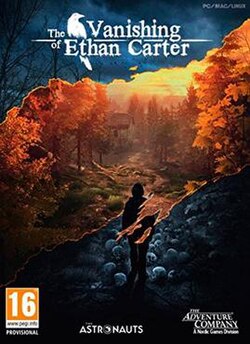

The Vanishing of Ethan Carter is the sort of game that treats you like an adult and then immediately gives you paranormal powers so you can play forensic interior decorator on dead bodies. Designed by The Astronauts, a small studio formed by ex-people-can-fly developers who wanted to swap gun fights for existential dread, the game originally launched in 2014 and eventually made its way to Switch in 2019. This is the Redux era of the title, which means it has been moved over to Unreal Engine 4, given a smarter save system, and had some of its rougher edges sanded down. If you enjoy walking at a deliberately thoughtful pace, finding story like eggs in tall grass, and learning that the narrator might literally be imaginary, then this game will keep you company for a handful of haunting hours.
You play as Paul Prospero, a paranormal investigator with a name that sounds like it belongs to a Victorian magician or a highly efficient estate agent. Prospero receives a fan letter from 12-year-old Ethan Carter and goes to Red Creek Valley to investigate the boy's disappearance. The 'how' of the story is more interesting than the 'go here, click that' approach most modern games use: this one proudly refuses to hold your hand. That is either admirable or mildly infuriating depending on your tolerance for ambiguity and nocturnal woodland atmospheres. Gameplay is built around exploration and reconstruction. The valley is open for you to wander, a deliberately natural-feeling environment modelled with photogrammetry and inspired by real mountain ranges. When you find a corpse, you can use Prospero's paranormal sense to detect important objects and restore the scene. It is forensic puzzling where the clues do not shout at you; instead they sigh. You collect fragments of a timeline and slot them together until a coherent series of events snaps into place. There are multiple deaths to investigate, each a tiny mystery that layers into a larger, increasingly strange tapestry. The game also peppers the landscape with extra 'stories', optional threads that deepen the ending if you choose to unpick them. Some of these are straightforward puzzles, while others tip into stealth-like sequences where failure resets the area. The tone never quite becomes action-y - you are not being trained to twitch-flick enemies - but these moments inject tension and variety, making the game feel less like a walking simulator and more like an anthology of ghostly short stories. Narrative-wise, the game walks a deliciously weird line. It borrows from weird fiction and is explicitly inspired by An Occurrence at Owl Creek Bridge, which helps explain the dreamlike structure and the appetite for a twist that reframes the entire experience. Without spoiling the exact mechanics of the twist, know that revelations here are not decorative; the game often rewrites its own rules as you uncover Ethan's stories. The final mural-based reveal asks you to reconsider what you took for granted, which is bold for a medium that so often prefers to spoon-feed cataclysmic expositional monologues. There were complaints about the original save system and the late-game backtracking sequence. Redux addresses those specific complaints: the engine swap to Unreal Engine 4 brought a revised save system and removed the tedious backtracking at the end. On Switch you get the benefit of those fixes, even if the hardware means you'll be playing on a less car-crash-level graphical platform compared to high-end PCs. The level design nudges you towards curiosity rather than combat, and the pacing rewards patience. If you like being left to your own devices with only ambient music and the occasional ominous whisper, this game gives you that luxury.
Visually, the game is its own salesperson. The Astronauts used photogrammetry to craft an environment that looks and feels lived-in, or at least abandoned in a way that suggests prior inhabitants had bad taste in wallpaper and worse secrets. The landscapes are expansive, with fog, slanting light and uncanny little details that make simple walks feel significant. There are few jump-scares and fewer cheap shocks; instead the visuals do the real haunting by being quietly, insistently beautiful. On the Switch, the visual punch is understandably softened compared to the highest-spec PC and console versions, but the art direction carries the weight. The world still reads as coherent and eerie. Light, mist, and foliage are used to excellent atmospheric effect. The Redux port's move to Unreal Engine 4 matters here because it improved the way the game saved itself and polished how scenes resolved. The environments were always the headline act, and even on portable hardware they remain the thing you will remember most. The sound design and soundtrack deserve a passing bow as well. Composer Mikolai Stroinski and the team created music that adds emotional ballast without being manipulative. Voice acting is solid and restrained - Prospero doesn't narrate like a poet and that's a strength. When the game wants you to feel small, the audio lets you know without shouting. When it wants you to feel sorrow, it does so with a single string instrument and a choice of silence.
The Vanishing of Ethan Carter on Switch is a patient, sometimes unnerving piece of interactive fiction that prefers implication to explanation. The Redux improvements - including the Unreal Engine 4 port and a better save system - make the Switch release a clean way to experience the game without the rough edges that irritated some reviewers at launch. The core is an open-world exploration of grief, imagination, and the cruelty of family, packaged as paranormal detective work where you reconstruct events like a soberer CSI: folklore edition. If you want frantic action, look elsewhere. If you want a tightly written, beautifully realised, and sometimes upsetting mystery that respects your ability to think and feel, this game will reward the time you give it. It is not perfect: the deliberate vagueness will frustrate some and the Switch's hardware is not magic, but The Vanishing of Ethan Carter remains one of those rare games that lingers after the console goes to sleep. Consider this your friendly deadpan warning: you will probably finish it feeling a little hollow and strangely consoled. That is the point.
 Resident Evil 7: Biohazard on PS4
 Resident Evil Village on Switch
 Tintin: Destination Adventure on PlayStation
 One Piece Grand Adventure on PS2
 Taiko no Tatsujin: Don to Katsu no Jikū Daibōken on Switch
 Taiko no Tatsujin: Dokodon! Mystery Adventure on Switch










 Another SquareThought Site