

 Feb 2023
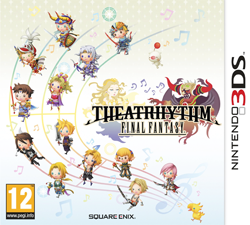

If you like Final Fantasy music, congratulations: this game is basically a museum where every exhibit punches you in time. Theatrhythm Final Bar Line is the latest, sprawling entry in a series that started as a charming 3DS oddity and quietly became the place where thirty years of melodic melodrama go to be tapped, swiped and held to death. Released on Switch (and PlayStation 4), Final Bar Line proudly announces 385 songs at launch and more on the way via DLC, which is an oddly soothing kind of obsession. Theatrhythm was always a love letter to fans who remember midi-era battle themes and full orchestral swells with equal fondness. Final Bar Line is that letter with better paper, more stamps and the occasional cameo from other Square Enix franchises. You play as a quartet of chibi Final Fantasy characters who march through Field, Battle and Event stages, and your reward for keeping rhythm is largely aesthetic: satisfying hits, shiny ranks, and the illusion that your party actually did something meaningful between notes. The core idea remains beautifully simple. Tap when the notes hit the center. Swipe when notes ask. Hold when the note is clingy. Do this well and you get the kind of gratification that makes you feel guilty for how much of your childhood soundtrack you can hum while smiling blandly into a Switch screen. Critics loved the older entries for their tracklists, the novelty of mixing RPG trappings with rhythm mechanics, and the way certain EMS cutscenes will reduce a grown composer to tears. Final Bar Line leans into that nostalgia, widens the buffet, and gently asks: do you still want more chocobo themes at 60 frames per second? The answer for most players will be yes.
Theatrhythm's gameplay is the kind of uncomplicated machination that pretends to be a tough nut to crack and then rewards you for not overcomplicating it. If you know the series, you know the three flavours of stage: Field Music Sequences, where your tiny party runs along a side-scrolling overworld and you tap, slide, or hold along waveforms as the screen scrolls; Battle Music Sequences, where notes come from left to right and represent your attacks, summons and special abilities; and Event Music Sequences, which are basically interactive music videos where you follow a cursor around while the original game cinematics bathe you in nostalgia. Bar Line ships with the same reliably addictive stage triptych, scaled up to obscene levels of content. Field stages are buoyant and occasionally cruel. Hitting notes makes your character sprint; missing notes is the game equivalent of tripping over your own ego. There is even the chance to ride a chocobo for a speed boost, which is foolishly satisfying and will ruin you for real-time racing forever. Battle stages are where the percussion counts and your timing directly translates into damage. Good timing makes attacks land harder; perfect timing sometimes triggers flashy summon attacks that feel like a micro-RPG victory screen compressed into a single satisfying moment. Event stages exist to make you cry quietly on public transport when they play that one theme tied to a childhood boss you lost to thrice. The RPG bits remain present, though they are mainly window dressing. You still assemble a four-person party, level up characters, and equip accessories, but the core fun of the game is musical. Reviews of the series have long pointed out that the party system functions as a visual aid for success more than a strategic layer. That remains true here: you can grind characters for little mechanical payoff beyond slightly better stats and the occasional edge that makes a brutal boss song more manageable. If you were hoping for deep party management, you will be disappointed in the same way you are disappointed that your cat will never learn to cook. Final Bar Line inherits the Chaos Shrine concept and expands the idea: a multi-level challenge tower where you play paired stages (field then battle) and face one of several bosses, each with different item drops. This is the part of the game that wears you down and builds you up at the same time. It rewards perseverance, precision and a willingness to replay the same song until your thumbs develop a distinct sense of shame. Unlocking harder difficulties in Challenge Mode and then carrying them into Series Mode is back, which means the game is as much about collecting and completion as it is about musical timing. If you love the idea of unlocking rarer, stranger tracks - say, mambo-infused chocobo ditties - then this is your Everest. Controls have always been touch-first: tap, slide and hold on the 3DS and mobile editions. On Switch, the interface has to stretch a bit further. The document base doesn't fully list the control permutations for Bar Line, so expect the game to retain the classic touch language in spirit while accommodating Switch quirks. Critics of earlier entries suggested button controls would be welcome; given the platform, it would be a relief if the Switch version lets you swap between touchscreen, Joy-Con or button-based inputs without judgment. The game continues to offer multiplayer and a generous number of modifiers: no-fail practice modes, difficulty tiers that genuinely scale from lenient to masochistic, and the kind of DLC ecosystem that encourages both rational and irrational purchases. The promised DLC will add 90 songs from other franchises like NieR, The World Ends With You and Chrono Trigger, which means your playlist will eventually become confusingly canonical and weirdly comforting all at once.
Graphically, the series has always been small and confident. It never pretended to be hyperreal, choosing instead to put a squad of chibi characters and tidy backgrounds on the screen while the soundtrack does the heavy emotional lifting. Final Bar Line benefits from being on Switch: the backgrounds are cleaner, the cutscenes (in EMS stages) look crisp enough to make old game footage feel like a warm, familiar sweater. The chibi cast is still adorable in that resigned way only veteran JRPG characters can be when reduced to cartoon proportions. The FMS backgrounds can feel repetitive if you stare too long, as previous reviews noted, but you rarely stare for reasons other than respect for the music. The real visual show is in the EMS cinematics. Those background snippets, pulled from across Final Fantasy history, are the game�s secret thrill. Seeing a beloved scene play while you keep time makes the whole experience feel like playing conductor at a funeral for your youth in the best possible way. Animations are punchy, summons look grand, and the UI is readable without being aggressively modern. If you're allergic to nostalgia, the graphics won't cure you, but they won't try to either. They are politely competent and occasionally moving, which is exactly what this game needs.
If Theatrhythm Final Bar Line had a mission statement it would read: maximize songs, minimize pretense, deliver nostalgia with a dry wink. The series has always been stronger as a jukebox with rhythm minigames than as a meaningful RPG, and Bar Line knows that. By piling on an enormous setlist (385 tracks at launch) and promising more DLC from beloved Square Enix properties, it doubles down on what works: letting you play the songs you grew up with or the arrangements you discovered on late-night YouTube rabbit holes, and doing so in a way that makes rhythm feel like a small, enforceable joy. There are caveats. The RPG layer remains light, sometimes to the point of being purely cosmetic. If you want a deep combat system where party composition becomes an obsession, come back later with a different game. Some backgrounds repeat, and if the Switch version doesn't treat control schemes gently, purists who prefer buttons over taps will grumble into their headphones. But these are small grumbles. Final Bar Line is essentially an apologetic, generous anthology for fans, and it does what it sets out to do with competence and a surprisingly dry sense of humor. There are songs to unlock, shrines to clear, and a comforting sense that somewhere behind the interface a composer is quietly pleased. Score: 8 out of 10. It is not trying to reinvent music games. It is trying to be the best possible way to play a mountain of Final Fantasy music, and for that aim it succeeds spectacularly. If you care about soundtracks, rhythm games, or gentle, repetitive mastery, you will find this game a polite, persistent companion. If you only came for deep RPG systems or revolutionary visuals, you will leave having spent many pleasant hours with a playlist that will haunt you in queue lines for weeks. Either way, you will hum the themes in the shower and feel no shame about it.
 Railfan: Chicago Transit Authority Brown Line on PS3
 Punch Line on PS4
 Rhythm Heaven on DS
 Super Crazy Rhythm Castle on Xbox Series X/S
 Rhythm Heaven Groove on Switch
 Taiko no Tatsujin: Dokodon! Mystery Adventure on Switch










 Another SquareThought Site