

 Sep 2018
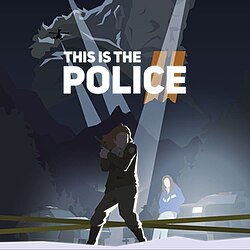

This Is the Police 2 arrives on Switch as a grizzled, morally ambiguous road trip through small-town law enforcement, with a dash of tactical XCOM-style grit and a coat of Fargo-flavored noir. You play Warren Nash, the man who prefers to keep his past in a fedora and a different name: Jack Boyd's sobriquet redux. The setup is deliciously obvious in its noir pedigree - a fugitive trying not to get caught, a town named Sharpwood that sounds like a knife that tells bad jokes, and a crew of cops whose loyalty and competence are as fragile as wet cardboard. The game is part management sim, part turn-based tactics, and very much a character study. The developers lean hard into personalities: the sheriff's office is less a team and more a rotating theatre of grief, ambition, and simmering backstabs. If you came for pure puzzle-solving or streamlined mechanics, reviews said the same thing: a brilliant core wrapped in some mechanical bloat. If you came for people, you're in the right interrogation room.
At first glance the gameplay reads like a checklist: allocate resources, dispatch officers, resolve crimes with turn-based tactics, and babysit the emotional state of your staff. Underneath that checklist, though, the game scaffolds a surprisingly intimate relationship system that entwines with the narrative. The Sheriff's Department mechanic is not just a UI flourish; it's the emotional connective tissue between the player and the cast. Each officer arrives with a skillset and, more importantly, a set of personal problems. Figuring out whether to send Officer Ramirez with a taser or some counseling isn't merely an optimization puzzle - it's a moral decision with career- and life-long consequences. That design choice forces you to consider people as variables, not just stats. Warren Nash's arc is the spine that carries most of the emotional weight. He's presented as a man wearing a new name like a cheap disguise, hoping the past doesn't RSVP to the present. The gameplay echoes that. Tactical encounters - grid-based, XCOM-adjacent skirmishes - are where Nash's leadership is tested in cold, noisy detail. When his officers flinch, make mistakes, or disobey orders, it isn't just a penalty screen: it's a moment that reframes how you view Nash. Is he an empathetic commander who understands trauma, or a hardened bureaucrat who expects results? The game lets you answer by how you run the precinct. If you prioritize loyalty and counseling, you'll shepherd a battered family of cops to functional stability; if you prioritize efficiency, expect burnouts and bitter mutinies. Neither path is morally pristine - the game delights in the fact that leadership often involves choosing the lesser of many evils. Lilly Reed's rise to sheriff is a compact tragedy in miniature. The plot hook - Sheriff Wells and two officers killed in an ambush linked to the Neckties gang, leaving Lilly promoted - turns what could be a perfunctory promotion into a crucible. Her arc is about authority under fire and the crushing loneliness of being the person who must make final calls. Gameplay forces you to live those calls: when crime hotspots spike, the choice to send rookies into the woods is no longer a line-item but an ethical dilemma about the expendability of your people. Lilly's story shows how promotions often come with a cost: survival is traded for responsibility, and that weight is reflected in the balance between resource management and tactical play. You feel the grind in your pocketbook and the ache in the staff room. The Neckties gang functions as both antagonist and thematic mirror. They are less painted mob bosses and more a weather system: sometimes a storm, sometimes a constant drizzle. Their presence exposes systemic issues - drug trafficking, corruption, and the ripple effects of small-town crime. Encounters with the Neckties are where the tactical rules collide with narrative consequence. A raid that goes sideways doesn't just cost you equipment; it fractures relationships, reshapes future dialogue, and influences morale. The design choice to tether gang encounters to character outcomes is clever: defeating the gang on a map doesn't automatically heal the people who did the fighting. The nonlinear narrative structure rewards players who pay attention to character beats. Conversations, side quests, and off-duty incidents are where arcs breathe. An officer's relapse into substance use, or an argument about protocol, can emerge during downtime and escalate into a crisis that affects field performance days later. That interplay makes the management layer feel human and occasionally heartbreaking. It's also the source of the game's main criticism: the game tries to be a lot of things. Tactical combat, management sim, and branching narrative don't always harmonize neatly, and sometimes the emotional storytelling gets buried under complex minutiae. Critics called it 'bloat' and 'occasional difficulty spikes' - and they're not wrong. At times the meta-game feels like paper-pushing at the worst possible moment. Yet the emotional returns are real. When a tired patrolman earns back his pride after a successful operation you orchestrated with empathy, the payoff feels earned. When Warren/Nash flickers between exasperation and paternal concern, the writing turns micro-decisions into moral punctuation marks. The gameplay is, in many ways, a study in how systems can tell people-centric stories: the mechanics are not just obstacles - they are how the game explains character.
Visually, This Is the Police 2 opts for stylized, slightly caricatured isometric presentation. The isometric map is primarily functional - streets, buildings, and crime scenes are clearly readable - but the art does something more subtle: it sets tone. Characters are drawn with exaggerated, memorable silhouettes that make each officer feel like an actor on a dimly lit stage. Cutscenes and portrait work are where the game's personality shines; facial expressions, when combined with a bit of sardonic voice work, convey more about a character's emotional arc than a menu could. On Switch the graphics are not a technical flex but a consistent mood-setter; the game isn't selling photorealism, it's selling atmosphere. The slightly rough edges of the art are almost comforting - the whole town looks like it was painted by someone who smokes while sketching - and that fits the game's weary narrative. Performance on Switch is functional. The isometric interface and turn-based maps translate well to handheld controls, though there are moments when the UI feels cramped compared to a mouse-and-keyboard setup. Tactical missions are readable, losses are comprehensible, and the animation flourishes land just often enough to keep things engaging. The overall package reads like a well-thumbed noir comic rather than a high-budget action epic, and that choice suits the writing-focused ambition of the game.
This Is the Police 2 is a game that insists you care about people even when the systems make it hard. It's flawed - reviewers noted 'mixed or average' reception on Metacritic and called out the extra mechanical layers that sometimes feel like bloat - but the heart is messy and beating. Warren Nash's attempt to hide from federal agents is a conceit that lets the game explore identity, responsibility, and the small moral compromises that define leadership. Lilly Reed's promotion and the deaths that precede it are the kindling for a narrative about lonely authority. The Sheriff's Department mechanics and the turn-based skirmishes force you to choose how you want your drama delivered: with empathy, with iron efficiency, or with the resigned shrug of someone who learned too late that there are no clean solutions. If you're buying This Is the Police 2 on Switch, expect character-first storytelling wrapped in a hybrid gameplay shell that sometimes squeaks. If you want a tight, single-genre experience, this game will surprise you by being generous in other directions. If you want to babysit personalities and feel the emotional consequences of sending the wrong cop into the wrong house at 2 a.m., then this is the precinct for you. The score reflects that mixture: a solid 7 out of 10 for ambition, narrative depth, and memorable characters, docked slightly for mechanical excess and occasional pacing issues. Ultimately, the game is a dossier of small tragedies and stubborn hope - and once you start reading these case files, turning the pages becomes surprisingly difficult to stop.
 This Is the Police on Switch
 Police Stories on PS4
 Kochira Katsushikaku Kameari Kouenzen: Hashutsujo – High-Tech Building Shinkou Soshi Sakusen! no Kan on PlayStation
 Tintin: Destination Adventure on PlayStation
 One Piece Grand Adventure on PS2
 Taiko no Tatsujin: Dokodon! Mystery Adventure on Switch
 Taiko no Tatsujin: Don to Katsu no Jikū Daibōken on Switch










 Another SquareThought Site