

 Feb 2021


There are times, as a reviewer of an industry that once celebrated dots, sprites and the pragmatic joy of blowing on cartridges, when a game arrives that forces one to shelve the usual hyperbole and instead report plainly: this is a fine piece of design. Thomas Was Alone is such a game. Born from a 24‑hour game jam and nurtured into a fuller release by its creator Mike Bithell, it takes a premise so minimal you can draw it on a post‑it note - coloured rectangles hopping about a two‑dimensional plane - and, by tedious craftsmanship and a sense of theatrical timing, turns it into a surprisingly moving experience. If you like your videogames to wear their influences on their sleeve, this one wears Bauhaus and Piet Mondrian like cufflinks. If you prefer them to speak to the imagination as much as the thumbs, it does so with an affecting script and the quietly amiable narration of Danny Wallace, a performance that earned a BAFTA. The Switch edition lands late in the game's life, but that does nothing to diminish the cleverness at the game's core: a set of very small mechanics combined with very big ideas about personality, cooperation and purpose. I approached Thomas Was Alone with the skeptical eye of someone who remembers when 'minimalism' was shorthand for 'cheap', and I left pleasantly chastened. This is an indie that remembers how to be concise, how to teach without patronising, and how to coax feeling from geometry. If you buy only one puzzle game on Switch this month because you want something short, intelligent and unlikely to make you rage‑quit, this will be a sound bet.
At first glance Thomas Was Alone is nothing more than a platformer you could sketch on the back of a receipt: run left, run right, jump. The important bit lies in the company you keep. Each rectangle you meet is an artificial intelligence routine given a simple body and a distinct personality: Thomas himself (technically 'Thomas‑AT‑23‑6‑12'), Chris, John, Claire, Laura and others. Each shape is distinguished by its colour, size and one particular mechanical quirk. One cannot jump high; another will float on water; one falls upwards. You do not control them all at once; instead you switch between available shapes, guiding each to its own exit point so that, at the final beat of each level, they occupy their destinations simultaneously. This shared‑exit conceit is the clever fulcrum. The puzzles are not about performing an isolated platforming stunt, but about choreographing an ensemble. A small block with a weak jump can be hauled upward by stacking larger comrades beneath it; a floating shape can ferry others across treacherous pools; the one who falls upwards will offer the player a fresh perspective on how gravity and level design can be turned against you. There are hazards - spikes, water, splitters that 'eat' characters - but death is a gentle tutor: lost shapes respawn either at the level start or at recent checkpoints, keeping frustration to a minimum and letting the player experiment without penalty. Levels are grouped into ten sets, each typically introducing a new character and the associated mechanics. The introduction of new abilities is paced with the discipline of an educational designer: early stages teach a single trick, subsequent stages recombine prior lessons until the player is solving puzzles that feel emergent rather than arbitrary. This is no coincidence: Bithell built the expanded version of the game to refine the original Flash prototype, using the Unity engine to add narrative, polish and additional puzzle elements. The result is a learning curve that respects the player's time while still offering moments of genuine 'aha'. When multiple shapes are available, the pleasure shifts from dexterity to planning. You will position, reposition and sometimes sacrifice a rectangle to act as a stepping stone. The game rewards economy of movement and imaginative use of the characters: one level which looks like an innocuous vertical gauntlet becomes a miniature movement puzzle when you realise a larger block can create a staircase for a smaller one. There are no timers, no collectibles demanding obsessive searches - the objective is pure and narratively justified: lead the little intelligences to their exits. For those worried the game is all thesis and no play, rest assured it remains a competent platformer. The controls are clean; the physics are consistent. The Switch build is a later port in a line that includes PC, PlayStation, Vita, iOS and Android, and while the documented touch enhancements were specific to Vita and mobile builds, the Switch's control scheme presents no problem. Extra content introduced on PlayStation - new levels and the Benjamin character with a jetpack‑like ability - was later made available to other platforms, so players get a reasonably complete package. The Benjamin's Flight expansion and the additional 'shifter' mechanics seen later in the storyline add variety without violating the game's minimalist aesthetic. If there is any criticism here, it is only that the game is short. A completionist could see the main story through in a handful of hours. Yet Thomas Was Alone is paced like good literature rather than a bloated triple‑A: it states its premise, explores it with admirable restraint, and moves on. In an age of padded runtimes and filler levels, there is dignity in brevity.
Graphically, Thomas Was Alone behaves like a well‑composed poster rather than a photorealistic experiment. The rectangles themselves are deliberately sterile - a design decision rooted in Bithell's admiration for modernist composition - but they stand out against a backdrop that occasionally blooms with texture and light. Levels are presented in clean two‑dimensional vistas; geometry is honest and readable. There are no distracting particle explosions or overzealous shaders, just measured use of colour and contrast to guide the eye and indicate function. This is not a game that will sell hardware, but it uses its visual economy to excellent effect: with very little, it says rather a lot. Sound and music do the heavy lifting in terms of emotional weight. Composer David Housden provided a soundtrack that reviewers called 'beautiful' and 'understated,' with electronic blips gradually rehearsing themselves against acoustic instrumentation to underscore the narrative of intelligences pushing toward an outside world. The narrator - Danny Wallace - is superb. His dry, sometimes rueful delivery supplies the characters with personality without ever lapsing into caricature. Wallace's performance was rightly recognised with a BAFTA award, and for good reason: he transforms line segments and boxes into creatures you care about. Technical polish across ports has been solid. Bithell worked with various partners on different platform builds - Bossa Studios and Curve handled some of the porting, and Ant Workshop published the Switch port - and the game runs reliably. On Switch you get the convenience of handheld play, which suits the short, episodic nature of the levels. A free demo was made available before the Switch release, a sensible move for a title whose pleasures are more tonal than flashy. For a game that costs relatively little and exists in a modest visual idiom, the presentation belies its tiny budget: Bithell estimated development and legal costs at roughly A35000 initially and raised additional funds for Wallace's voice via Indiegogo, yet the final product reads like the labour of a careful and experienced designer rather than a shoestring experiment.
In the manner of a 1990s critic who has seen an industry expand from two dimensions into many, I can say with conviction that Thomas Was Alone is an exercise in gamecraft worth celebrating. It proves that personality in games need not be purchased by realism; it can be written into mechanics and narration and coaxed from the player by design that trusts intelligence over gimmick. The writing is witty and occasionally poignant, the puzzles are thoughtful, the audio is exemplary and the core mechanics are judiciously taught and recombined. That the game also has a story - about emergent AIs, the fountain of wisdom and the yearning to reach an 'outer world' - gives it a narrative spine rare for a title composed of rectangles. Moments in the plot, such as interactions with the pixel cloud 'splitter' and the eventual 'emergence' of the AIs into the real world, land with surprising gravity. If the brevity of the experience is a complaint, it is a small one: great design should not be measured in hours alone. Thomas Was Alone leaves you with a clear memory and the odd sting of affection for creatures that are nothing more than coloured blocks. On the Switch, it is an eminently portable little treasure. I award it a 9 out of 10. Buy it if you value intelligent puzzle design, splendid voice work and music, and a game that knows when to say enough. In an industry that often equates spectacle with value, Thomas Was Alone politely reminds us that restraint, personality and a sound hook are still potent currencies.
 Alone with You on PS4
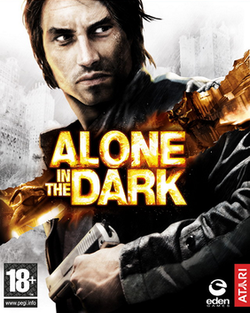
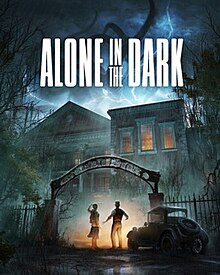
 Alone in the Dark on Xbox Series X/S
 Puzzle by Nikoli 4: on PS4
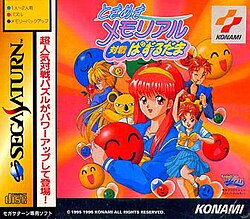
 Tokimeki Memorial: Taisen Puzzle-Dama on PlayStation
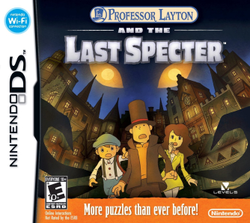
 Professor Layton and the Last Specter on DS
 Tokimeki Memorial 2 Taisen Puzzle Dama on PlayStation










 Another SquareThought Site