

 Aug 2022
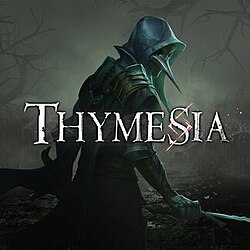

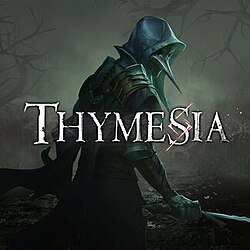
In an era when games announce themselves with the subtlety of a thunderclap, Thymesia arrives like a plague doctor's shadow on the doorstep of the modern action-RPG. Developed by Taiwan's OverBorder Studio and shepherded to retail by Team17, Thymesia sets itself the modest goal of marrying furious, precise combat with a morbid, alchemical fable - and then asks you to survive long enough to care for either. On paper it wears its influences like a heavy cloak: critics and developers alike call it a 'Soulslike,' and it borrows a melody from that hard-edged lineage. In practice the game is smaller, more focused, and oddly intimate. You play Corvus, feathered cloak flapping and birdlike mask gleaming, a single figure sent into a kingdom undone by alchemy and plague. The Switch edition is delivered as a cloud-based experience, which alters the conversation: the game's aesthetic and design come through intact, but the delivery method tints the experience with occasional latency and the odd compression artifact. This review proceeds with the earnestness of a desk-bound critic holding a glossy magazine and the wry smile of someone who has seen both triumph and folly in equal measure. If you have a soft spot for disciplined difficulty and gothic atmosphere, Thymesia will offer you moments of grim satisfaction. If you demand technical polish and sprawling scope, you may find the journey lean and occasionally forgettable, as several reviewers have already observed.
Thymesia's mechanical heart is a study in controlled aggression. Corvus is nimble, his moveset compact and brutal: quick slashes, charged strikes, a parry that will sever the patience of any foe, and an ingenious plunder system that feels like a clever equalizer. When you land blows and execute flawless counters, you can pluck 'plague' from enemies - a form of currency that functions both as health-recovery and as a resource to be spent on improving your arsenal. This plunder mechanic rewards skilled play and creates a loop that nudges you to fight precisely, not just relentlessly. The combat borrows the rhythm of the harder action-RPGs: study an enemy, bait an attack, punish, move. On a single screen it is immediate and often satisfying; the economy of risk and reward feels tuned to a compact, intense play session rather than an open-world endurance test. Enemies run the gamut from shambling infected townsfolk to grotesque, alchemy-twisted abominations. Boss fights are the game's rhetorical flourishes - condensed dramas where pattern recognition and timing are king. OverBorder Studio does not attempt to reinvent the wheel; instead it polishes a handful of systems until their edges gleam. The level design is more utilitarian than labyrinthine: you move through rotted keeps, plague-haunted streets, and alchemist's laboratories, each arena constructed to support encounter pacing rather than exploration for its own sake. Those who crave large, interconnected maps with constant discovery will find Thymesia's approach austere. On Switch, because Thymesia runs as a cloud version rather than a native cartridge or download, gameplay idiosyncrasies appear with the usual caveats. Input feel is crucial in a game of this temperament, and for the most part cloud streaming remains faithful to the frame-perfect demands of combat. There are moments - usually during heavier graphical sequences or sudden network hiccups - when the latency intrudes, turning a parry into a near miss and raising the blood pressure of even the most patient player. The trade-off is that the art and fidelity are delivered without the hardware compromises that a native Switch port might demand; backgrounds retain their detail and effects remain impressively moody. For anyone who has spent long nights with old-school action titles, this is the modern equivalent of pleading with your phone line to not drop during a climactic boss call. Progression in Thymesia leans on modest RPG trappings: equipment upgrades, a roster of plague-based skills, and the plunder economy already mentioned. There is an economy of choices rather than a sprawling skill tree, which keeps the pace brisk but limits deep build variety. The narrative is intentionally oblique - the kingdom has fallen, alchemy is rampant, and Corvus is the kingdom's thin spear against the tide - and the game prefers atmosphere and implication over verbose cutscenes. This works in its favor, giving each new discovery a sense of grim parable, though some players will lament the absence of a more expansive story to glue the combat together. Reception has been mixed among the critical press, and those judgments are understandable. IGN noted that the aggressive combat can be enjoyable but called the overall adventure 'easily forgettable' in places; GameSpot, while pointing out moments that 'don't gel,' declared it a 'small, smart, and rewarding Souls-like experience.' Those two takes, placed side by side, capture Thymesia's essence: it does what it attempts very well in small doses, but the sum of its parts rarely feels greater than the experience of its best encounters. On Switch, the cloud delivery preserves the aesthetics and mechanics admirably but occasionally allows connectivity to become an unwanted participant in your duels.
Thymesia is built on Unreal Engine 4, and even through a remote pipe to the Switch, its visual identity remains one of the game's strongest cards. The palette is a study in grays and sepia, with alchemical glows and bioluminescent filigree providing the only bright notes in otherwise sullen tableaux. Character design is memorable in a deliberately grotesque register: plague-masked figures, feathered cloaks, and malformed beasts populate a world that feels both baroque and diseased. The textures, lighting, and particle effects translate well through streaming; close-ups on boss encounters reveal the care taken with sculpting and animation. There is, however, a compromise. Cloud streaming sometimes imposes compression artifacts on fine detail and can soften the crispness of anti-aliased edges, producing brief moments where a boss's nuance reads as muddled shapes rather than menacing sculpture. These instances are interstitial rather than chronic, but when a split-second visual cue is the difference between a successful parry and a devastating riposte, the odd visual slip can sting. Framerate holds steady for the majority of encounters, and the game's art direction cleverly masks performance dips with strong silhouettes and bold animation. On the whole, Thymesia's visuals remind the player that mood and design can outshine raw technical razzle-dazzle; a well-composed scene will haunt you even if a pixel here or there chooses to misbehave.
For those of us raised on glossy print reviews and the stern pronouncements of column inches, Thymesia feels like the kind of compact, well-crafted experiment magazines used to celebrate: it is not sprawling, and it is not perfect, but it is honest in its intentions and mostly succeeds. OverBorder Studio has produced a game with a focused combat loop, an effective plunder mechanic that rewards precision, and an atmosphere that wears its disease-soaked heart on its sleeve. On the Nintendo Switch, the cloud-based delivery preserves the game's visual ambitions and keeps the experience faithful to the developer's vision, though the occasional latency and compression artifacts remind the player of the technological leash that cloud gaming imposes. This reviewer recommends Thymesia to players who appreciate tight, demanding combat, a moody gothic aesthetic, and the satisfaction of incremental mastery. If you demand a sweeping epic, an encyclopedic story, or uncompromised native performance on the Switch hardware, you will likely find the game wanting. The critics' consensus - mixed but respectful - is apt: Thymesia offers memorable skirmishes and moments of dark poetry, but it is a small castle rather than a sprawling fortress. In short: a commendable, compact title with flaws that are forgivable for the pleasures it delivers. For an evening with a lamp and a stiff drink, Corvus is an excellent companion. Score: 7 out of 10.
 Combat Elite: WWII Paratroopers on PS2
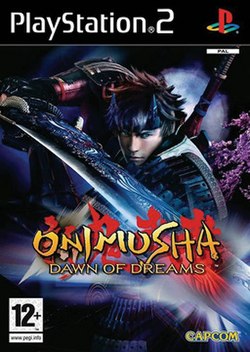
 Onimusha: Dawn of Dreams on PS2
 Action Man: Operation Extreme on PlayStation
 Project Sakura Wars on PS4










 Another SquareThought Site