

 Dec 2021
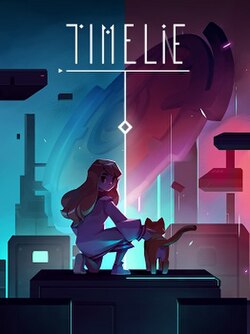

Timelie is a tidy little brain-twister wrapped in a mystery box and tied with a ribbon of time. On Switch, this Thai-made indie puzzle-stealth title asks you to guide a silent girl and her suspiciously social cat through a maze of hostile robots, broken floors, and wibbly-wobbly timelines. If you enjoy thinking three moves ahead, then rewinding to see why your strategy fell apart, Timelie gives you a tiny media-player-style time bar to fast-forward, pause, and rewind your choices until everything clicks. The game looks cute, sounds atmospheric, and - most importantly for the type of player who hates wasting progress - encourages deliberate planning. For anyone who considers 'trial and error' an extreme sport, Timelie is a playground where the sport is mostly mental and occasionally involves getting rusty robots to self-destruct.
Timelie's central conceit is simple: time is a sandbox you can scrub through like a YouTube video. You roll the timeline forward to preview what the bots will do, then rewind when their predictable patrols turn your neat plan into a steaming pile of busted expectations. At a surface level, levels are top-down stealth puzzle arenas with doors, keypads, pressure plates, vents, and purple orbs that repair broken pathways. Under the surface, it's about juggling variables and seeing cause-and-effect in instalments: press this switch, lure that bot, fix that floor, and then undo the parts that made it go pear-shaped. The Switch's handheld format makes this feel like an ideal commute companion for your brain - but don't be fooled into thinking 'ideal' equals 'easy.' Early puzzles are gentle pattern-recognition exercises: learn the patrol routes, wait for the gap, slip past. They teach you the core skills Timelie expects: observational patience, timing, and a reluctance to panic. The twist that turns a pleasant warm-up into a full cognitive workout is Timelie's object-specific time-bending. Pick up a white charge orb and the girl unlocks the ability to rewind certain objects independently of the global time. That means you might rewind a broken tile into being whole while every robot continues along the timeline you previously previewed. Suddenly, you're not just predicting enemy paths - you're planning the state of the world across two or more temporal layers. It's a design decision that elevates the game from 'nice indie puzzler' to 'exercise in temporal chess.' Once the cat gets unlocked, the game adds another axis: dual-character coordination. The orange cat isn't fluff; meow mechanics lure bots, vents provide stealthy lanes only the cat can use, and its voice recharges over time so you can bait enemies in a pinch. Playing both characters requires a switchflip in thinking: you must think as a duo rather than a solo actor. The cat can perform sacrificial distractions, travel routes inaccessible to the girl, and create asynchronous opportunities that the girl can exploit after you rewind or fast-forward. The cognitive load goes up because you're now simultaneously tracking two agents, multiple switches, and the state of repairable tiles. Challenge ramps are gradual but merciless. Designers introduce puzzles that literally vanish under your feet - sections of the level that slowly disintegrate unless you outpace them - which turns a stealth puzzle into a speed-and-planning contest. There are also scenarios that force you to revisit earlier levels to change conditions in the present, so your memory of past solutions becomes an active tool rather than a completed diary entry. This means long-term planning matters: if you skip collecting an orb earlier, you might find yourself replaying prior stages to flip a variable that makes a later level solvable. The skills Timelie demands are a buffet of cognitive abilities. Pattern recognition and short-term memory are table stakes - you'll be memorizing robot routes and remembering where you left pressure plates in previous runs. Spatial reasoning is crucial; levels are tiny logic puzzles in which movement and positioning trump reflexes. Executive planning and foresight get tested when you have to think several timeline scrubs ahead: where will Bot A be after two scrubs, what will happen to this tile if I spend a charge, which character should be where when I press this keypad? Multitasking ability matters too: juggle both characters without losing the plot. Patience and tolerance for methodical trial-and-error are part of the package, but Timelie rewards deliberate retries rather than blind button-mashing. If you like solving things by failing smarter each time, this game is tailor-made for that sweet spot. For players seeking a real spike in difficulty, the Hell Loop DLC (free for owners) adds 30 extra levels designed to be much tougher than the main campaign. These levels lean hard into the game's core mechanics and force creative uses of time charges and character coordination. If the main game taught you the rules, Hell Loop is the tournament where those rules get remixed into puzzles that require use of multiple skills at once - often under time pressure or with minimal margin for error. In short, Timelie scales from pleasant to properly brain-burning, and it does so while remaining fair: when you fail, the time bar lets you rewind only as far as you need to reconfigure your approach, so the cost of experimentation is low while the cognitive reward of discovery remains high.
Timelie dresses its complexity in a minimalist, almost storybook aesthetic. Levels are readable, which is the single most important graphic virtue for any puzzle game: you always know which tiles are walkable, which are broken, and which elements interact with time-bending charges. That clarity is no accident - the art and UI are designed to keep variables visible so your brain can focus on strategy rather than squinting. Visual cues for enemy vision cones, mew-able distances for the cat, and object states are concise and consistent, which reduces unnecessary frustration and keeps the flow of puzzle solving uninterrupted. The soundtrack and sound design deserve a shout-out, especially for players who solve patterns by ear. Timelie uses orchestra, choir-like textures, music-box motifs, and clock sounds to underline the theme of time without getting in the way. Sound effects are crisp: the metallic clank of a robot, the musical tinkle when you repair a tile, and the cat's meow all provide useful feedback. On Switch, both docked and handheld modes maintain these atmospheric touches well. The visuals aren't trying to be photorealistic; they're optimized to communicate puzzle information and mood. If you prefer flashy graphics over functional clarity, this isn't the game for you. If you prioritize readable design and a soundtrack that nudges you into focus, Timelie's presentation hits the bullseye.
Timelie on Switch is a compact, clever puzzler that forces you to think like a planner, a chess player, and occasionally a frustrated orchestra conductor trying to keep two soloists in sync. Its challenge is cognitive rather than twitchy: success comes from studying patrol patterns, learning to manipulate discrete time charges, coordinating two characters, and occasionally revisiting past stages to alter the present. The difficulty curve is well-constructed - accessible at first, then steadily escalating into the Hell Loop DLC's proper head-scratchers. For an 18-year-old who wants their gaming to exercise the brain without turning into a math textbook, Timelie is an excellent match. It's forgiving when you experiment, ruthless when you half-ass your planning, and satisfying when your rewinds and replays finally align into a perfect run. The Switch port preserves the game's tactile feel and makes it easy to dip in for a level or two between classes, chores, or existential dread. If you enjoy puzzle games that reward foresight, patience, and strategic multi-tasking, pick it up. If you enjoy screaming at uncooperative platformers, maybe bring a towel and an aspirin for the Hell Loop DLC. Either way, Timelie will leave your brain pleasantly worn out and oddly proud of its newfound time-bending skills.
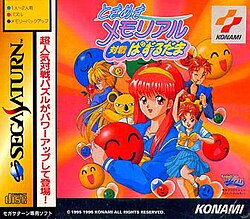
 Tokimeki Memorial: Taisen Puzzle-Dama on PlayStation
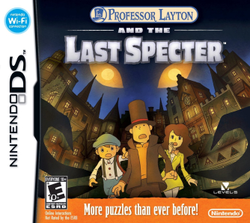
 Professor Layton and the Last Specter on DS
 Tokimeki Memorial 2 Taisen Puzzle Dama on PlayStation










 Another SquareThought Site