

 Mar 2019


Reporters in the 1990s had a phrase for sequels that returned to their origins: 'back to basics.' ToeJam & Earl: Back in the Groove is exactly that - a deliberate slide back into the isometric grooves of the original Sega Genesis classic rather than a reinvention with all the modern glitz. Developed by HumaNature Studios, the outfit founded by series creator Greg Johnson, this is a crowd-funded resurrection that survived publisher swaps, platform stretches and an ardent fan base; it arrives on Nintendo Switch carrying the scent of cartridge-era charme and the occasional creak of a production that had to find its legs again. If you expect a radical overhaul, you will not find it here. If you crave a faithful, sometimes wobbly, often affectionate tribute to the original ToeJam & Earl spirit, then this game will hand you a pair of rocket skates and point you at floating islands.
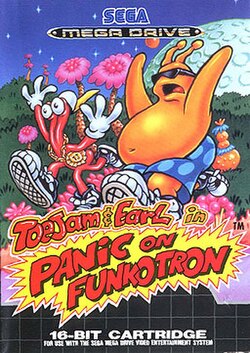
The first thing to make clear is that Back in the Groove plays most like the original ToeJam & Earl for the Sega Genesis. From a fixed isometric viewpoint the player hunts across successive layers of floating islands, opening presents, meeting bizarre NPCs and trying to keep ToeJam and Earl upright long enough to progress. HumaNature Studios have not attempted to transplant the franchise into a radically different genre; this is not Panic on Funkotron redux, nor is it a modern open-world reinterpretation. What the team has done - and done deliberately - is to reconstruct the tone and loop of the first outing while dropping in a few minor side systems from other series entries. Designers will appreciate the restraint. Levels unfold as compact, self-contained arenas of funk: you search, you find, you puzzle out routes between the islands and - occasionally - you brawl. The presentation of stages as layers of floating realms gives the game a board-game-like cadence. Objectives sometimes feel ephemeral, occasionally mischievous, and the mixture of exploration and mild chaos produces moments of genuine delight. The 'Jam Out' rhythm mini-game is one of the nicer nods to the series' side-obsessions; it provides an enjoyable, if lightweight, diversion from the primary loop and ties Back in the Groove to the series' history without pretending to be anything it is not. One of the headline features is the cast: nine playable characters are present at launch, each delivering a slightly different feel in movement and personality. This foundation allows for four-player cooperative play, both locally and online, which is where the title truly shines. The Switch's handheld and docked modes suit cooperative sessions well; the game can turn into an amusingly chaotic couch experience when friends pile on. Online play works, though it occasionally carries the telltale hiccups of an indie online infrastructure rather than a major platform-holder's polished service. For solo players the game maintains a steady rhythm, but the variety is unquestionably deeper when friends are involved. The development story seeps into the experience. Back in the Groove grew out of a Kickstarter and a small core team; it was later shepherded briefly by Adult Swim Games before returning to self-publishing. That indie lineage is visible in both the game's ambition and its rough edges. Certain systems are intentionally retro in their constraints, which will please nostalgic players; others feel as if they could have benefited from more iteration. Critics' responses were mixed-to-favorable across platforms, and the Switch landed comfortably in the 'generally favorable' bracket on Metacritic. The game's design choices are not timid, but neither are they revolutionary: it's a love letter rather than a manifesto. Combat is serviceable rather than spectacular. Rather than intricate mechanics, the encounters are about timing and positioning in small spaces, often made frenetic by multiple players and the sheer oddness of the enemies. Items and presents - a longtime staple of the series - return as unpredictable boons and curses, preserving the luck-of-the-draw charm. The randomness can be exhilarating or exasperating depending on your temperament; purists will revel, completionists may grind, and newcomers might occasionally be bewildered. The balance leans toward the playful; Back in the Groove would rather surprise you with a rocket-powered slipper than ruin you with an insurmountable difficulty spike. Pacing is an honest discussion point. The game does not rush. Levels and runs can stretch out in a way that recalls the leisurely afternoons of the 16-bit era. If you remember reading a manual and then loading a cartridge, you will recognize the patience required here. In an era of on-demand action and fast rewards the title often asks you to take your time, explore, and tolerate some repetition. For fans of the original that is a feature; for everyone else it might be a mild, occasionally frustrating, restraint.
Graphically, Back in the Groove is an interesting hybrid. Built on the Unity engine, the game adopts a modernized cartoon aesthetic that seeks to echo the exaggerated, funky visuals of the original series. The isometric perspective is preserved, and that decision dictates much of the visual grammar: environments are compact dioramas with bright palettes, quirky NPC designs and a fondness for oversized silhouettes. The art team - credited in the documentation - have managed to craft a style that nods to its Genesis ancestor while taking advantage of contemporary rendering conveniences. Textures and models are clean but not obsessed with photorealism; the game is happiest when it leans into caricature. Animations are characterful, and small flourishes - a well-timed jig, a ludicrous expression - sell the game's personality more reliably than any shader trick. On the Switch, performance is generally solid, though in crowded scenes with four players the camera and frame rate can be tested. This is not a fault unique to the platform, but rather a reminder that the team was small and that the priorities were charm and fidelity to the series over pushing graphical boundaries. There are moments when the visual clarity suffers slightly in the isometric view: cramped island layouts and overlapping foreground art occasionally hamper readability, particularly during frantic multiplayer sessions. These are quibbles in the broader context of a game that aims more to evoke feeling than to dazzle the eye with technical virtuosity. For those who grew up on the original, the visual callbacks and lovingly designed locales will likely evoke a warm, retro nostalgia; for those discovering ToeJam & Earl for the first time, the style should read as intentionally cartoony and welcoming rather than cutting-edge.
ToeJam & Earl: Back in the Groove is a respectable resurrection - neither an immaculate remaster nor a clumsy cash-in. It is a game made by people who remember what made the original compelling and who have chosen to preserve that DNA rather than graft on every modern trend. The result is a faithful, often funny, occasionally frustrating title that rewards patience and a willingness to embrace its retro impulses. In terms of value, the Switch edition benefits from local co-op and the platform's portability, making it an excellent choice for after-school couch sessions or short bursts on the road. Single-player runs are enjoyable, but the title's heart beats loudest with friends. The development backstory - crowd-funded, briefly published by Adult Swim, then self-published with physical editions from Limited Run Games - is surgery-visible in the game's virtues and its small wounds. Macaulay Culkin's involvement as executive producer is a quirky footnote that speaks to the series' cultural stickiness more than it affects gameplay. If you are a fan of the original ToeJam & Earl, Back in the Groove will likely land squarely where you want it: familiar, funky, and full of oddball charm. If you are a newcomer, approach it with an open mind and an appetite for deliberate pacing; you will be rewarded with moments of genuine fun, even when the game remembers that sometimes presenting you with a rocket slipper is part of the point. This is a retro revival done with affection and a clear point of view - enough groove to keep a smile on your face, a few rough edges to remind you it's the work of a small team, and a playful spirit that refuses to grow up. For these reasons I award it 7.5 out of 10.
 Back 4 Blood on Xbox Series X/S
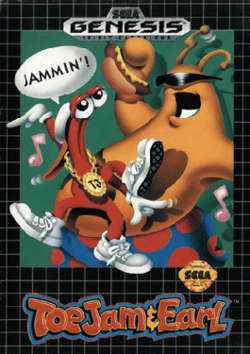
 ToeJam & Earl on PS3
 Onimusha: Dawn of Dreams on PS2
 Action Man: Operation Extreme on PlayStation
 Door Kickers: Action Squad on Switch
 Combat Elite: WWII Paratroopers on PS2
 Doki-Doki Universe on PS3










 Another SquareThought Site