

 Nov 2019


Trover Saves the Universe is the videogame equivalent of that one friend who tells wildly inappropriate jokes at a funeral but somehow makes you laugh anyway. Created by Squanch Games, the studio co-founded by Justin Roiland (yes, the Rick and Morty guy), Trover is a comedy-first action-platformer that was built with VR in mind but generously lets mortals without headsets join the party. On Switch it arrives as a compact, colorful romp where you play a defenseless Chairorpian (a humanoid species that, bafflingly, is stuck to chairs) and bark orders at Trover, a purple monster with an ego the size of an interstellar DMV queue. The premise is gloriously silly: an all-powerful villain named Glorkon has kidnapped your dogs and stuffed their essence into his eye sockets, and it's up to you - and the constantly snarky Trover - to retrieve them and not accidentally end anything resembling a universe in the process.
The gameplay is a bit like coaching a very opinionated, bouncy dog through a platforming level while holding a controller that also happens to be your face's remote. Trover is positioned as your companion and combatant, but you don't control him directly in the classic sense. Instead the game is told from a second-person perspective: you are always literally holding a controller on-screen, issuing commands to Trover such as run, jump, and attack. That concept sounds weird on paper (and it is - gloriously so), but it gives Trover a unique personality that constantly reacts to what you do, which is where much of the charm comes from. Progression leans on light upgrades rather than intricate RPG systems. Your chair (yes, your chair) is both character and HUD: it displays your power and health and can be upgraded as you play. Upgrades unlock neat little abilities like picking up and throwing objects, levitating between three distinct height levels - handy for platforming puzzles and combat verticality - and beefing up Trover's own combat moves. The combat itself is straightforward and arcade-y: Trover can learn new moves and combos, but fights rarely demand the reflex gymnastics of a hardcore action game. Instead they act as a stage for comedic banter and satisfying, chunking hits. There are five major levels at launch, each serving up a mix of exploration, puzzle-solving, and combat. The game's design encourages poking at things and seeing how Trover reacts: the developers recorded tons of lines (Justin Roiland alone laid down over 20 hours of dialogue) and even let actors improvise, so Trover's responses often feel fresh and reactive. The team also observed playtesters and added voice responses to common player interactions, which makes the world feel oddly conversational. Be warned: while Trover will keep you laughing, the actual mechanical depth is intentionally on the simpler side. Some reviewers called the gameplay basic, and that's fair - Trover wears its simplicity like a neon shirt: loud, unashamed, and meant to be noticed. If you want complex platforming puzzles or precision combat, this might not be your jam. If you want a snarky companion, a steady stream of jokes, and bite-sized gameplay loops that work great in short bursts (perfect for Switch sessions), Trover delivers.
Visually, Trover is a bright, bizarre cartoon built in Unreal Engine 4, which suits the game's absurd tone perfectly. The art direction leans hard into exaggerated shapes, neon colors, and grotesque-but-endearing creature designs that feel like someone drew their fever dream after bingeing sci-fi cartoons. On the Switch, the style translates nicely: it doesn't aim for photorealism, so the platform's limitations are hidden behind bold outlines and stylized textures. The result is a game that still looks charming in handheld mode and reads clearly on a TV. Because Trover was designed with VR as a priority, the world is full of details, snappy animations, and voice-acted reactions that make environments feel populated and alive. Even though the Switch isn't a VR platform (at least not officially for this release), the core visual and audio design choices translate well: characters emote with big, silly expressions and the animation sells their hubris. The only real caveat is that the game's visual identity is built more on comedy and character than on technical showboating; if your expectations are set to jaw-dropping graphical fidelity, you'll be disappointed. If you want a consistently funny, visually coherent universe where weird monsters and ridiculous scenarios pop off the screen, you're in the right place.
Trover Saves the Universe on Switch is like a joke that keeps giving: sometimes it lands perfectly and leaves you snorting into your Switch case, sometimes it swings wildly past the point and you laugh at how gloriously wrong it went. The voice work and improvisational energy - largely courtesy of Justin Roiland and a team encouraged to be weird - are the game's main engines. That comedy-first design is why critics generally liked Trover: it's consistently funny and will especially click with fans of Rick and Morty, but it doesn't pretend to be a deep mechanical masterpiece. If you're after a bite-sized adventure with five packed levels, plenty of quotable lines, and a charmingly absurd design, the Switch version is a great way to play it on the go. The gameplay is intentionally simple, the chair-as-HUD gimmick is a delightful recurring joke, and Trover himself is one of those sidekick characters you'll grumble at and then miss. The game picked up nominations for VR awards and got generally positive reviews - critics praised the humor while noting the basic gameplay - which is exactly what Trover aims to be: funny first, functional second. Final verdict: buy this if you want a portable, hilariously rude platformer that respects your time more than your eardrums' sense of decorum. If you crave deep systems or punishing difficulty, look elsewhere. For everyone else who likes to laugh while occasionally pressing buttons, Trover earns a solid 8/10 and a recommendation to play it with friends nearby so you have someone to explain what the heck just happened when the plot does a cartwheel into nonsense. Also, go rescue your dogs. They're counting on you, the Chairorpian - and also apparently on a purple monster with commitment issues.
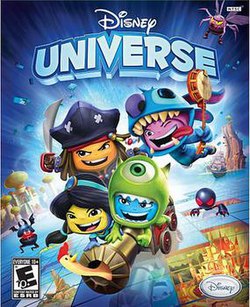
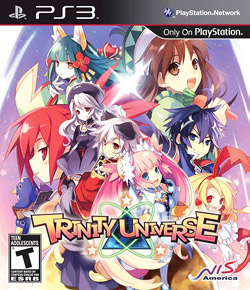 Disney Universe on PS3
 DC Universe Online on PS5
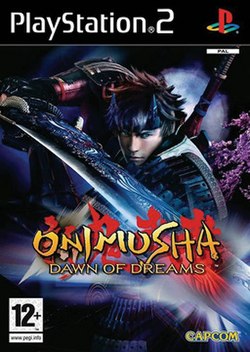
 Onimusha: Dawn of Dreams on PS2
 Action Man: Operation Extreme on PlayStation
 Door Kickers: Action Squad on Switch
 Vividred Operation: Hyper Intimate Power on PS3










 Another SquareThought Site