

 Mar 2024
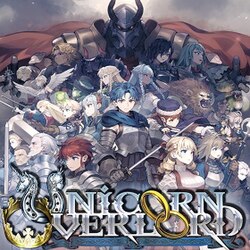

Unicorn Overlord is Vanillaware's ten-year itch turned into a tactical RPG that wears its design textbook proudly but refuses to be boring. Designed and heavily driven by Takafumi Noma, the game aims to resurrect the speed and spectacle of 1990s tactical titles while packing modern meta-systems, large-scale encounters, and Vanillaware's signature 2D illustrations. On Nintendo Switch the title landed well with critics (Metacritic: NS 89/100) and players, which is impressive for a game that juggles sprawling overworld exploration, automated skirmishes, and a forest of currencies and unlocks. This review focuses on the mechanical and technical plumbing: how the systems interlock, what that means for playability on Switch hardware, and where the design choices shine or strain under complexity.
At a systems level Unicorn Overlord is an exercise in designing for scale without giving the player carpal tunnel. The core loop splits into two layers: overworld campaign movement and large-scale, real-time battles. Overworld navigation is lightweight but informative - 2D sprites roam an overhead map where towns act as service hubs (blacksmiths, merchants, side quests) and untamed areas contain wandering enemy sprites. Save-transfer from the demo was supported day one, which is a pragmatic touch for modern demos, and early patches made some technical improvements to smoothing transitions and handling edge-case saves. Combat staging is where the design gets interesting. Battles occur on expansive battlefields and consist of troop movement across a grid plus individual unit clashes when two parties meet. All combat occurs in real time, but Vanillaware intelligently provides a pause function so you can tweak tactics mid-fight. That hybrid real-time/pausable flow hits a sweet spot: it preserves momentum for large engagements while giving players room to make deliberate calls during pivotal moments. Parties are grouped into up to five-character units with a class system that defines role and range. Early in the campaign units are limited to two characters; additional character slots and party capacity unlock via the Honors currency - a gate that makes resource management feel meaningful rather than arbitrary. Resource architecture underpins nearly every tactical decision. Valor acts as the deployment budget for units in a given engagement and is earned via victories, forcing players to consider opportunity cost when fielding specialized squads versus generalists. Gold powers the standard economy; Honors handles recruitment, promotion to higher-grade classes, and unlocking more slots; Renown sits atop the hierarchy to modify how Honors can be spent. This three-tier currency model is cohesive: Valor controls battlefield throughput, Honors controls roster breadth, and Renown modulates mid-to-long-term progression. Having distinct currencies reduces single-resource bloat, but it also increases bookkeeping and potential for choice paralysis. Battles themselves are more automated than many in the tactical genre. Units act according to attributes and player-set behaviors, meaning you establish tactics and then watch them execute. This decision greatly reduces micro-management - crucial when you're fighting across dozens of units - but it also shifts the player's skill expression from twitch-inputs to pre-battle configuration, positioning, and behavior tuning. Grid placement is mechanically significant: formation, distance, and terrain (open fields vs. urban environments) all affect ability efficacy. Environments introduce memorable mechanical toys: controllable siege weapons, burning hazards, and other stage gimmicks that both sides can leverage. These elements change the tactical calculus and add an emergent quality to runs. System complexity is substantial. Combat resolves until one side is defeated or both sides exhaust action points, which stuns defeated units for a period rather than killing them instantly; that mechanic softens punishment while incentivizing attrition play. The game's meta-skill design borrows inspiration from 13 Sentinels and the team explicitly tuned automation to avoid overwhelming players with direct control at scale. Reviews and early feedback note the design's depth is excellent for dedicated players but can be daunting for newcomers - a deliberate trade-off between offering a 'rebirth' of classic tactical depth and keeping the onboarding curve gentle. The developers addressed some usability friction with patches (April updates focused on a recurring bug and unit management QoL improvements), and Nintendo Life praised the tutorial system for helping with the learning cliff. Multiplayer unlocks later in the campaign as an AI-squad clash mode, offering asynchronous or competitive yardstick value without interfering with the single-player narrative. Recruitment and story choices (spare or kill certain foes) ripple into later narrative beats, which is a nice connective tissue between tactics and narrative consequence. From a Switch technical standpoint the game avoided major platform-specific snags in release coverage: critics praised art and animations and Nintendo Life specifically noted a lack of technical issues. A day-one patch delivered some stability and convenience improvements; subsequent patches addressed persistent bugs and interface headaches, showing the team was responsive post-launch. The localization by 8-4 drew public commentary in preview stages for deviating from the Japanese text, but that is a content localization point rather than a technical one. Overall, the systems are ambitious and well-executed for the scale Vanillaware targeted - the occasional UI crowding and the sheer number of interlocking systems are the main technical frictions a player will meet.
Graphically Unicorn Overlord is where Vanillaware's pedigree shows in full force. The game refuses to chase polygons and instead commits to lush 2D illustrations: character art, detailed background paintings, and fluid battle sprites that animate with a level of polish usually reserved for fighting games. The overhead overworld feels intentionally like a board game map, which helps readability when dozens of units are on screen. Battle animations were singled out by multiple reviewers as some of the best seen in recent tactical titles - big attacks have weight, status effects are readable, and environmental animations (burning fields, siege machinery) integrate with hit detection and animation timing so the visual feedback never feels disconnected from the systems. The studio's decision to keep characters and locations in 2D also pays dividends for memory and performance on Switch hardware. While specific framerate figures weren't disclosed in the source, reviewers consistently praised the stability of the experience and noted few technical problems. UI density is the primary complaint: when the battle gets crowded the interface can feel busy, and GameSpot flagged moments of UI crowding as a hindrance. That's a UX design problem more than a rendering one, but it affects how comfortably the graphics and information layer coexist during high-action segments. Patches have already improved some interface pain points, which helps the game present its beautiful visuals without burying the player in menus.
Unicorn Overlord is a systems-first tactical game that wears its ambition unapologetically. Vanillaware and Takafumi Noma built a layered machine: real-time movement with pausable control, automated but configurable AI behaviors, grid-sensitive positioning, and a three-currency economy that keeps both short-term tactics and long-term progression meaningful. On Switch the package is visually brawny without being a technical headache; day-one and follow-up patches addressed stability and QoL complaints and critics praised the art, music (Basiscape), and the depth of mechanics. The chief trade-offs are complexity and UI density - newcomers will need patience, and some will find the bookkeeping and management overwhelming - but for players who like tactical games that scale up to battalion-sized encounters without forcing you to click every micro-step, Unicorn Overlord is a strategically rewarding ride. It's not a simple nostalgia trip; it's classic tactical DNA reworked with modern systems engineering, and on the Switch it mostly delivers.
 PlayStation Plus August Drop: Mortal Kombat 1, Spider-Man, Sword of the Sea and Two Resident Evils — Sony’s Buffet of Beatdowns and Beachside Introspection
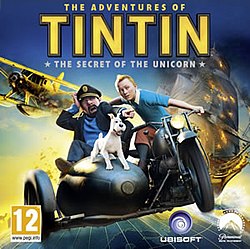
 The Adventures of Tintin: The Secret of the Unicorn on PS3
 Utawarerumono: Itsuwari no Kamen on PS3
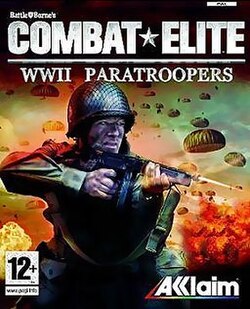
 Combat Elite: WWII Paratroopers on PS2
 Rainbow Moon on PS4
 The Banner Saga 2 on PS4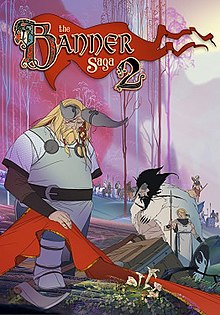
 Odin Sphere Leifthrasir on PS3
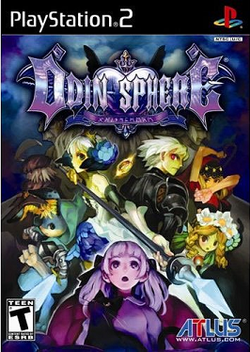 Odin Sphere on PS2
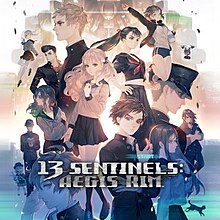
 13 Sentinels: Aegis Rim on PS4Dragon's Crown Pro on PS4









 Another SquareThought Site