

 Dec 2020


Unsung Story began life like an indie romance: a flashy Kickstarter, a big-name creative director attached, and enough promise to make tactical-RPG fans get misty-eyed. The Kickstarter raised roughly $660,000 and attached talents like Akihiko Yoshida and composer Hitoshi Sakimoto to the project, which is how you make people assume the game will be a spiritual heir to Final Fantasy Tactics. Then things got awkward. Development drifted, the original studio (Playdek) stopped work due to lack of resources, the director quietly stepped away, and Little Orbit bought the rights and started from scratch. The version that actually appeared in early access on Windows in December 2020 shipped only Chapter 1 - seven missions, roughly four hours - and was met with mostly negative reaction. Ports to Switch, PS4, Xbox One, macOS, Linux, iOS and Android were planned for full release, but as of the document's last notes there was no finished Switch product to evaluate. So, because modern game reviews are expected to be thorough and occasionally delusional, this review examines the game's available early-access substance and how that material would likely translate to a Switch port.
If you squint hard enough, Unsung Story plays like a textbook tactical role-playing game trying to wear a vintage coat. The early-access offering contains Chapter 1: seven missions that serve as a tutorial, a pacing exercise, and a mild endurance test for your patience. You'll move units on grid maps, manage classes and jobs - the game originally touted a Matsuno-style systems complexity - and handle the kind of turn-based positioning that makes these games addictive for people who enjoy counting squares and watching pixelated people be reasonable about cover. The chapter runs about four hours, which is long enough to show the bones of the combat loop but short enough to avoid any real commitment to character arcs or mechanical refinement. The design lineage is obvious on paper: job systems, tactical positioning, and a focus on strategy over twitch reflex. In practice, the early access build feels like a demo that brought a bag of tricks but forgot half the instruction manual. Little Orbit restarted development from scratch after acquiring the project, which helps explain why the game feels simultaneously familiar and incomplete. The missions demonstrate competent map design at times, and the underlying Unity engine is perfectly capable of handling the tactical formulas. What the early access version lacks is polish - UI rough edges, balance inconsistencies, and the little quality-of-life touches modern players expect from a port to a handheld console. For a Switch release, those touches would matter: quick saves, intuitive touch or Joy-Con controls, readable fonts in handheld mode, and sensible camera zoom would be non-negotiable. The document does not confirm whether any of these were implemented, so assume the Switch version will require those fixes to avoid feeling like a straight-lift of the PC early access experience. Narratively, Unsung Story's troubled history bleeds into expectations. The game was pitched as a spiritual successor to a classic, with Matsuno attached early on, but his day-to-day involvement apparently ended years before Little Orbit's tenure, and the studio eventually removed his name from marketing. That kind of behind-the-scenes implosion rarely results in a cohesive story on-screen. The early access chapter is functional storytelling scaffolding - motivation for battles exists, characters are present, and the world hints at intrigue - but it doesn't reach the narrative highs implied by the original pitch. If the Switch release aims to sell nostalgia and auteur pedigree, the current documented reality suggests it will land somewhere between sincere homage and undercooked promise.
Visually Unsung Story leans into a serviceable, if unremarkable, tactical aesthetic. The art team originally attached included Akihiko Yoshida, whose style suggests a classy, painterly approach, and composer Hitoshi Sakimoto's involvement hinted at a soundtrack that could lift humdrum skirmishes into operatic miniatures. The early access build demonstrates some of these ambitions: character portraits and sprite work are competent, environments have distinct palettes, and the general look will please anyone who likes their strategy games with a side of tasteful sketching. Reality check: the finished polish isn't there. Text readability and UI scaling are problematic in places, which is an issue that becomes a full-blown offense on Switch handheld screens. Unity can run beautifully on Switch when cared for, but the documented early-access release shows the team still had work to do on optimization and presentation. If you imagine this on Switch docked, it might look tidy enough; handheld performance and legibility are the bigger unknowns. The soundtrack credits imply Sakimoto involvement which, if present in the final product, could be a highlight. The document doesn't confirm whether the original audio team saw their work through Little Orbit's relaunch, so the Switch experience may end up with either evocative chiptune-adjacent tracks or audio that tries very hard to be epic and occasionally trips over itself. Graphical fidelity and frame stability are solvable problems; the questionable part is whether time and resources were poured into those solutions between the early access launch and any eventual Switch release. The answer given in the document: not much progress after 2021, and work restarted only in October 2024, which suggests visual polish might still be in progress.
Grading Unsung Story as a Switch product right now is a bit like reviewing a restaurant based on its takeout menu while the chef is on sabbatical. The concept is alluring: a tactical RPG with high-profile talent attached, a job system, and the promise of Matsuno-level depth. The execution in early access was a polite but shaky proof of concept - seven missions and four hours that show potential without delivering on the promise. Little Orbit's acquisition and reboot explain why the vision shifted, and public distancing from the original director added an awkward footnote. If a Switch edition ever arrives in final form, it will need to address polish across UI, controls, and performance to justify being on a handheld. The early-access build isn't broken so much as unfinished; it's the kind of game that invites patience and promises payoff, provided the developers actually finish the job. Given the game's history of delays, a stalled update cadence after 2021, and only a resumed effort noted in late 2024, optimism should be measured. For now, treat this as a C+ on paper with the potential to become good if Little Orbit follows through. If you enjoy tactical RPGs and are into following the saga of a game that fell down the stairs and then slowly considered standing up again, keep an eye on Unsung Story. Buy it on Switch when there's a proper release and a changelog that screams 'we fixed things.' Until then, five out of ten: intriguing ideas, messy delivery, and the faint hope of redemption.
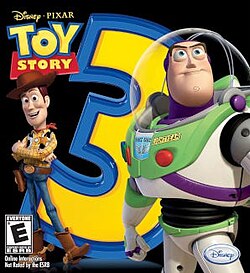 Disney/Pixar Toy Story 3 on PS2
 Vagrant Story on PlayStation
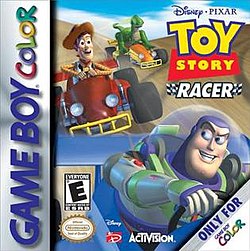
 Toy Story Racer on PlayStation
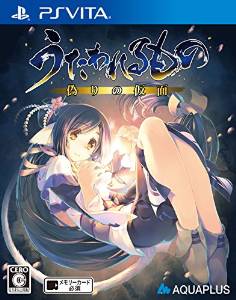
 Utawarerumono: Itsuwari no Kamen on PS3
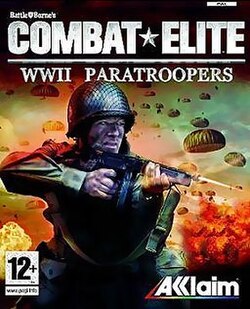
 Combat Elite: WWII Paratroopers on PS2
 Rainbow Moon on PS4
 The Banner Saga 2 on PS4










 Another SquareThought Site