

 May 2019


VA-11 Hall-A is the kind of indie experiment that sneaks up behind you, mixes a perfect drink and then tells you a life story while your brain is pleasantly buzzed. Originally a 2014 game jam prototype turned full release, this 'cyberpunk bartender action' visual novel trades explosions and hacking minigames for drink recipes, intimate conversations, and a worldbuilding method that prefers whispers to press releases. On Switch the package is the same distilled cocktail: vinyl-ready vaporwave soundtrack, PC-98/anime-inspired pixel art, and a mechanic that turns cocktail recipes into narrative branches. If you came for a high-score chase you'll be disappointed; if you like carefully engineered interaction design and narrative systems that rely on subtle state changes rather than binary dialogue trees, you're in for a treat.
At its core, VA-11 Hall-A's interactivity is elegantly minimalistic: five ingredients and a drag-and-drop mixer. The fictionally named ingredients - Adelhyde (sweet), Bronson Extract (bold), Powdered Delta (dangerous past-life as rat poison), Flanergide (spice) and Karmotrine (alcohol) - serve as the game's entire verb set. From a systems perspective that's smart design: the fewer atomic actions you offer, the more meaningful each combination becomes, and the game exploits that by tying cocktails directly to branching narrative states. There is no explicit dialogue-choice engine. Instead the bartender mechanic acts as the game's decision node. Customers will order explicitly, hint cryptically, or mislead by emotional state; the player must infer whether to satisfy the order, deviate, or tweak a drink (single vs. multiple servings, aged vs. iced, add Karmotrine for alcohol). This is a clever instance of emergent narrative design where player intent is encoded in the composition of a drink rather than in a dialogue wheel. From a usability standpoint VA-11 Hall-A avoids throwing artificial stress at the player: there is no time limit and a mistaken pour can be reset. That removes twitch pressure and turns the bartending into a deliberate cognitive task rather than a reflex test. Monetary tips reward precision (flawless drinks = better tips), but the real payoff is the narrative state progression: consistent correct orders unlock character routes and special endings. The game also ships a recipe book, which on paper reduces discovery-based play, but in practice encourages a kind of meta-gaming: you can memorize recipes to reliably hit branches or experiment to discover subtle emotional states of NPCs. Switch's control mapping is naturally important here. VA-11 Hall-A was built in GameMaker Studio, an engine the developers picked for its ability to produce "a bunch of crazy effects" and portability. That choice made console ports feasible without a ground-up engine rewrite. The gameplay translates to Switch comfortably because inputs are simple-point-and-click style selection mapped to buttons or touch in handheld mode-so control fidelity is not a limiting factor. The only real UX pressure point is text pacing: the game frequently uses short dialogue windows, which can feel like micro-sips of conversation rather than long pours. This layout choice increases readability on small screens but can also make dense passages feel choppy if you're a reader who prefers longer paragraphs. Beyond the bar, there are light meta-systems: decorating Jill's apartment, buying items, and phone-app conversations. These systems are thin but functionally meaningful because they affect Jill's mood and therefore subtly influence in-bar suggestions. It's a neat example of cross-module state, where off-shift micro-management affects on-shift dialog outcomes, reinforcing the game's core theme: small personal choices ripple into interpersonal interactions. One notable design risk is repetition: some reviewers found the bartending loop repetitive after many hours. That is a fair technical critique; because the core loop is small, pacing and new character beats have to carry heavy narrative weight to sustain engagement. For most players that works; for others, the limited mechanical depth can start to show after repeated runs.
The visual identity is a deliberate retro-futurism cocktail: PC-98-era grain, anime-influenced character portraits, and neon-soaked cityscapes. Chris Ortiz's pixel art wins on silhouette and mood rather than flashy technical bravado. On Switch the art scales well-GameMaker's portability helped preserve palette and sprite fidelity across platforms. The UI makes pragmatic choices: dialogue occupies a few lines per page and character portraits are large and expressive, optimizing for close-up reading rather than cinematic staging. From a technical composition standpoint, the game leans heavily on 2D compositing and layered effects to create the cyberpunk ambiance. The soundtrack by Michael Kelly is vaporwave-tinged and does a lot of ambient heavy lifting; because gameplay is dialogue-heavy, the mix places music low enough to avoid masking spoken text (there's no VO), yet prominent enough to establish tone. The jukebox feature-players can assemble a playlist-shows an awareness of player agency in audio design, useful on a handheld where players may be in diverse listening environments. There are a few presentation trade-offs. Dialogue is split into short frames and occasionally feels clipped; because much worldbuilding is inferred rather than spelled out, players who skim text or prefer block-paragraph storytelling may find the delivery disorienting. The pixel assets do not pretend to be high-resolution; instead they rely on composition, color, and character design. That aesthetic choice is consistent and intentional, and on Switch it reads cleanly whether docked or handheld.
VA-11 Hall-A on Switch is an exercise in focused design: the developers picked a tiny set of mechanics and wrung maximum narrative nuance from them. Technically the decision to build in GameMaker Studio paid dividends-portability was simplified and the aesthetic/presentation survived the move to console intact. The bartending mechanic cleverly replaces binary dialogue trees with compositional decisions that map directly onto character states, and cross-module features like apartment management and the jukebox add low-friction variety. If you want a game that tests reaction time, this is not your bar. If you want a game that rewards pattern recognition, empathy, and close reading of characters, VA-11 Hall-A serves a strong, bittersweet drink. Minor quibbles-text pacing and the possibility of mechanical repetition over long play sessions-exist, but they're the sort of flaws that come from narrowing focus rather than sloppiness. On Switch the package is tidy, portable, and faithful to the original vision. Consider it a slow, high-quality pour: it's designed for sipping and conversation, not a keg-stand.
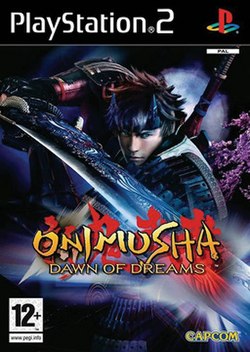
 Onimusha: Dawn of Dreams on PS2
 Action Man: Operation Extreme on PlayStation
 Door Kickers: Action Squad on Switch
 Tokimeki Memorial Drama Series Vol. 3 Tabidachi no Uta on PlayStation
 Root Film on PS4
 Pachislot To Heart 2 on PS3
 White Album on PS3










 Another SquareThought Site