

 Jul 2024


Abathor is a loving, pixel-studded homage to the 2D action platformers of the 1980s and 1990s - except this one read its manuals, learned level design theory, and packed a surprising amount of mechanical variety into a compact package. On Xbox Series X/S the game arrives as a contemporary retro title: four-player co-op, over 50 stages, and a bestiary of 100+ enemy types all wrapped in deliberate arcade pacing. If you want a modern exercise in old-school readability - tight hitboxes, checkpoint placement that actually matters, and design that telegraphs threats instead of ambushing you with randomness - Abathor mostly delivers. This review leans into the technical: how the game structures its stages, the behavior and predictability of enemies, the way its systems scale with difficulty, and how later updates like the Ultimate Edition alter the mechanical calculus.
At its mechanical core Abathor is a structured progression game: 52 stages partitioned into 10 zones, five stages per zone, with a boss room gating access to the next area. That skeleton yields predictability - which is good, because the game trades cheap surprise for finely tuned challenge. Each stage is a module built around one or two mechanical themes. You get minecart sequences that are really timing puzzles, platforming gauntlets with disappearing or shifting footholds, environmental puzzles that force you to manipulate switches and hazards, and side-scrolling shoot-'em-up segments that change the control set and rhythm. The variety keeps the core run fresh, but more importantly the implementation is clear: level telegraphing (enemy movement arcs, projectile cues, platform blink timing) prioritizes player read-time over guesswork. Enemy design is where Abathor shows engineering discipline. The claim of "100+ enemy types" is not just filler: enemy behaviors are discrete, parametrized patterns rather than procedurally spiced reskins. You have enemies with predictable patrol arcs, seekers that trigger on line-of-sight, and multi-phase minibosses that change attack windows mid-fight. Because each enemy type telegraphs its attack footprints, players can build heuristics (kite, dodge-window, parry-frame) rather than relying on rote health sponging. This is a design choice that makes co-op meaningful: in four-player runs enemies can be baited or zoned with intention rather than devolving into chaotic button mashing. Checkpoints are strategically placed and crucial to pacing. Instead of sparse checkpoints that punish a run-ending mistake, Abathor favors segmented progress with restart points at high-fail nodes. That reduces time-sink frustration and supports the game's inclusion of multiple difficulty tiers. The three difficulty levels are more than damage-number scalars: higher difficulties add an extra stage at each zone spike and increase enemy aggression, so players encounter additional mechanical permutations rather than just stronger enemies. The Ultimate Edition refines this further, rebalancing difficulty modes and adding a speedrun mode - a sign that the devs want their timing windows and routing decisions to be scrutinized by precision players. Controls and player dynamics are tight. Movement feels intentionally chunky in the retro sense, preserving momentum and committed jumps that reward planning. The Ultimate Edition's addition of a run ability is a meaningful mechanical shift: it changes optimal timing windows on platforming sequences and opens up new routing strategies for speedrunners. Co-op scales well because stages are designed to accommodate multiple players through room sizing, enemy spawn logic, and safe respawn behavior. The net effect is a game that reads like it was built with both single- and four-player runs in mind rather than bolting co-op onto a linear experience. Where Abathor stumbles is in some of the shoot-'em-up conversions. The side-scrolling sections change control paradigms, and while they are distinct and fun, a few of them feel like they demand a different skillset that the main platforming loop doesn't fully prepare you for. These sections are still well-crafted, but they occasionally break the player's rhythm rather than enhance it. Balance-wise the post-launch Ultimate Edition addresses several spikes, and the speedrun mode plus world map overhaul show the developers listened to how players pushed the game after release.
Abathor's visual stack is deliberately retro: pixel art that emulates the color constraints and animation cadence of classic 2D titles. On Xbox Series X/S you get cleanly scaled pixels and layered parallax backgrounds that give scenes depth without betraying the 8-/16-bit aesthetic. Animation frames are spare but expressive; hit feedback is done with readable flash frames and knockback animation rather than ambiguous visual noise. The overworld (upgraded in the Ultimate Edition) moves from a functional node map to a handcrafted representation that better communicates progression flow and optional routes, which is a UX improvement as much as an artistic one. From a technical point of view Abathor makes smart sacrifices: it doesn't try to fake modern shader effects over the spritework, which keeps the rendering pipeline simple and consistent. That pays dividends in clarity during busy encounters - important when the game leans on patterned enemy behavior. Level tilesets reuse palettes intelligently, giving each zone a distinct silhouette while keeping memory usage efficient. On higher difficulties the visual language still holds up; enemy spawn telegraphs and platform cues remain readable even in the chaos of four-player skirmishes. The soundtrack-a chiptune-heavy score by a small team of composers-complements the visuals by reinforcing tempo rather than vying for attention. It's functional audio design that supports play decisions, especially in boss encounters where musical cues underscore phase transitions.
Abathor on Xbox Series X/S is a technical love letter to retro action-platformers that actually understands why those older games mattered: clear telegraphing, intentional enemy patterns, pace-friendly checkpointing, and mechanical variety. It is not a nostalgia cash-in that mistakes pixel blips for substance. The main criticisms are minor: a few shoot-'em-up segments disrupt rhythm, and some players used to faster, modern platformers may find the pre-Ultimate Edition pacing a touch rigid. The Ultimate Edition shores up these concerns with difficulty rebalancing, a better overworld, a run toggle, and a speedrun mode - thoughtful updates that show a developer interested in mechanical longevity. If you like readable systems, precise design, and multiplayer that scales without descending into random chaos, Abathor is an engineered retro romp worth playing. Score: 8.5/10 - a clever, technically confident platformer with a few room-to-grow moments that its post-launch support is already addressing.
 Abathor on PS5
 Disney's Chicken Little: Ace in Action on PS2
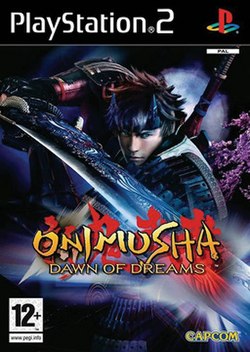
 Onimusha: Dawn of Dreams on PS2
 Tokyo Xanadu eX+ on PS4
 Action Man: Operation Extreme on PlayStation










 Another SquareThought Site