

 Jul 2025
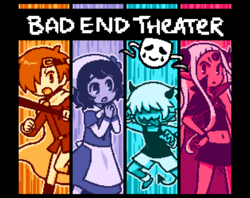

Bad End Theater arrives on Xbox Series X|S wearing pastel colors and a very sinister grin. On paper it's a compact Ren'Py visual novel where you shepherd one of four archetypal cast members through a branching series of deliberately awful conclusions. In practice it's a clever little machine for probing perspective, narrative agency, and emotional subtext - all while you gleefully toggle personality traits like a mad director. This review digs into the characters and their arcs, because if a game is called Bad End Theater, you probably care more about who gets the tragic monologue than how the save screen looks.
The core loop of Bad End Theater is elegant and sneaky: pick one character to control, give the other three personality traits (think of them as little puppeteer sliders), and then watch scenes unfold in second-person narration as everyone makes choices determined by those traits. Those choices branch into 41 distinct bad endings, each short, sharp, and-importantly-informational. Endings act like clues: unlocking one lets you see more branches on the decision tree and nudges you toward new permutations. Mechanically the system is simple but narratively rich. When you toggle "hungry" on the Underling, you're not committing to a single grotesque outcome for the entire game; you're exploring one facet of that demon's temperament and seeing how that temperament ripples through the other characters' arcs. The choice architecture encourages experimentation. Replaying isn't a grind: it's detective work. The decision tree is satisfyingly visual, so you can feel your narrative comprehension improving rather than grinding through the same cutscene for the tenth time. Because the player is addressed in second-person, agency feels both intimate and theatrical. You are literally the director, and the game leans into that: the narrative voice has enough distance to let you evaluate character motivations clinically, then close in and hit you with the emotional consequences. The 'bad' endings are not just shocky deaths or punchlines; they clarify relationships, expose prejudices, and reveal hidden sympathies. As arcs accumulate, the unlockable letters and the ultimate meta-path outside the theater elevate the whole thing from a cute experiment to a story that reflects on storytelling itself. The final few mechanics deserve praise because they transform the game from a gimmick into a moral puzzle. The "true" bad ending-when you've discovered all 41 endings and watch the cast die together-unlocks a meta battle with the playwright, Tragedy, and a reveal that reframes everything: the player-character is Comedy. That twist retroactively colors every choice you made, turning your role from cold observer into a lover seeking reunion. It's an earned pivot because the earlier endings have already trained you to read relationships as metaphors. Gameplay and story are braided here; each unlocked bad ending supplies a tile for the mosaic that becomes the good ending.
Graphically Bad End Theater is minimalist but purposeful. The pixel art aesthetic and pastel palette give the game a deceptively cute sheen that makes the darker beats land harder-like a teddy bear delivering a soliloquy about betrayal. Each character has a signature color (orange Hero, purple Maiden, cyan Underling, pink Overlord), which the game uses as shorthand for perspective as well as for motif in menus and UI. That visual shorthand is smart: you'll often know who's narrating before text cues confirm it. The chiptune soundtrack complements the visuals well: jaunty, melancholic, and occasionally barbed when a scene turns grim. Music themes are assigned to characters, and the interplay of leitmotifs during certain endings adds narrative weight that the pixel sprites alone can't carry. Expression in the art is stylized rather than photorealistic, which was a deliberate decision by NomnomNami to evoke emotional death without splatter-porn gore. It works; the game achieves pathos through editing, music, and timing, not through graphic depiction. On Xbox Series X|S, the game runs crisply-this is not a tech showcase, but it benefits from the platform's smooth performance and controller-friendly menus.
If you want a visual novel that treats each character like a laboratory specimen and a heart in equal measure, Bad End Theater is a delight. The Hero is the archetypal protector whose arc interrogates performative bravery; the Maiden subverts the damsel trope by being both victim and locus of agency; the Underling becomes a complicated comic-knife, capable of grotesque acts and surprising tenderness depending on the trait toggles; and the Overlord's romance with the Maiden functions as a potent metaphor for forbidden love, eventually reframed as comedy's search for tragedy. Those layers of interpretation are the game's best trick: endings don't just tell you what happens, they tell you how perspective changes truth. NomnomNami's design choices-pastel pixel art, a chiptune score, second-person narration, and a system of trait-driven branching-make the mechanics and the message sing together. The meta-reveal that the player is Comedy hunting down a lost Tragedy reframes the experience as a story about authorship and empathy, and it makes the "good ending" feel hard-won rather than tacked on. There are limits: if you want massive playtime or layered subplots outside the theater conceit, this is a short game optimized for replay and interpretation rather than sprawling narrative epics. But as a concentrated exercise in character study, it's brilliant. On Xbox Series X|S it's an easy recommendation for anyone who likes indie games with brains and heart, and for players willing to treat bad endings as chapters of a larger emotional argument rather than as punitive dead ends. Final score: 8.5/10-a charming, bittersweet little stage that proves sometimes you have to watch everyone fail to understand what they were fighting for.
 Lethal Enforcers I & II on PlayStation
 Battlefield: Bad Company on PS3
 Root Film on PS4
 Tokimeki Memorial Drama Series Vol. 3 Tabidachi no Uta on PlayStation
 Oshiete! Popotan on PS2
 Princess Princess on PS2










 Another SquareThought Site