

 Oct 2026
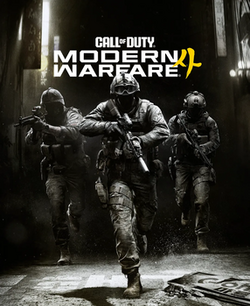

Call of Duty: Modern Warfare 4 arrives with the confident swagger of a franchise that has played every possible war twice and some of them in slow motion. Infinity Ward is back at the wheel for the twenty-third installment in the series and, for the fourth time in the rebooted Modern Warfare arc, insists that this is the one that will redefine things. The elevator pitch is refreshingly blunt: a campaign split between the Korean Peninsula and globe-spanning hotspots, a competitive multiplayer suite, and the return of the extraction-mode DMZ. On Xbox Series X|S, this is a ninth-generation-only release - which is marketing-speak for 'we expect your console to be tired but capable.' The result is not a revolution, but a confident, occasionally surprising entry that mostly does what Call of Duty games have spent two decades proving they do very well: make firefights feel urgent, cinematic, and slightly exhausting in the best way.
Modern Warfare 4 divides its time like a person with a long to-do list and expensive weapons: campaign missions, multiplayer matches, and the DMZ extraction mode that refuses to stay dead. The single-player campaign centers on a renewed conflict between North and South Korea. You play two leads: Private Park, a South Korean recruit who wants to protect his home and probably has a complicated relationship with breakfast, and Captain John Price, who is on the run after an ill-advised assassination. The plot weaves familiar Call of Duty threads (moral ambiguity, explosions, loud orders over radio) into new territory with missions set not only in Korea but in New York, Paris and Mumbai. If you like your globe in pieces and your endings ambiguous, the campaign will feel reassuringly competent. Character work is sturdier than it has any right to be in a game whose primary job is to provide interesting ways to shoot digital people. Price returns as a grizzled pivot around which more contested personalities orbit: Ghost, a Task Force 141 operative with interpersonal issues; Valeria Garza, a cartel leader who now trades alliances like they were collectible action figures; and a supporting cast that leans into the political stakes. Infinity Ward says they consulted regional specialists and even defectors to handle the Korean setting with care. That doesn't absolve the project from raising eyebrows - the Korean War's human fallout is real and ongoing - but it does show intent to avoid caricature. Multiplayer is, predictably, the place many players will live. At launch there are 12 core 6v6 maps and returning favorites like Gunfight (with its own map pool) and Big War for larger clashes. The 'Kill Block' map is a headline feature: a dynamic arena that literally changes layout during play, with more than 500 possible configurations. It's the kind of idea that sounds like chaos paste at a design meeting and then somehow works because chaos is fun when it rearranges cover mid‑match. One of the bigger mechanical shake-ups is the removal of hipfire bloom. For people who hated the randomness of hipfire penalization, this is a gift; for those who enjoyed contending with RNG while spraying, it will feel oddly puritanical. Movement updates - hanging and shimmying along edges and pipes - add a nice verticality and tactile sense of environment traversal without turning the game into a gymnastics simulator. DMZ returns for players who prefer extraction tension to scoreboard glory. It preserves the risk-versus-reward loop that made it compelling in Modern Warfare II: go in, loot, and pray you get out with the good stuff. It's a comfortable middle ground for players who like both PvP and PvE elements. The studio's cross-studio development model (Infinity Ward leading with ten assisting studios) keeps the modes feeling polished, if a little designed-by-committee. If you want a mode that rewards patience and planning, DMZ is still the place to quietly gloat when your stealth play earns you better loot than a rage-filled run-and-gunner. Modern Warfare 4's campaign and multiplayer balance are competent; nothing dangerously experimental gets in the way. The decisions - setting the conflict in Korea, splitting protagonist focus, removing hipfire bloom, adding dynamic maps - feel like deliberate, safe bets to keep longtime players engaged while making room for small innovations. It's the sort of upgrade that will be enjoyed mostly by people who were already very comfortable with the franchise's rhythm.
Infinity Ward and Activision advertise Modern Warfare 4 as setting 'a new technical benchmark for the series,' and on Xbox Series X|S the game generally lives up to 'it looks very expensive.' This is the first Call of Duty to be exclusively ninth-generation at release, which translates to denser environments, cleaner lighting, and more objects to take cover behind when someone inevitably sighs 'campers' in chat. The PC version gets extra ray tracing bells and whistles - reflections, ambient occlusion and improved shadows - but the Series X build carries the visual load well: crisp textures, convincing particle effects, and lighting that makes explosions feel like semi-sentient narrative beats. Kill Block's dynamic geometry is a visual highlight. Watching a map rearrange itself in mid-match, complete with believable physics reactions and debris, provides an oddly satisfying spectacle. The campaign's Korean locales were handled with an eye for scale; city streets, military compounds and rural areas feel distinct, and missions in New York, Paris and Mumbai offer expected variety. It's worth noting that Infinity Ward's sensitivity consultation around the Korean setting shows in environmental detail that avoids lazy stereotypes, which is both visually and ethically preferable. If you own an OLED or a high-quality HDR set, the payoff is immediate. Load times are appropriately minimal for a ninth-gen release, and the game's presentation rarely stumbles into performance issues on Series X hardware during our time with it. The Series S, with its lesser horsepower, is likely to make more compromises; Infinity Ward's 'technical benchmark' claim is easier to keep on the bigger console. The overall impression is polished, if not always audacious. It's a look that says, 'premium shooter,' and then politely hands you the controller.
Modern Warfare 4 is not a reinvention. It is, however, an efficient and occasionally clever continuation of a formula that still knows how to deliver impact. The campaign takes bolder geopolitical steps by focusing on a Korean conflict and attempts respectful treatment through consultation, even if the subject matter will inevitably rub some people the wrong way. Multiplayer tweaks - removal of hipfire bloom, movement additions, and the wonderfully unpredictable Kill Block - freshen the core experience without alienating existing players. DMZ's return is the gift that keeps on making you paranoid in matchmaking lobbies. On Xbox Series X|S the game looks and plays like a modern AAA shooter should: technically competent, visually confident and designed to keep you coming back for one more match. The decision to delay Game Pass availability by at least a year is annoying but predictable, like a timed grenade you know you'll throw eventually. For longtime fans who want familiar thrills with a handful of sensible innovations, Modern Warfare 4 earns respect. For those hoping for something radically new, it will feel like an elegant iteration rather than a revolution. Score: 8/10. It knows its audience, polishes its shoulders, and then proceeds to make very satisfying things explode. Exactly what you signed up for - and, let's be honest, secretly hoped for.
 Call of Duty: Modern Warfare III on PS5
 Call of Duty: Modern Warfare 4 on PS5
 Warhammer 40,000: Boltgun 2 on Xbox Series X/S
 PixelJunk Shooter 2 on PS3
 Turok: Dinosaur Hunter on Switch
 Primal Carnage: Extinction on PS4
 Call of Duty: Modern Warfare II on PS5
 Call of Duty: Modern Warfare on PS4
 Call of Duty: Modern Warfare II on PS4
 Call of Duty: Warzone on PS4










 Another SquareThought Site