

 Feb 2024
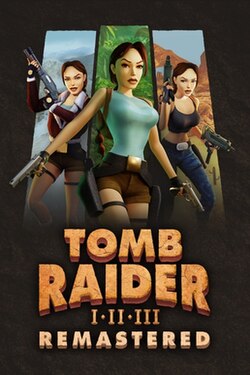

Tomb Raider I-III Remastered is a technical love letter to late-90s level design wrapped in modern tooling - a 2024 compilation from Aspyr that resurrects the original source code and engine for the first three Core Design Tomb Raider games. The remaster keeps the bones of the originals intact (two pistols with infinite ammo by default, tank-control heritage, block-pushing puzzles and FMV cutscenes) while grafting on contemporary comforts: a graphics toggle (original vs enhanced), a modern control scheme (right-stick camera, direction-dependent movement), photo mode, camera lock-on and more than 200 achievements. From a preservationist perspective it's fascinating: Aspyr tracked down original assets, brought in Timur "XProger" Gagiev (OpenLara) as technical director, and leaned on AI texture upscaling and a mix of baked and real-time lighting to present two visual layers players can flip between. The result is simultaneously reverent and pragmatic - a remaster that prioritizes fidelity to archaic geometry while letting modern GPUs and tooling do the heavy lifting.
On a nuts-and-bolts level, the gameplay remains extremely faithful to the 1996-1998 originals. Lara's move set - run, walk (the important one that prevents falling off ledges), look around, forward/back jumps, ledge shimmying, rolls, swimming and block manipulation - is intact and behaves as it did because the remaster runs on the original source code and engine. That purist approach is why there are moments that feel charmingly archaic and moments that feel frustratingly ancient. Aspyr balanced that by exposing toggles: you can opt into the classic 'tank' controls or switch to a modern layout inspired by Crystal Dynamics' later reboots. The modern scheme adds right-stick camera rotation and makes movement direction camera-relative, which dramatically changes how platforming feels - it smooths certain camera frustrations but also alters the timing and precision that puzzles were tuned around. Technical add-ons aim to reduce needless repetition without rewriting the designs: camera lock-on, health bars for boss fights (addressing the originals' inferential damage-tracking), and replacement of 2D item sprites with 3D models so hitboxes and visual language make more sense on modern displays. The physical and digital packages include the original expansion content (Unfinished Business, The Golden Mask, The Lost Artefact) so the compilation is comprehensive. Also notable is the decision to leave original sounds and FMV content intact - FMVs were AI-upscaled rather than replaced - which preserves historical texture but also means some audiovisual elements date themselves awkwardly. Critics praised the faithfulness and the photo mode and adepts will appreciate the achievement layer. The main criticisms with gameplay are not about fidelity but ergonomics: the modern control scheme is polarizing (some outlets called it 'annoying' or 'disastrous'), there's no rewind feature for platforming errors, and there are sporadic glitches that betray the complexity of grafting modern rendering on top of a 90s engine.
Graphically, the project is a technical exercise in restraint. Aspyr and Crystal Dynamics updated textures and models while deliberately preserving original geometry; the visuals are 'remodelled' rather than rebuilt. The team used an AI-driven texture upscaler to take low-res assets and push them to higher-resolution targets, then layered both baked and real-time lighting to give environments depth without re-sculpting levels. This is exposed to the player via a graphics toggle: switch to 'classic' for pixel-perfect nostalgia or 'enhanced' for upscaled textures, updated character models, new enemies and some modern lighting effects. The upshot is that the enhanced visuals often read like the game your memory imagined rather than a literal modern remake - some playtesters reportedly couldn't tell the difference until they toggled back. There are trade-offs. Replacing 2D sprites with 3D models fixes readability but can upset the tone of certain encounters; several reviewers noted that some enemy models look 'goofy' and break immersion. FMV sequences were preserved and upscaled rather than re-shot, so you'll see the original performances with a modern polish that occasionally highlights the low-budget roots. On PS4 specifically the remaster presents well: textures and models look cleaner than the originals and the PS4 hardware handles the modern lighting gracefully, but the compilation as a whole benefits more on higher-end hardware where higher internal resolutions and smoother frame pacing hide artifacts. Critics were split: many praised the balance between old geometry and new art, while others found certain textures and models to be over-smoothed or stylistically at odds with the originals. Ultimately, it's a conscious art-directorial choice - fidelity to memory over full redesign - executed with contemporary upscaling and lighting tricks.
Technically, Tomb Raider I-III Remastered is an impressive engineering effort: sourcing original code, involving community tooling (OpenLara's developer as technical director), adding modern UX features and using AI upscaling to revive a mountain of decade-old textures. If you care about game preservation, toggles and being able to play the original geometry with modern conveniences are a rare treat. The execution isn't flawless - the modern control scheme divides players, there are occasional glitches and the remaster lacks certain modern quality-of-life features like a rewind for platforming mistakes - and some of the updated art choices land awkwardly. On PS4 it's a solid version of a collection that will delight fans and historians, but newcomers should be warned: these are old-school designs at heart. Buy it for the faithful restoration, the curiosities of 90s level design and the technological curiosity of toggling between eras; don't expect a full‐blown remake. Score: 7.5/10.
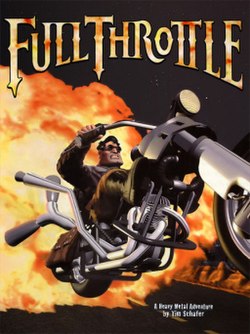
 Full Throttle Remastered on PS4
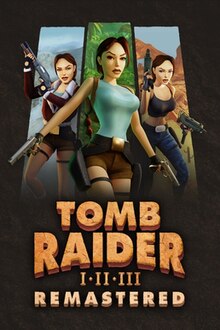
 Tomb Raider I–III Remastered on Xbox Series X/S
 Ghostbusters: The Video Game Remastered on Switch
 Tintin: Destination Adventure on PlayStation
 Disney's Chicken Little: Ace in Action on PS2
 One Piece Grand Adventure on PS2
 Taiko no Tatsujin: Dokodon! Mystery Adventure on Switch
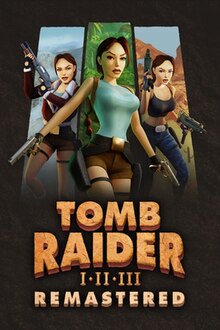
 Tomb Raider I–III Remastered on PS5
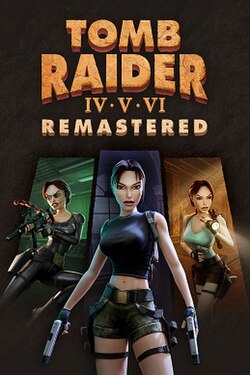
 Tomb Raider IV-VI Remastered on PS4
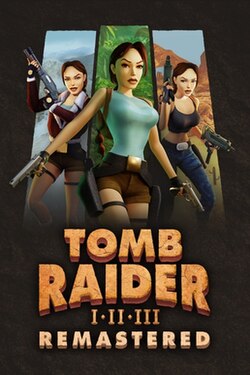
 Tomb Raider I–III Remastered on Switch
 Puzzle Quest: Galactrix on DS










 Another SquareThought Site