

 Feb 2024
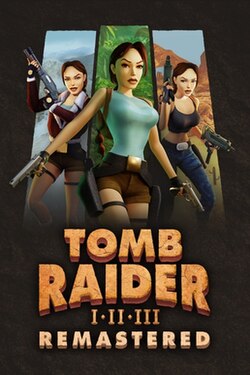

If you ever wanted to time-travel to the 90s while keeping the convenience of modern controllers and the existential dread of poorly-lit tombs, Tomb Raider I-III Remastered on Switch is your mildly pixelated DeLorean. This collection bundles the original trilogy - Tomb Raider (1996), Tomb Raider II (1997), and Tomb Raider III (1998) - lovingly dusted off by Aspyr and friends. It arrives like a nostalgia tour guide: sometimes polished, sometimes sentimental, and occasionally tripping over its own hip-hugging polygonal pants. The core idea is gloriously simple: give us the classics, let us toggle between original and enhanced visuals, and let Lara Croft keep doing whatever it is she does when not baffling us with platforming that requires the patience of a saint and the reflexes of a caffeinated squirrel.
The gameplay will feel like hugging an old friend who still practices weird rituals. You play as Lara, armed with twin pistols that, for reasons of 90s logic, come with infinite ammo by default. Movement options read like a checklist from an archaeology-themed circus: run, walk (walk is a precious safety net that helps you avoid immediate doom by stepping off ledges), shimmy, jump, roll, swim, and nudges that move blocks with all the finesse of an overenthusiastic raccoon. The core structure remains unchanged: travel through ancient ruins, solve environmental puzzles, dispatch foes and occasionally wonder whether that statue should really have been pulled that far. Aspyr wisely included toggles that cater for both the purists and the modernists. You can flip between classic tank-style controls and a modern control scheme inspired by Crystal Dynamics' later reboots, which lets you rotate the camera with the right stick and move Lara relative to that camera. The modern setup is more intuitive for players used to contemporary third-person games, though some critics found it a little clunky in practice. A camera lock-on option and health bars for bosses are welcome concessions to modern expectations, especially since the original minimal UI could make prolonged boss fights feel like wrestling fog. There is no rewind function, and some outlets flagged its omission as a glaring oversight for a collection that otherwise modernizes a bunch of QoL aspects. The package also includes more than fan-service: photo mode, over 200 achievements to chase, and three expansion packs from the original releases - Unfinished Business, The Golden Mask, and The Lost Artefact - so you're not getting just the base games. Development-wise, Aspyr leaned on original source code and even roped in community heroes like the creator of the OpenLara engine for technical direction. Those retro roots show up everywhere: level geometry and classic design choices are preserved, which means the puzzling level flow and sudden spikes in difficulty are still part of the charm, whether you love them or loudly complain about them at 2 a.m.
The remaster's visual approach is refreshingly practical: it uses the original game geometry but layers modern art direction, new models, baked and real-time lighting, and AI-upscaled textures to give things a cleaner look without rewriting the games from scratch. Aspyr and Crystal Dynamics collaborated on the art updates, and they even added 3D models for items that used to be 2D sprites. The switch between original and enhanced graphics is a neat trick; early playtesters reportedly couldn't always tell when the modern art was active, which is a flattering way of saying the updates whisper rather than scream. There are moments where the modern visuals genuinely shine: Lara's updated character model received praise, with some publications calling it one of the remaster's biggest achievements. On the other hand, some reviewers thought certain enemy models looked unintentionally goofy and that some texture smoothing robbed environments of a bit of their gritty personality. The full-motion video cutscenes were upscaled with AI and left largely intact, which preserves the kitschy time-capsule quality of the originals but also means you get the dated audio and presentation without fancy re-recordings. On the Nintendo Switch specifically, the remaster performs admirably given the hardware; Metacritic shows the Switch version sitting in the low 70s, which translates to 'good, with caveats.' If you're playing docked, the enhanced lighting and models look quite fetching. Handheld mode necessarily reduces fidelity, but toggling original graphics can make the game feel more consistent and less like it underwent an uneven facelift.
Tomb Raider I-III Remastered on Switch is a well-intentioned nostalgia cocktail: part restorative dentistry for beloved classics, part modern dental filling. It respects the original blueprints, lets you switch between old and new looks, and even invites community contributors into the museum to tidy up the exhibits. Critics and players agree that it does a lot right - updated visuals, optional modern controls, photo mode, and bundled expansions - but it doesn't fully smooth out the jagged edges. Tank-control moments, occasionally awkward modern-control transitions, a lack of a rewind mechanic, and some questionable art choices keep it from achieving perfection. The package also includes a one-time content warning acknowledging the series' outdated and sometimes offensive depictions, which is a thoughtful and responsible touch. If you grew up with Lara and still hum a half-remembered level theme while making toast, this collection will make your heart and thumbs very busy. If you're new to early Tomb Raider, expect some vintage design philosophies, a few rough edges, and a distinctive old-school charm that modern games rarely attempt. On Switch, it's a convenient and portable time capsule that usually behaves itself but occasionally remembers it's from an era that did things differently. Recommended for fans and curious newcomers who don't mind doing the occasional pixelated facepalm; score-wise, it lands at a solid 7 out of 10 - a good remaster that leaves room for future polishing, but still a joy to play when you've got a craving for tombs, levers, and Lara's iconic ponytail.
 Tomb Raider on PS3
 Tomb Raider on PlayStation
 Tintin: Destination Adventure on PlayStation
 One Piece Grand Adventure on PS2
 Taiko no Tatsujin: Dokodon! Mystery Adventure on Switch
 Onimusha: Dawn of Dreams on PS2
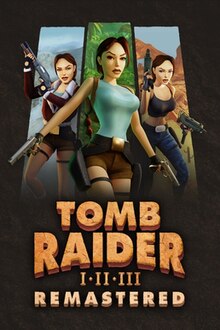
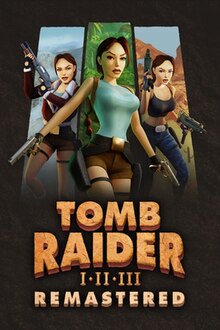 Tomb Raider I–III Remastered on Xbox Series X/S
 Puzzle Quest: Galactrix on DS
 Tomb Raider IV–VI Remastered on Switch
 Tomb Raider IV–VI Remastered on Xbox Series X/S
 Tomb Raider IV–VI Remastered on PS5










 Another SquareThought Site