

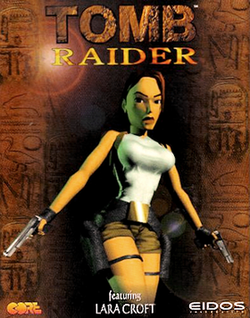

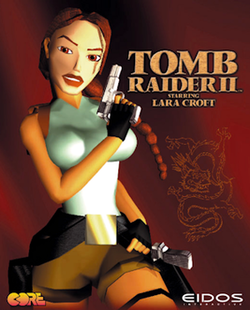
Tomb Raider arrived on PlayStation in late 1996 like a polite archaeological dig that also happened to blow the roof off the industry. It took a small team in Derby, a budget somewhere in the low hundreds of thousands, and the elegant pessimism of late 90s hardware to create something that looked like a movie and played like an intricate toy box. You control Lara Croft, an adventurous archaeologist with a trademark braid and a habit of walking into ancient, trap-riddled structures the way most people walk into coffee shops. The game is equal parts platforming, puzzle solving, and occasional gun-assisted argument with wildlife. Its four main zones - Peru, Greece, Egypt, and Atlantis - have the pleasing logic of a travel brochure for people who think a valid career path includes unearthing artefacts and stabbing monsters. Tomb Raider did what many titles promised but few pulled off at the time: a fully realised, third-person 3D world centered on a believable playable character. The result was novel enough to become a cultural phenomenon and commercially successful enough to make Eidos very happy.
Tomb Raider's gameplay is an honest relic of an era when designers made compromises and called them 'design decisions'. Movement uses tank-style controls by default, which means Lara faces the direction she faces and you handle rotation and walking separately. This can feel awkward after two decades of thumbsticks and aim assists, but it was a practical solution for D-pad input and grid-built levels. The grid system itself is crucial: levels are constructed as multi-room complexes with verticality, secrets, and interlinking passages inspired by actual tomb architecture. The map is a set of connected rooms, and progression often involves toggling switches, finding keys, and remembering which apparently-trapped corridor you ignored five levels ago. Lara has two basic modes: hands-free and weapons-drawn. Weapons-drawn locks her on to targets and removes some mobility options, like grabbing ledges. This is a neat trade-off that forces decisions: shoot this wolf now and risk falling to your death, or climb like a reasonable person? Her starter kit includes twin pistols with infinite ammo, a merciful design decision. Additional firearms - a shotgun, dual magnums, dual Uzis - appear as you progress, each changing the tone of encounters from 'scary' to 'satisfyingly louder'. Combat is not the game's core; enemies often act as choreography to push you toward puzzles or to change the atmosphere from naturalistic to horror-tinged. Platforming is where Tomb Raider truly earns its name. Lara can jump, climb, shimmy, hang, swan dive, and even do a handstand from a hanging position if you're feeling dexterous. These moves were hand-animated rather than motion-captured, giving Lara a distinctive, slightly stiff style that moves with cartoon precision. The animations are essential because the camera is not fully free; it relies on preset angles that switch depending on location. Sometimes the camera will give you a cinematic overview of a new area, and sometimes it will angle itself into an unhelpful perspective and hope for the best. Learning to read the camera is part of the challenge, and the moment when you time a jump through a deceptive cut of perspective is the modern equivalent of a high five. The save system on PlayStation uses Save Crystals placed within levels. This forces a kind of measured progress: die and you reload from your last crystal, so the game treats death as a learning tool rather than a punishment conceived by malice. Inventory is simple and deliberate: picked-up items remain until used. Collectibles like med-packs and ammo are often tucked behind secrets. Speaking of secrets, the game rewards curiosity. Finding hidden rooms triggers a little tune and often hands you something useful. Most secrets are optional but some are satisfying enough to make you replay areas just to see what the designers hid behind that suspiciously plain wall. Enemies in the early stages are largely animals - bears, wolves, bats - deliberately chosen because they were easier to animate and because the developers had reservations about Lara executing many humans. Later areas introduce more fantastical creatures and self-aware Atlantean monstrosities. Pacing is thoughtful: exploration and puzzle solving form the spine of the experience, with combat used sparingly to maintain tension. The four-zone structure lets the game change its vocabulary periodically. Peru is jungly and tomb-heavy, Greece brings monastic corridors and murals that move the plot forward, Egypt gets the bricks-and-sand claustrophobia, and Atlantis is where the story turns genuinely weird and mythic. The Croft Manor training level sits separately like a polite tutorial: it's there to let you learn basic maneuvers without the threat of being eaten by a tiger. The expansion pack, Unfinished Business, tacks on new, tougher levels if you want to feel punished for knowing how the original works. There are rough edges. The camera presets occasionally create maddening misreads of space, and a couple of notorious engine quirks - such as a corner-climbing exploit and a secret-detection bug in the final level - survived initial releases. But these are the sort of quirks that become folktales in a community: the digital scar tissue that proves you were there. Overall, Tomb Raider's gameplay is a thoughtful balance of movement, puzzle design, and optional combat, and it still rewards players willing to learn its language instead of demanding the modern comfort of permanent aim assists.
For 1996, Tomb Raider's PlayStation presentation was audacious. The game used a custom engine that rendered a fully three-dimensional Lara and complex rooms, and when that engine worked it produced set pieces with real scale. Polygonal Lara moves in blocky confidence; her silhouette and animations were so distinct they practically needed their own billing. The environments are deliberate and atmospheric, with lighting and multi-layered room design creating an actual sense of verticality and depth. Where other early 3D games felt like rooms pasted onto each other, Tomb Raider's spaces connected and looped, rewarding memory and observation. The art direction leaned on real-world references: the team studied Inca, Greek, and Egyptian architecture to give each world a cohesive feel. The grid-based level construction, necessary for the controls and hardware, also forced a clarity of design. This meant less organic-looking outdoor expanses and more intricate indoor puzzles, which is exactly the aesthetic the game needed. Audio complements visuals more cleverly than you expect. Composer Nathan McCree avoided the era's temptation for constant bombast and instead used motifs sparsely, employing a four-note theme and occasional choral swells - the underwater track is an uncanny little moment - that land precisely because they don't play all the time. Most of the audio work goes to effecting atmosphere: the drip of water, Lara's effort noises (recorded by Shelley Blond and other team members), and the clang of distant machinery. The sound design cleverly uses silence as a canvas; areas without music become unnervingly alive simply because there is nothing to hide behind. Technically, the PlayStation build tends to be sharper than the Sega Saturn release, which suffered from lower frame rates and audio fidelity in retrospective analyses. The graphics aren't realistic by modern standards, but they age with character. A remaster released decades later shows how the bones of the level design still hold up; modern lighting and options make the jagged geometry less of a distraction, but the core feeling of place remains intact. If you play the original on PlayStation hardware or as a well-emulated edition, you'll see why people called it revolutionary at the time: it created a convincing 3D playground for a character-driven adventure.
Tomb Raider on PlayStation is both a product of its time and a piece of timeless game design. It introduced a confident, capable protagonist, and wrapped her in a package that combined cinematic presentation, careful level design, and an insistence that players think with their thumbs as much as their reflexes. The game's tank controls and camera angles will frustrate the unprepared, but they are also part of what makes solving its challenges satisfying: you learn the rules and then outwit them. Its commercial success - millions of units sold - and critical reception were well earned. Lara Croft became an icon not because the game tried to make her one, but because the design supported a character you wanted to keep moving through your television's polygons. The music, sparse but memorable, and the voice work, concise and effective, round out an experience that still has emotional beats. If you plan to play it now, temper expectations about modern conveniences and be ready to treat the game like an elegant fossil: not fragile, just very, very old-school. If you were there in 1996, you remember why it felt like an earthquake. If you weren't, this is a historical curiosity that still entertains because the puzzles are smart, the levels are generous, and the sense of exploration is deliberate. For PlayStation veterans and retro adventurers alike, Tomb Raider deserves a place on your shelf or hard drive. It earns a 9 out of 10 for inventiveness, playfulness, and the unshakable sensation that you are, essentially, playing a very stylish museum heist where the museum fights back.
 Tomb Raider on PS3
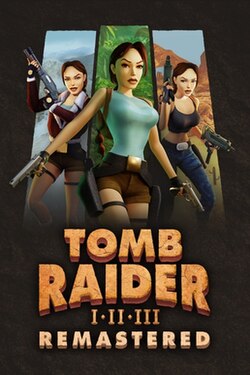
 Tomb Raider I–III Remastered on Switch
 Tintin: Destination Adventure on PlayStation
 One Piece Grand Adventure on PS2
 Taiko no Tatsujin: Dokodon! Mystery Adventure on Switch
 Onimusha: Dawn of Dreams on PS2
 Firestorm: ThunderHawk 2 on PlayStation
 Machine Head on PlayStation
 Fighting Force on PlayStation
 Ninja: Shadow of Darkness on PlayStation
 Fighting Force 2 on PlayStation












 Another SquareThought Site